



The long view
State governments are pushing the long-term view of Australian ports.
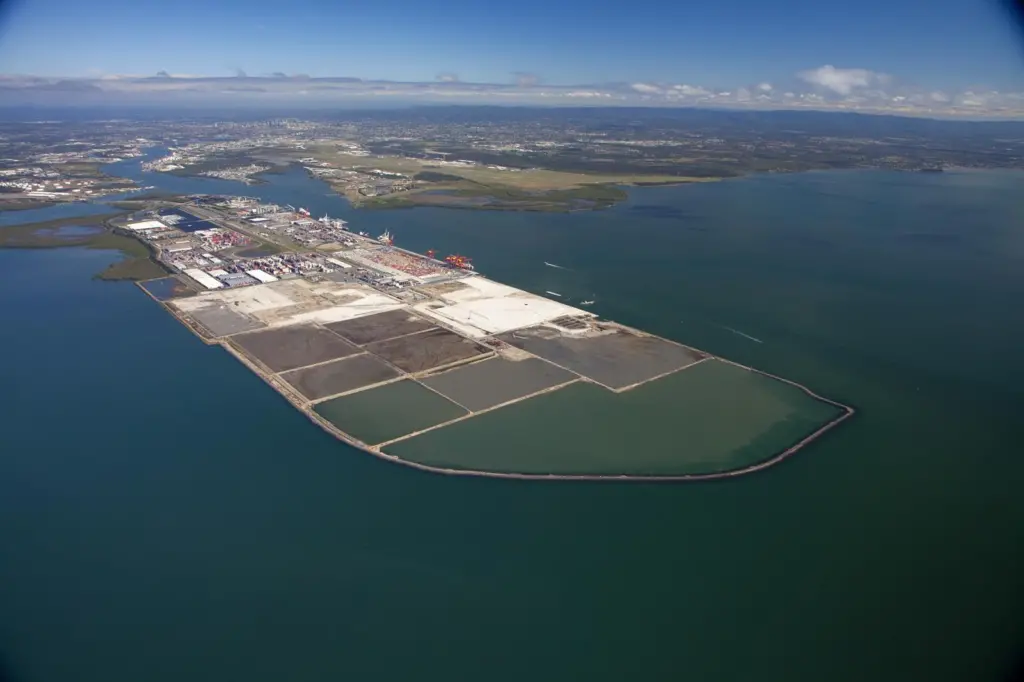
The hand of state government control is being felt in different degrees at Australia’s three major container ports, at a time when throughput at all the ports is booming.
Melbourne, Sydney and Brisbane are all reporting significant lifts in throughput. Melbourne as an example recently became the first Australian port to handle an average of 7,000 teu/day for a monthly reporting period.
Total container trade through Melbourne set a new national record in October, with the port handling over 217,000 teu for the month. Overall trade increased 7.6% over the year, in which containers were the strongest contributor, with the annual throughput up 10.4%.
But while the current scene is healthy, the state owners of all three ports are aiming to put down foundations for long-term development growth.
The spotlight is particularly on Brisbane, where an investment consortium has won the right to a 99-year lease to operate the port. The Queensland State Government decided to place responsibility for the future development of the port into the hands of private enterprise, thereby avoiding the taxpayer having to fund developments estimated at up to $1bn.
The deal agreed with the government was worth A$2.3bn (US$2.3bn) to the successful bidders Q Port Holdings, which brings together a number of stakeholders and which officially assumed ownership of Port of Brisbane Pty Ltd on December 1.
So what now for the newly-privatised port? Managing director Alistair Baillie tells Port Strategy that the object of Q Port Holdings is to facilitate trade growth while maximising efficiencies across the port and achieving high levels of asset utilisation.
Underlining the company’s commitment to working collaboratively with customers and to sustainability, Mr Baillie emphasised Q Port Holdings has the financial clout to underpin new capex if needed — “The members of the consortium bring substantial port management expertise, and we have the financial capacity to ensure the Port of Brisbane will continue to play a pivotal role in the Queensland economy.”
For the 2009/2010 year, Brisbane invested nearly A$150m in new infrastructure and already, some new key capex projects are underway. The Captain Bishop Bridge duplication and associated road upgrades will ensure efficient access to the main port complex well into the future and construction of Wharf 11 has just begun. This, along with Wharf 12, will be operated by Hutchison Port Holdings, bringing increased competition to container stevedoring.
Competitive stevedoring seems already to be alive in Brisbane. Patrick set a record in September for containers moved by a single gantry crane in their Brisbane terminal and DP World also set a new Australian record in container handling in September.
It is not just on the container side that Brisbane is expanding. Its general purpose berth was completed last year, which in turn led to Sunstate Cement investing A$17m in a new conveyor to link its processing facility to the berth. In May, SAMI Bitumen Technologies opened a new facility at Brisbane’s bulk precinct, with a pipeline to connect its storage tanks directly to the General Purpose berth. QBH also invested $65m in a project to expand its coal stockpile area, significantly boosting throughput capacity
The hand of state government control is being felt too in Sydney, where new regulations to reduce congestion and improve efficiency at Port Botany have been introduced. The Port Botany Landside Improvement Strategy (PBLIS) is described as Australia’s first operational performance management scheme for ports, involving penalty payments between stevedores and road operators for failure to meet regulated benchmarks.
NSW Treasurer and Ports Minister Eric Roozendaal says this will bring consistency between stevedores and truck carriers — “If a truck operator is forced to wait; the stevedores must pay the trucking operator for the time they wait.”
Another effect of the PBLIS is that Sydney Ports will be able to set the price for rail servicing at the terminals, in a bid to encourage the switch from road to rail.
The need for efficiency has become more apparent with container trade through Port Botany reaching record levels. Container trade for the financial year to October 31 was up 8.1% on the same period in 2009, a year in which Sydney Ports invested A$280m of capex in new projects including the Port Botany Container Terminal Expansion project which will lead to the introduction of Hutchison Port Holdings as operator for the new third terminal (T3).
Hutchison will begin installing its own infrastructure at the terminal this year and become operational next year.
In Melbourne, where the concept of a third container operator has been mooted but not as yet adopted as policy, industry and community is being consulted on how the future freight task can be effectively handled.
Container trade through the port is forecast to double to around 4.4m containers by 2020 and the Victorian Government has asked the Port of Melbourne Corporation (POMC) to take market soundings on how the port and land infrastructure should be shaped to handle the increase.
Terminal operators, shipping lines, industry groups, local government, transport operators and the community are among those being consulted.
Questions being asked include where is the best location for the next one million teu in Melbourne; is it essential to have available capacity 15% above the current requirements; and if that involves the use of Webb Dock or not, is it time for a new motor vehicle facility in Melbourne and how should it be configured?
Previously, POMC had prepared a robust business case to develop Webb Dock for the reintroduction of containers and expand Webb Dock West for motor vehicles.
Shipping Australia (SAL), the industry body representing shipowners, operators and agents, has backed the early development of Webb Dock container terminal as essential for Melbourne to retain premier port status. SAL said development of Webb Dock East was preferable to alternatives such as maximising capacity at Swanson Dock precinct, fast tracking development at the Port of Hastings or creating an international container terminal at the Port of Geelong.
POMC says it is pleased with the depth and quantity of the responses to its market soundings, 38 for container traffic and 16 for motor vehicles.
The planning for the future of Melbourne comes after the completion of the Channel Deepening Project, the largest marine infrastructure project in the history of the port, which rectified a situation in which 60% of container vessels calling at Melbourne were potentially draught-affected.
The dredging removed a national blockage — if Melbourne as the largest container port could not handle deep draught vessels they would not have come to Sydney and Brisbane either.
Related Articles
 WORLD
WORLD
 PORT & TERMINAL NEWS
 PORT & TERMINAL NEWS