


Carbon footprinting in the Port of Antwerp
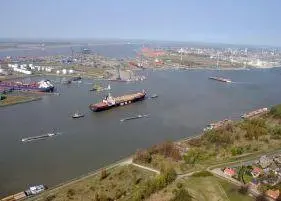
During the recent GreenPort conference on the 23th and 24th of February , the Port of Antwerp presented its carbon footprint.
“It has been a difficult work, but having all the energy data at hand is essential for a port authority in order to make the right decisions”, says Geert Schrooten, technical manager energy and climate at the Antwerp Port Authority.
The Antwerp Port Authority has made two carbon footprints: one for its own activities and one for the entire port area.
Based on the ‘Greenhouse Gas Protocol’ and the’ WPCI-methodology for carbon footprinting’, the port started working on its own carbon footprint in July 2010 . The work focused not only on scope 1 and scope 2 emissions of the port authority, but also some of the associated scope 3 emissions were inventoried. Scope 1 and 2 emissions are for example emissions of company owned vessels (the port authority has 21 tugboats and 15 dredging vessels) and emissions of company owned mobile cranes (the port authority has three mobile cranes which can be hired by tenants). Also, emissions due to the electricity use of bridges and locks in the port area were calculated. The port authority is also the distribution grid operator in the Antwerp port area, indirect emissions due to public lighting and grid losses are also a part of the scope 2 emissions of the Antwerp port authority. Scope 3 activities covered the business travels, the commuting and purchases.
The vessels and cranes of the port authority are clearly responsible for the biggest part of the CO2-emissions. In 2011 the Port of Antwerp will install a more performant energy measuring system on each of its vessels. “By doing this, we will gain a better insight in the relative performance of our individual vessels. Also, when buying new vessels, energy efficiency and clean (alternative) fueling will become increasingly important.“
From 2011 onwards, the Antwerp Port Authority purchases green electricity for all of their activities. This will lead to a impressive 18% reduction in total carbon emissions of the port authority (reduction calculated based on 2008 data). “As we are a great promotor of renewable energy generation in our port area (both solar and wind), getting a green electricity contract for our remaining electricity use, is a very logical step.”
Besides a carbon footprint for its own activities, the port also footprinted the entire port area. The total carbon footprint of the entire port area is some 1000 times larger than the footprint of the port authority. This is logical, as Antwerp has the largest petrochemical cluster in Europe, including 5 refineries, and the biggest chemical producing companies in the world. “Our petrochemical cluster is in terms of direct CO2-emissions off course very important, but this does not mean that other industries can sit back. Every player in the port area has to do its share. We as a port authority will keep launching initiatives which strengthen the position of our port companies. As CO2 becomes an important element both for industrial as for logistics companies, we will keep working on our CO2-footprint and have an ambitious energy policy in the years to come. We will focus on energy efficiency, renewable energy production, alternative fuels and carbon capture and storage”, concludes Mr. Schrooten.
Related Articles
 ALTERNATIVE FUELS GREENPORT