It’s clean, green and touted as the soon-to-be dominant fuel of shipping. But liquefied natural gas bunkering is still very much in its infancy and ports remain cautious in their acceptance.
After all, who would invest heavily in the infrastructure to support a market that has yet to burst forth? Notwithstanding a handful of announcements regarding planned LNG bunkering facilities, ports are understandably reluctant to commit to such a substantial capital outlay, particularly as there is no guarantee that LNG will remain the cheaper fuel option for shipping in the longer run.
“It is very much chicken-and-egg; no one really wants to invest in it but they have got to at some point,” says Steve Hinton, advisory group director for maritime and waterways at Royal Haskoning DHV. “If ports don’t have the facilities, then the ships can’t convert because they won’t be able to refuel.
“Ports have to think about having a facility but they don’t want it to be too far ahead of being required, because then it won’t be used and they won’t get their capital back.”
Norway stands out as a country that has taken to LNG, with small-scale operations supporting coastal type vessels and ferries powered by the fuel. In the Baltic, meanwhile, Viking Line is due to introduce an LNG-powered passenger ferry on the Stockholm-Turku route in 2013. Bunkering is planned to take place at Stockholm, with LNG delivered to the port via road truck from Nynashamn.
Delivery challenges
For large ports, with a broad mix of customers, ship types, international links and schedules, the challenges of delivering LNG are complex.
“Putting in LNG bunkering facilities could be a real upheaval for a port,” says Steve Hinton. “And converting ships to LNG could be difficult; at this point in time, probably most [shipowners] won’t go for LNG until their ships need replacing, especially with larger vessels where most of their journeys are outside any restricted zones in terms of emissions.”
At the moment, LNG is a cheaper and more efficient fuel, he adds: “But that could be outweighed by the cost of conversion. If you are converting an existing ship, unless it has a very long life ahead of it, you will never get your money back.”
In the conservative shipping world, Mr Hinton says the dangers of handling LNG are probably exaggerated – but he also points out that there are no set down rules on LNG fuelling in ports.
“The problem will be when you are fuelling – connecting the hose and pumping between the two,” he says. “You may not be able to load passengers at the same time. It might come down to the quantity of LNG. But there will be issues handling LNG in a live, busy port and there is no real guidance on that. You don’t want bunkering to take place where ships are going close to and fro. Can you refuel when passengers are around or goods are being loaded?”
One solution is to take ships to a separate berth for bunkering – that could take place once a week, for example – but time out equals earnings lost, and major operators would surely not be keen on that.
Gothenburg goals
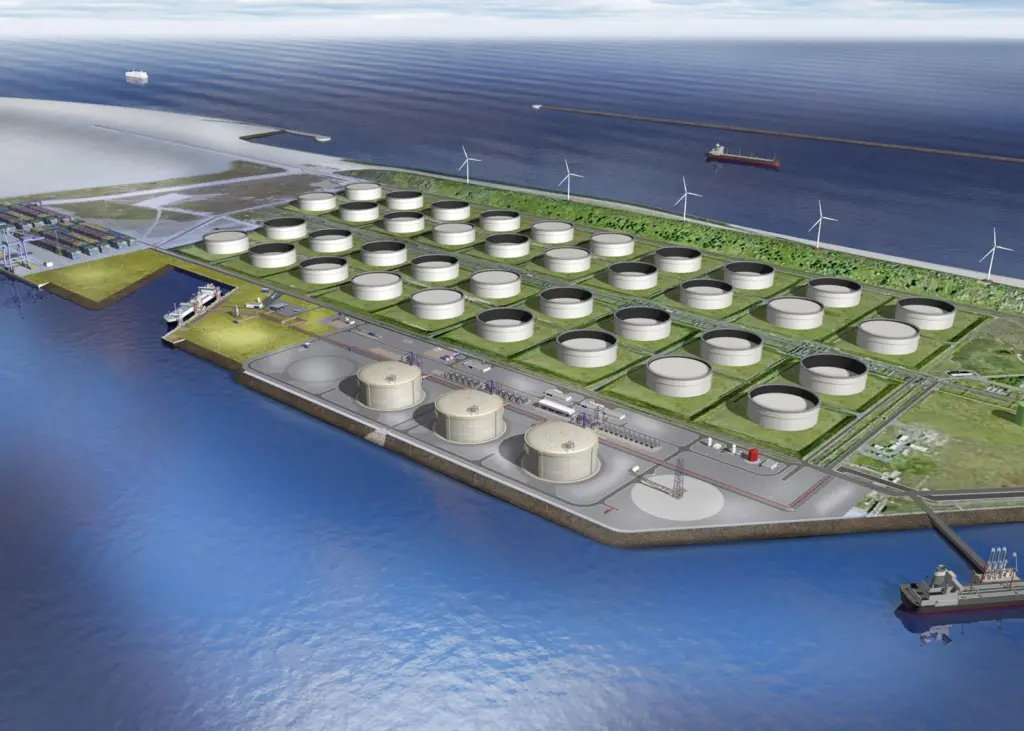
At the Port of Gothenburg, Swedegas and Vopak recently announced plans to build an LNG terminal by 2015.
“Importantly, this will allow ship-to-ship bunkering as well as bunkering on the terminal,” says Cecilia Carlsson, the port authority’s corporate communication manager.
This is very important for operating on a large scale, she says. “We don’t think big container vessels would have time to go into a separate terminal to bunker, which would be the case in many other ports.
“There are no rules and regulations for this yet but we will collaborate with other major European ports to make this happen; because it will only be interesting if it is available at enough other ports. We want to give the industry a clear signal that this will be available in the Port of Gothenburg, and they can start investing in their LNG vessels.”
The terminal will be set up to serve landside industrial customers too – hence delivering a return on investment straight away, while LNG fuelling for shipping will likely take time to scale up.
Fleet formation
Belgium is focusing strongly on solutions to make use of LNG as a marine fuel and the ‘last bottleneck’ is bunkering, says Frans van Rompuy, director general of Belgium’s DG maritime transport.
“The fuel, engines and equipment on board are all available – the only remaining issue is the certainty of getting the fuel,” he says. “Of course, the situation varies from one country to another, but for Belgium our feeling is that the best answer is to have a fleet of bunkering vessels that can operate in the port and maybe just outside the Scheldt at sea to supply merchant vessels with the necessary LNG.
“But also the inland waterways are very important and we need to establish how LNG [fuelled] vessels here can be supplied.”
He believes that LNG bunkering in Europe needs a kick-start via EU subsidy. “The situation can be overcome by subsidising to a certain extent the first step to invest in the infrastructure to provide the service,” he says.
Without this, the business case for such a facility could be difficult to justify to shareholders, he adds. “Shareholders will say that looks very nice … but what is the payback?
“You need to take a big leap forward and EU subsidy could be the policy approach to cover that leap forward.”
Risk analysis
There are those who believe that concerns about the rush to implement LNG fuelling without properly considered safety systems and procedures are misplaced, Richard Ceen, managing director of SeaTechnik, says. “The fear is that the cost of such procedures and systems might be the straw that breaks the camel’s back,” he says. “However, a single catastrophe would be far more damaging to the development of this emerging industry.”
UK-based SeaTechnik supplies LNG ship-shore links (SSL) and emergency shutdown (ESD) system technology to LNG carriers and shore terminals, its SSL design solving many problems of compatibility between ships and shore terminals.
The challenges for large-scale LNG are maintaining absolute compatibility so any LNG ship can visit any terminal and be certain that the ESD and communications/data systems can interconnect reliably, says Mr Ceen. But in general, LNG transfer is usually under the control of an experienced trained operator on shore and an experienced cargo engineer on board.
“In small scale LNG, particularly bunkering, the receiving tank arrangement will be under the control of a marine engineer who will have limited experience of the problems in transferring LNG and the issues associated with pressure excursions caused by the very different tank conditions between the two sides,” he says. “The limited volumes of the bunkering vessel’s tanks add to the difficulty.”
A simple go/no-go ESD system is likely to reduce confidence and encourage potentially dangerous short cuts, he adds, but some commentators are concerned that sophisticated and costly SSLs and large-scale practice might limit the uptake of LNG fuelling. SeaTechnik has taken the basics of a digital system and applied it to low-cost portable military fibre-optic technology to provide the ESD, data and communication link to safeguard operations. “The cost of volume production has been significantly reduced to make the system take-up by small terminals and even trucks cost-effective.”
He adds: “We see ports such as Singapore gearing up to cater for LNG fuelling but the detail of systems and arrangements for overall safety will be left to the market and regulators such as IMO IGF Code and WG 10. The deliberations of the committee process are being left behind in some areas as solutions are having to be implemented now.”