



Diamonds in the dirt
Coal producers are bypassing chokes in the supply chain to invest directly in terminal space, as Stevie Knight explains
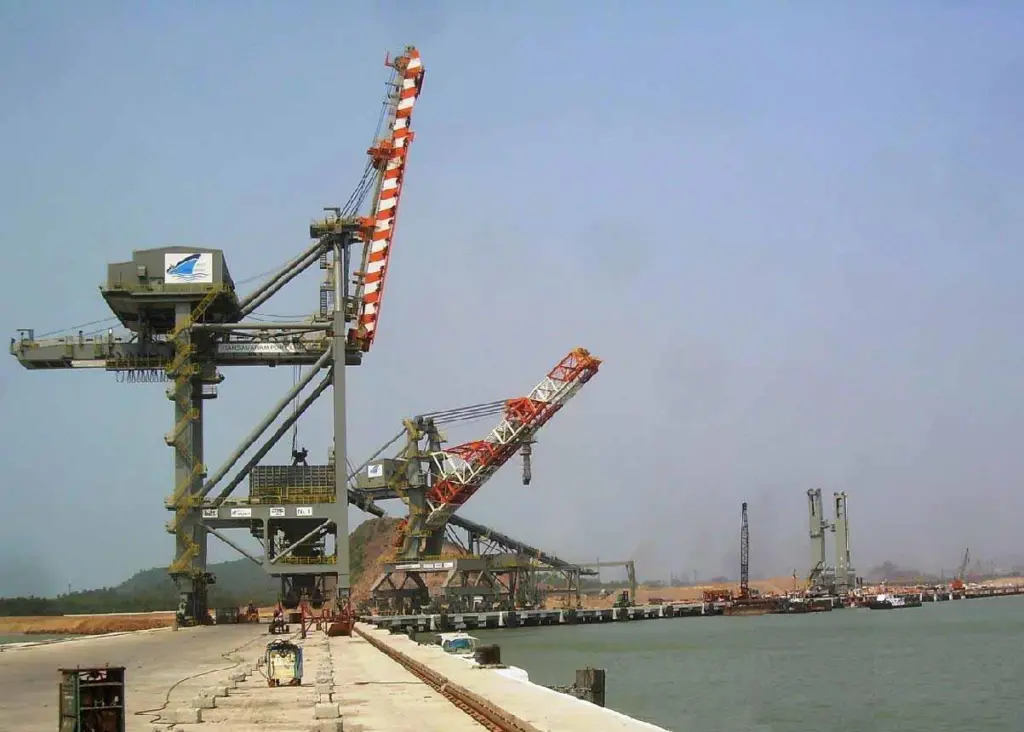
The news that China alone expects to import 27m tonnes of high-grade steel-making coal this year comes at the same time as Indo-Asian governments are raising their energy game. So, ports across the whole region are looking at ramping up operations – and coal is still “the quick and practical option” for power, says Dr Mark Yong of BMT Group.
Dr Yong confirms that although there are demands for coal right across Asia, the hiccup in the system comes from chokes in the exporting chain rather than inward shipping. “South Sumatra, for example, has 160 mining operations. One of the bigger mines can move 2m tonnes of coal, but it is limited to between 7,000-10,000 through the lack of transport links,” he explains.
Increasingly, it seems mining companies are looking at snagging their own coal terminals – like Indonesian ITM’s Bontang Port which has just raised its loading capacity from 12.5m tonnes/annum to 18.5m tonnes/annum – while at the other end, “you are beginning to see power generating companies looking for – or even constructing – port facilities, and big conglomerates grouping together to bid for power generating projects which actually include port and terminal structures”, says Dr Yong.
Although he is unwilling to speculate too much, it seems these concerns have swung the twin developments of the Hai Phong II coal-fired plant (generating 7.2bn kWh for the local grid) and Dinh Vu port which has seen a major deepening and widening of the access channel, allowing in vessels up to 30,000 dwt. Certainly TNB feeds each of its four coal-fired power plants in peninsular Malaysia from its own coal jetty – usually located at the plant itself.
Interestingly, Dr Yong also points out that many countries in the region depend on river ports, which puts bigger ships at a disadvantage. After factoring in handling, he explains it is more economical just to load up on a few smaller vessels that can chug directly up the rivers.
But there are important differences across Asia: “Where China might reach a tipping point as international prices rise and local takes over from imported coal, Malaysia and Vietnam, are deeply dependent on the imports, so for them the prices will just have to be borne for longer,” he says.
India, too, is growing fast. Total thermal coal imports are expected to reach 70mta in the next five years – double the figures of two years ago. Southern Tamilnadu, for example, is showing a sharp enough increase in industry to warrant its own power plant, (probably to be fed from Tuticorin).
However, this makes for a complicated picture. Many port’s capacities are still limited to smaller handymax ships while on the other hand Gangavaram and Mundra, (owned by energy firm Adani) have big ideas: the former recently adding a 19.5 metres draft, 320 metre coal terminal and the latter planning for one that should be capable of handling 25mta with 22 metres depth.
And there may be a hiccup on the horizon. Indonesia, which provides much of India’s thermal coal, looks like clamping down on its exports due to internal rising need, although the general feel is that it won’t cause too much of a problem – yet.
As for coking coal, the Steel Authority of India Limited (SAIL), has had problems with its preferred ports. To begin with Haldia has ongoing navigational challenges, while Paradip has been hit by pre-berthing detentions. Coal has been rerouted through Visakhapatnam port – entailing extra costs.
It has been complicated by politics: eager to hold on to supply, the Orissa government has now said that Paradip should funnel its imports into SAIL’s plant in nearby Rourkela, thus kicking much needed flex out of the system.
Given all this, it is not surprising that Gangavaram, Kakinada and the new port of Dhamra, are being considered by SAIL. But some feel that a major change will take a while to overcome the necessary teething problems.
And it has to be said that teething problems are rife at both ends of the chain. A lot of India’s high-grade coking coal as well as thermal comes from South Africa, but expansion at the Richards Bay Coal Terminal – which is aiming for a capacity of 91mta, has been put back till 2010, a year later than initially planned.
Certainly, delays on loading from Austrailia are once again reaching epic proportions: ships are still waiting about a month on average for coal from Hay Point.
However Newcastle (which exported a record 8.97m tonnes of coal in December) has a plan: a group enterprise is to provide a $5bn investment over the next four years in return for allocation. Interim measures rationed existing capacity on a pro-rata basis instead of encouraging port and rail expansion – but still, although the plans say new entrants will have greater accessibility to this scheme, some feel the element of control is much needed.
“Australia is doing very well, but they are now making sure that Chinese companies are limited in the aggressive buying of stakes in coal and mining entities,” explains Dr Yong.
But on the whole, Australian players are taking advantage of “the China effect”. For example, with its proposed developments of Wiggins Island and Port Alma, Gladstone looks like almost doubling the massive Dalrymple Bay coal operation which has just been expanded to 85mta – with the option of more to come. Queues have been the norm for many Australian operations for some time, so infrastructure investment, especially rail connections, have been a hot topic.
For example, the notorious “missing link” connection between Goonyella’s coal rail and the Newlands railway stands to make Abbot Point (also in the midst of expansion) a strong market player. But the Queensland government seems bent on selling off port and coal freight assets before the link is in place – sparking criticism from the local Mayor, who likened it to “a fire sale”.
However, the final question has to be will “the China effect” take up the slack left by the falling west? Dr Yong sounds a note of caution. “Although rising, China per capita spending power is still way below the US,” he says “and can’t fill the hole in the bucket entirely.”
Related Articles
 NEWS
NEWS
 CONTAINER & CARGO HANDLING
 OPERATIONS