



FLTs Andy Andrews
On the green side, fork-lift truck technology is moving on apace.
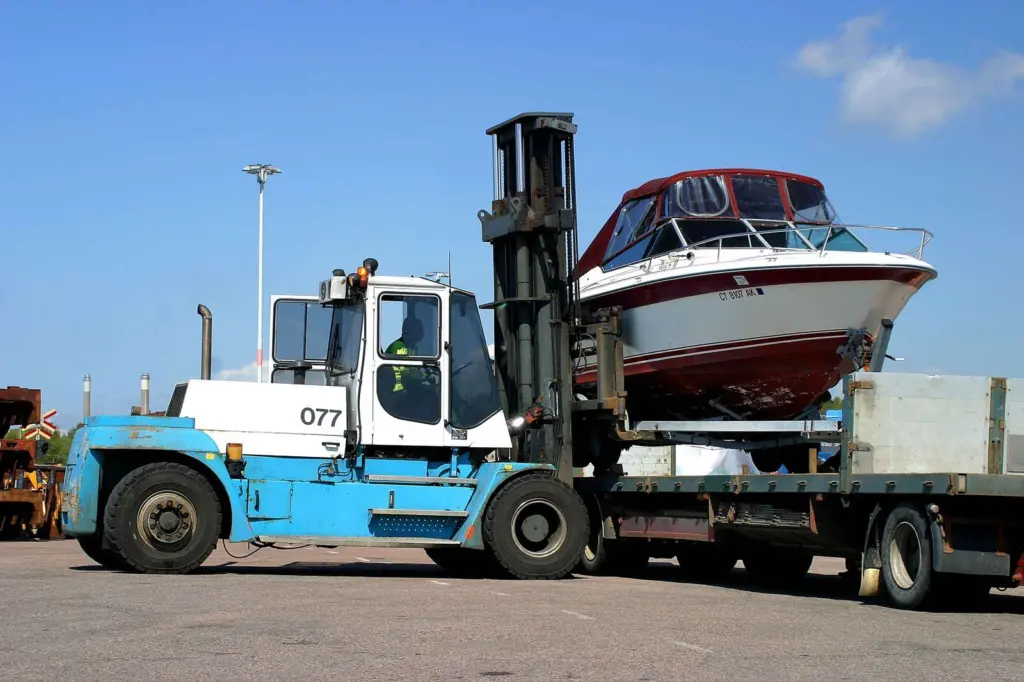
Says Ms Jonasson: “Today, operators are definitely pressurising manufacturers to come up with more fuel efficient and environmentally-friendly FLTs. Some are therefore fitting energy-saving hydraulic-pumps. We are also seeing more suitable engines selected for the type of work that the FLT will undertake; these often have limited rpm and are fitted with good diagnostic-tools.”
In Gothenburg, FLTs are already equipped with catalytic converters and particle filters. However, Ms Jonasson predicts the future will be the development of an electric/diesel-electric hybrid, although this won’t be suitable for all applications.
And while top end machines continue to belch out plumes of black smoke, a revolution is slowly taking place in the container freight stations (CFS), where LPG is taking over from diesel as the fuel of choice. Capt Andrews isn’t at all surprised.
“It is not just a question of economics. Although LPG-powered equipment is cheaper to operate and maintain, it is also significantly cleaner and quieter, which is definitely the preferred option in an enclosed environment,” he says.
When he was in charge of ICTSI’s Manila International Container Terminal, LPG suppliers helped in converting the entire fleet of CFS FLTs to work with gas. This worked to the advantage of both companies, since the gas suppliers gained a long term customer, while MICT got cheaper operational equipment.
Related Articles
 NEWS
NEWS
 CONTAINER & CARGO HANDLING
 OPERATIONS