






Future fuel fix
With aviation moving in on biofuels, what opportunities are there for ports asks John Bensalhia
Biofuels are literally taking off: the growing demand for biofuels from the aviation industry has been making the headlines.
A recent review from Navigant Research reported that GE Aviation will be buying synthetic biofuel for testing jet engines, while Lanzatech’s jet biofuel has been certified by the independent Roundtable on Sustainable Biomass.
On top of this, Brazilian airline GOL Linhas Aeras Intelligentes’ recent partnership with Boeing and Amyris will mean that 200 planes travelling to next month’s World Cup football tournament and 20% of flights in 2016 for the Rio Olympics will use sustainable aviation biofuels.
So can biofuels handling take off for ports in the same way?
“Markets for biofuels are policy driven,” explains Anja de Kiewit of the Port of Amsterdam. “Biofuels are very diverse. The most important one is biodiesel from plants and grease, used for blending in fossil diesel. Due to the European Union targets, the European Union is preparing rules to bring back the percentage of blending of biofuel from 10% to 6%. The market for bio-LNG as transport fuel for trucks and ships is expected to grow. Bio-LNG (green gas) is made of sewage treatment which can be used as transport fuel.”
Wide appeal
The potential for biofuels handling at ports is recognised globally. Exporting biofuels opens up all sorts of prospects for ports, since more countries are looking to use environmentally friendly solutions. With that in mind, recent figures released by the Renewable Fuels Association showed how the US had increased exports of ethanol to the Philippines by eight times in the first 10 months of 2013 (as compared with a year earlier). The RFA also said that the US had increased ethanol exports to countries such as Mexico, Canada and India. With biofuels providing environmentally friendly alternatives to regular fuels, it’s little wonder that this sector holds great potential.
American port operators have also taken this on board when it comes to running their own business. For example, North Carolina Ports have introduced three new biodiesel tanks, two of which will be run at the Port of Wilmington, the other at the Port of Morehead City. Two of these tanks hold 10,000 gallons, while the other will hold 20,000 gallons. These tanks allow for both efficiency and environmentally sound operations.
But are US ports making the most of the great potential? A recent report in the Wall Street Journal looked at some of the problems with respect to tapping that potential, such as government plans to cut American consumption requirements and higher transport costs in delivering the fuel to the shipping ports.
The Port of Los Angeles comments on other issues: “The same type of equipment used for other liquid bulk commodities such as storage tanks and pipelines is needed for handling of biofuels. The issue is that there is not a significant amount of this infrastructure dedicated to this use. Another issue is that biofuel feed stock will likely come from a wide variety of sources and therefore may not fit in the same logistics footprint as petroleum based transportation fuels that are dependent on one primary feed stock in crude oil.”
Existing capacity
In the case of cost issues, the Port of Los Angeles explains how use of current facilities can overcome the problem of finance. “Regarding waterborne movements, existing liquid bulk marine terminals can be used. Regarding land based movements, existing truck and rail access can be used. For storage, existing tanks can be used. With regards to transportation, we are not aware of any pipeline infrastructure currently dedicated to this use. Pipelines may not be required initially due to limited volumes and trucks would be the primary land based transportation method.”
The Port recognises the massive potential of the biofuels sector. “It is important for the Port to maintain and grow existing liquid bulk market share. As a result of California’s Low Carbon Fuel Standards, it is likely biofuels will become a significant part of the transportation fuels mix in California. The Port is focused on finding ways to accommodate this growth market.
“The Port is focused on providing the State of California with energy needs to meet low carbon fuel standards. Accommodating movement of biofuel and biofuel feedstock through the Port is likely essential to meeting these new standards. Many of the feed stocks that may be used for production of biofuel will be waterborne.”
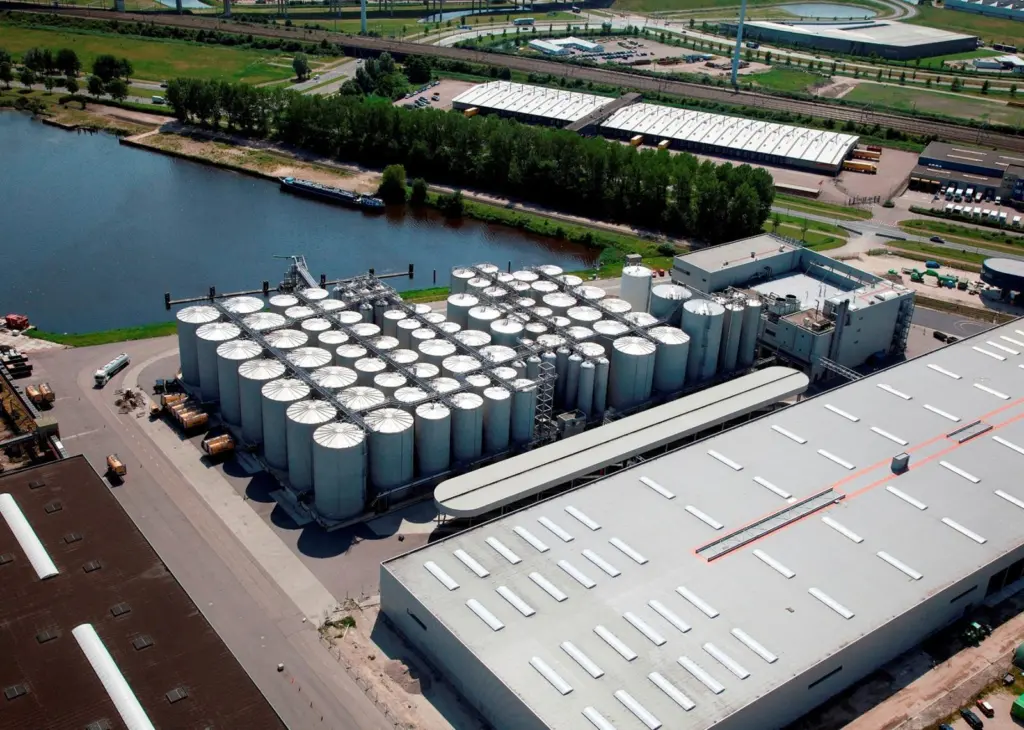
Other ports have introduced facilities for the handling of biofuels. For example, the Port of Amsterdam contains two biodiesel factories – Greenmills and Vesta Biofuels Amsterdam – in order to handle the high annual throughput of up to 1m tons. It’s a high figure that is on the rise all the time; the port has said that it expects this figure to increase to 3.5m by 2020.
The Port of Amsterdam’s Ms de Kiewit comments: “Biofuels are important for the Port of Amsterdam in relation to the transition from fossil to renewable, subsidiary of biofuel plants and future growth of biofuels in the transhipment volumes.
“Currently we have two biofuels refineries and an expansion is expected in the near future. Amsterdam looks at producing bio-LNG from waste water treatment biogas. A feasibility study is currently being held. The most important drivers are the feasibility of blending of LNG and bio-LNG as well as increase in market demand. Total volumes will remain relatively low, although it is possible to produce at least 10% of the expected demand within 10 years. It is a growth market in the perspective of fixing the fuels.”
Handling growth
The Port of Rotterdam has seen recent increases in biofuels handling. Last year, statistics given by the port showed that throughput of biofuels products such as biodiesel and ethanol had grown by 24% in 2012 to 5.9m tonnes, compared with the previous year. In particular, import and export of biodiesel had increased by 1.5m tonnes.
Demand for biofuels is certainly growing. As more environmentally friendly solutions are required for all kinds of use, the low emission rates and recyclable properties of biofuels tick the boxes. Ports can take advantage of this growing sector with the right facilities and equipment, ensuring worthwhile results.
As the Port of Los Angeles concludes: “At this time we have just begun to explore business opportunities in the last year. As the California Low Carbon Fuel Standards requirements for renewable and lower carbon intense fuels begin to ramp up in coming years, we see biofuels as a good opportunity for the Port to grow the existing liquid bulk business.”
Related Articles
 NEWS
NEWS
 CONTAINER & CARGO HANDLING
 OPERATIONS