

Antwerp Port welcomes two electric cranes
Two electric cranes inaugurated in Antwerp are marking progress towards lower-emission cargo handling and more sustainable port operations
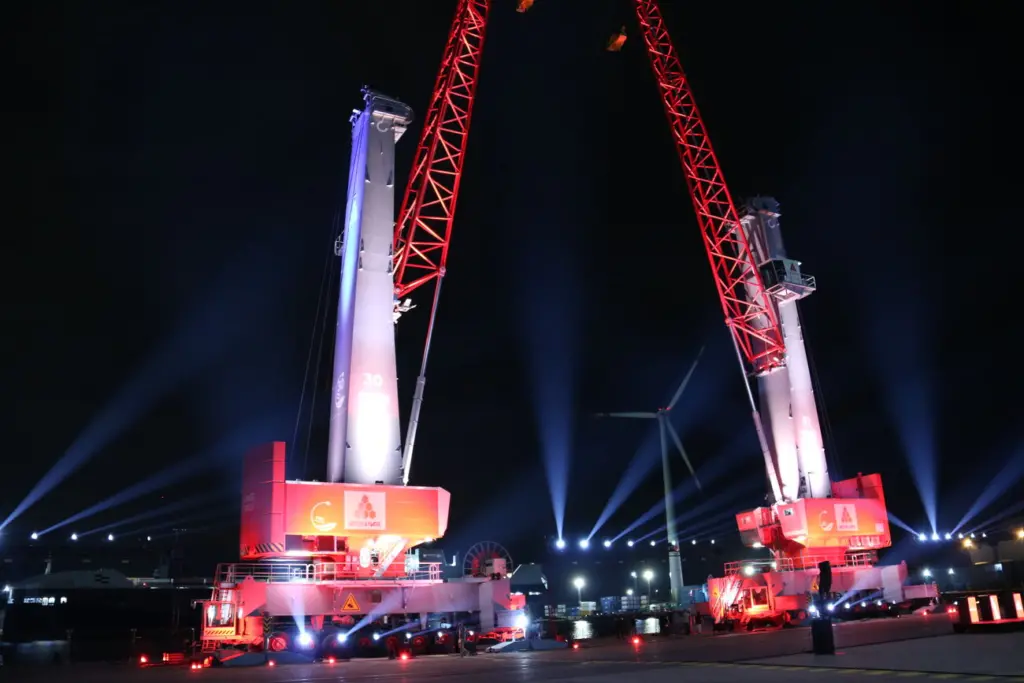
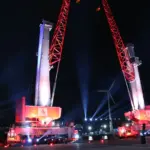
Katoen Natie and Konecranes have inaugurated two all-electric Konecranes Gottwald Mobile Harbor Cranes at the Port of Antwerp, marking a milestone in their cooperation and efforts to decarbonise cargo handling.
The two ESP.8 cranes, each with a maximum lifting capacity of 150 tonnes, were officially inaugurated at Katoen Natie Bulk Terminals Quay 1227 on 15 October 2026. They form part of a six-crane order placed in 2025 for operations across three deep-sea multipurpose terminals.
“Investing in our first fully electric mobile harbor cranes is a forward-looking choice that prepares our operations for the future,” said Vincent Vandecauter, business unit manager for port operations at Katoen Natie. He added that the investment combines performance and flexibility with zero local tailpipe emissions.
The complete fleet comprises four ESP.9 cranes, each capable of lifting up to 200 tonnes, and two ESP.8 models. All six feature Tandem-lift Assistant, enabling a combined maximum lifting capacity of up to 400 tonnes.
Each crane uses an all-electric drive system combining an external power supply with rechargeable batteries. The technology eliminates local tailpipe emissions during operation, while battery support allows the cranes to move independently between operating positions without a diesel engine.
The six cranes are expected to significantly reduce annual operational carbon emissions compared with conventional diesel-powered equipment. The investment also supports Katoen Natie’s broader energy transition strategy, which includes renewable energy generation, large-scale battery storage and upgraded electrical networks.
“This project sets a clear direction for the entire industry,” said Tomas Myntti, president of Konecranes Port Solutions. “It shows that large-scale electrification of mobile harbour crane operations is not a distant ambition, but a practical reality today.”
To maintain operational availability, the cranes include TRUCONNECT remote condition monitoring, predictive servicing through Konecranes Service Frontline in Belgium, a long-term service-level agreement and dedicated spare-parts packages.
Related Articles
 ENERGY & TECHNOLOGY GREENPORT
 ENERGY & TECHNOLOGY GREENPORT
 ENERGY & TECHNOLOGY GREENPORT