



EXCLUSIVE: Britain’s ports need a power upgrade
Chris Hartnoll, CEO of HICO Investment Group, argues that the drive to decarbonise UK shipping is creating a new infrastructure challenge for port operators – securing enough electricity to power the next generation of vessels and increasingly electrified port operations

Britain’s ports are accustomed to thinking in terms of tonnes, containers, vessels and quayside capacity. Increasingly, however, another measure is becoming just as important: megawatts.
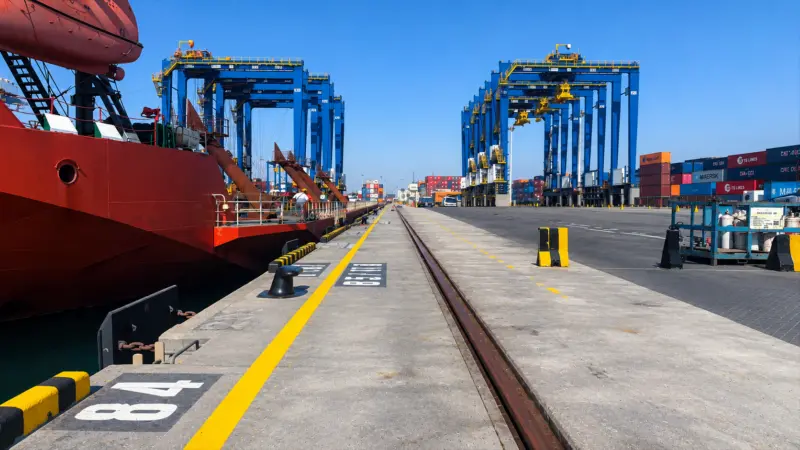
The UK’s drive to decarbonise maritime transport is creating a fundamental new infrastructure challenge. Ports will need substantially more electricity, not only to power increasingly electrified operations, but to provide visiting vessels with shore power, or ‘cold ironing’, while they are docked.
The principle is straightforward enough. Instead of running auxiliary diesel engines while berthed, a ship connects to the port’s electricity supply and shuts those engines down. The result is lower emissions, reduced local air pollution and less noise around the port.
Maritime decarbonisation
The engineering challenge is rather less straightforward. A large vessel can have a substantial electrical demand while alongside, and that demand is being added to an increasingly electrified port. Cranes, cargo-handling equipment, vehicles, warehouses and other facilities are all placing greater demands on the grid. Several vessels connecting simultaneously could create a significant peak in demand.
For many ports, therefore, installing shore-power equipment is only part of the problem. The bigger question is whether the electricity network can actually deliver the power required.
This is an issue the government is increasingly recognising. Its work on net zero ports, most recently detailed in its 2025 Maritime Decarbonisation Strategy, highlights the changing nature of port energy demand and the difficulties operators face in securing
sufficient grid capacity. The challenge is not simply how much electricity is required, but when it is required and how variable that demand might be.
That has important implications for investment. Historically, port electrification could be approached on a relatively project-by-project basis: identify a requirement, apply for a connection and install the necessary equipment. That model becomes much more difficult when future electricity demand is potentially measured in tens of megawatts and depends on a combination of shipping, cargo and industrial activity.
The grid connection may also need to be secured years before the full demand materialises. This creates something of a chicken-and-egg situation. Shipping companies have little incentive to equip vessels for shore power if ports cannot provide it. Ports, meanwhile, may be reluctant to commit millions of pounds to infrastructure without confidence that vessels will actually use it.
Plugging into the bigger picture
The government’s wider reforms to the electricity connections process are particularly relevant to ports. There is a growing recognition that network capacity needs to be planned strategically ahead of demand, rather than simply responding to individual connection requests.
For port operators, this could fundamentally change the way infrastructure investment is approached. A future port energy strategy may need to consider the capacity of its grid connection, substations, transformers, switchgear and internal distribution network alongside traditional investment decisions around berths, cranes and warehouses.
Frequency conversion may also be required because vessels can operate on different electrical frequencies. Battery storage and on-site renewable generation could help manage peaks in demand, while intelligent energy-management systems will become increasingly important in deciding when and how power is used.
Energy hubs of tomorrow
In other words, the ‘port of the future’ will increasingly resemble an energy hub. That perspective is reflected in the investment landscape around maritime and energy transition.
HICO, for example, has backed companies working across several of these emerging challenges.
One such company is Core Power, which is developing floating nuclear power plants that will provide ports and nearby industrial facilities with a reliable, low-carbon electricity supply. To be built in shipyards and deployed close to demand, these systems are being developed support the growing electricity requirements for shore power and electrified port operations, with the first plants expected to come online in the mid-2030s.
Robust port grid infrastructure will also be integral for the transition to fleet electrification. Tidal Transit, which supplies specialised vessels for offshore wind, has seen increasing demand for electric and battery-led hybrid craft among offshore operators in the UK and Europe, and is currently running sea trials for a vessel converted from diesel to run on 100% electric power. With support from HICO, the retrofit process has helped Tidal Transit establish the technical capabilities and strong supplier networks needed for transitioning towards a fully electrified fleet, helping meet offshore wind’s growing preference for decarbonised crew transport.
Granted, grid reinforcement is a vital strategic challenge, but we should also be looking at the wider energy landscape, including storage, flexibility and intelligent energy management to help ports optimise existing capacity and defer costly upgrades.
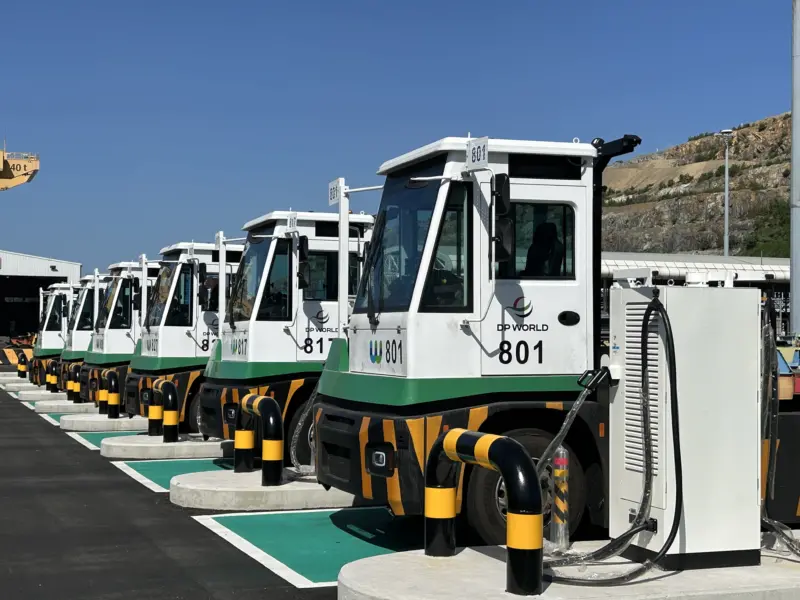
HICO-backed Arenko develops software for managing and optimising grid-scale batteries and renewable energy assets, crucial solutions given the growing importance of flexibility and intelligent energy management. Another HICO investment is in Elonroad, the Swedish company whose conductive charging technology can be built directly into port roads. This allows electric terminal vehicles to charge automatically while they drive or load, reducing the need for large batteries and conventional charging parks.
As ports electrify, coordinating energy use, vehicle charging and equipment in real time will require reliable data exchange, making digital connectivity an essential part of the wider infrastructure upgrade. Druid Software provides crucial connectivity to ports, with private 4G and 5G networks designed to give automated equipment and operational systems the secure, low-latency communications they need.
These are not futuristic concepts, but technologies being developed and deployed in ports today. There is, however, a fundamental dependency: none of them can deliver their full potential without the underlying infrastructure to support them. Electric charging technology still needs access to sufficient power; autonomous systems need the physical space and systems in which to operate; and connected ports need resilient networks and power supplies. The message for port developers is clear: the innovation is coming. The question is whether the energy and infrastructure networks will be ready to make use of it.
As port electricity demand rises, technologies that improve operational efficiency and make better use of available capacity will become increasingly valuable.
Cleantech start-up Modjoule provides another example of the kind of technology that can complement investment in port energy infrastructure. The company is developing high-efficiency power systems for refrigerated transport and storage, targeting one of the energy-intensive parts of the logistics chain. HICO invested in Modjoule in 2025, supporting its development of systems designed to reduce fuel use and emissions without requiring fundamental changes to existing refrigerated operations.
The technology doesn’t replace the need for grid reinforcement, but it illustrates the broader opportunity. Investment in electricity infrastructure can provide the capacity; intelligent technologies can then help ports use that capacity more efficiently. For operators facing rising demand from shore power, electric handling equipment, refrigeration and other applications, that combination will be increasingly important.
Shoring up power infrastructure
The common thread is that the energy transition is not a single technology story. Ports will need to accommodate electricity, alternative fuels, energy storage, digital systems and potentially new forms of propulsion, often within the same estate.
This is particularly significant because shore power is only one part of the equation. As ports decarbonise their own operations, demand for electricity will rise further. Electric cargo-handling equipment, vehicles and charging infrastructure will all compete for available capacity. At the same time, some ports are positioning themselves to support new energy industries, including hydrogen and other alternative fuels.
The scale of the challenge becomes clearer when considering how little shore-power infrastructure currently exists. As of February 2026, the government was aware of just nine
UK ports, harbours, terminals, marinas or wharves with operational shore-power units, with two more being installed. In the latest figures from Europe, around 760 of 870 shore-power connections were still missing from qualifying seaports, ahead of the fast-approaching 2029 shore power deadline.
These figures, however, are likely to improve as environmental requirements on vessels at berth become more demanding, especially in light of new Emissions Trading Scheme rules for maritime coming into play in 2027.
One of the greatest advantages of electrification, outside of meeting decarbonisation targets, is that it offers ports a pathway towards lower total cost of ownership and greater operational resilience. Higher energy efficiency and reduced maintenance requirements of electrified systems can lower lifetime equipment costs; transitioning from diesel reduces direct exposure to oil price shocks and disruption to fuel deliveries; while on-site generation, battery storage and intelligent energy management can give operators greater control over electricity costs and supply.
If Britain wants its ports to leverage these strengths, electricity capacity, long-term cost and reliability need to become part of strategic port planning. Grid reinforcement, connection times, future demand and total cost of ownership must all be considered when investment decisions are being made – not once the cranes are installed and the ships are waiting at the berth.
The next generation of port infrastructure will not be defined by deeper channels, bigger cranes or larger warehouses, but by how much power can reach the quayside and how intelligently that power can be managed. A critical national issue, electrification is not a means to an end for achieving decarbonisation goals and regulatory compliance, but about the industry’s resilience, efficiency and long-term international competitiveness.
Related Articles
 ENERGY & TECHNOLOGY GREENPORT
 ENERGY & TECHNOLOGY GREENPORT
 INSIGHT & OPINION GREENPORT