




Box Terminal Expansion A Response to China Trade
Whilst the leader in Canadas box boom is the West Coasts Vancouver, other ports are rising quickly through the ranks, as Michael Rosenfeld reports.
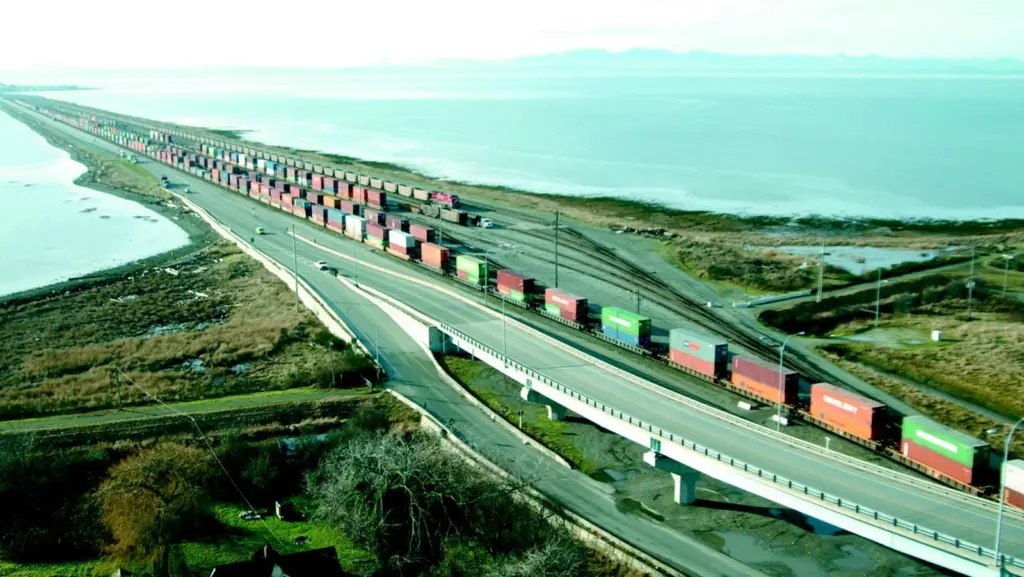
Three recent events signified rapid changes at Canada’s West Coast ports, pointing to the incredible surge in Asia-sourced container traffic across the Pacific, which caused considerable congestion issues through Vancouver in 2004 and early 2005.
On 1 January of this year, Maher Terminals took over operation of the Fairview Terminal in Prince Rupert, as the giant New Jersey-based container terminal operator and the Prince Rupert Port Authority prepare to convert the remote general cargo facility into a full-scale, US$90m high-capacity container terminal.
On 3 February, Fraser Surrey Docks posted photographs of their two new container cranes being erected at the Doosan factory in Korea. The two cranes were loaded to a Dockwise Express ship in March. After arrival in Fraser River Port, the two cranes are now being commissioned.
The next day, the Canadian government announced it was increasing the borrowing limit for the Vancouver Port Authority (VPA) from US$222m to US$400 million. The VPA had less than US$32m of long-term debt at the end of 2003. The expanded debt facility clears the way for commercial financing of the next phases of its container terminal expansion programme. VPA president and ceo Gordon Houston said: “Our borrowing limit is based on our cash flow, ” noting simply it reflects “our ability to pay back a loan.”
The port has enjoyed rapid growth and handled over 1.6 million TEUs last year. Expansion is underway at all three of the port’s container terminals in programmes, which include significant investments by the terminal operators.
TSI – Terminal Systems Inc. operates both Deltaport and Vanterm, and is expanding both. The 160-acre Deltaport is adding a seventh container crane in April. The terminal now handles 1m TEUs annually but is nearing capacity. An expansion project to add a third berth and more land is currently in the environmental review process according to Norman Stark, president and ceo of TSI. “The project is moving along and is expected to be under construction by the end of this year” with the goal to open in 2008.
At Vanterm, two super post-Panamax cranes arrived in April. The terminal is also adding an additional 3-track intermodal yard on the west side plus additional yard support equipment including RTGs and tractor-trailer units as well as 350 more reefer plugs. This will boost annual capacity to more than 530,000 TEUs.
P&O Port Canada Inc. operates Centerm, at 72-acres, the port’s smallest container terminal. A major US$119.5m rebuild began last year as it converts from a top-pick terminal to a high-density RTG operation. P&O Ports expects to more than double annual throughput capacity to 783,000 TEUs by 2006.
In December, Berth 5 was shut down as a 40-foot pile and deck addition is added to the dock face, which will give the berth 50 feet of water depth. When Berth 5 is completed in September, Berth 6 will be closed for a similar rebuild. Two new Zhenhua cranes will arrive from Shanghai in June to give the terminal a total of five. Fourteen RTGs have been ordered from Noell Crane Systems in China for delivery in two lots by February 2006.
RAIL CAPACITY TIGHT As with container traffic elsewhere up and down the North American West Coast, China is pushing much of the business. Rail capacity is so tight on the Canadian Pacific Railway main line that it just concluded a deal with Canadian National for the CN to run eight CPR trains per week through the Rocky Mountains via Edmonton. Like their counterparts in the US, both CN and CPR are feeling the pressure of rapid growth. CPR has imposed limits on intermodal traffic from Vancouver, while CN is struggling to keep up with demand. In February, the VPA had asked for inbound liner customers to cut cargoes by 25% for a period of time until congestion issues were mitigated through the port’s container terminals and onto the rail lines.
Fraser River Park, south of Vancouver, has rapidly established a mark in container traffic. In 2004, Fraser Surrey Dock, the port’s container and general cargo terminal handled 325,000 TEUs up 28% over 2003. As noted Fraser Surrey Dock will take delivery of two container cranes this spring. The new cranes are part of a US$153.5m expansion programme for the terminal and adjacent properties, which also include a new off-dock intermodal yard, operated by IDC Distribution Services, and expanded track by the port.
In 2004, Maher Terminal and the Prince Rupert Port Authority announced plans to create a new container terminal on the site of the 50-acre Fairview Terminal. It was the most striking sign that after a few years of difficulty, the port was re-emerging as a significant factor on the West Coast. While the port is still negotiating some financing, engineering work by Moffatt & Nichol is already underway on the project. By 2006, the terminal will be re-created as a 400,000TEU facility with three post-Panamax cranes and on-dock rail. The key to the terminal is rail capacity – an under-utilized CN mainline track stretching east to the Rockies.
Related Articles
 NORTH AMERICA
 CONCESSIONS & INVESTMENTS