![GreenPort[PortStrategy]](https://www.portstrategy.com/greenport/wp-content/uploads/sites/4/2026/09/GreenPortPortStrategy.svg)



Baltimore Bridge collapse could lead to cargo claims
Transits are being delayed, potentially spoiling cargoes, as the aftermath of the Baltimore Bridge collapse continues to impact shipping in the area.
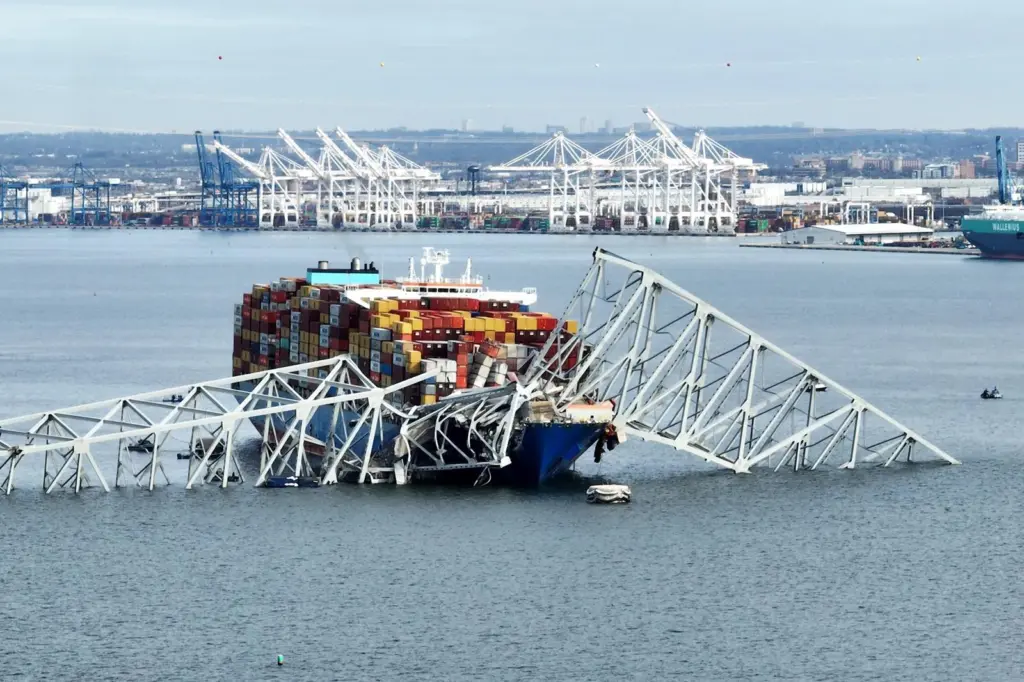
The Francis Scott Key Bridge collapsed in the early hours of 26 March when it was hit by the Dali, a 10,000 teu vessel operated by Synergy Group and time-chartered by Maersk.
Nick Evans, head of product at UK-based insurance facilitator, Insurwave, warns that ships are being held for three weeks increasing the likelihood of substantial cargo claims because of spoiled goods or simply late delivery.
“It’s common for even a large ship to remain in port for as little as six hours, with turnaround times especially important if the vessel is carrying perishables, like grain or other foodstuffs,” said Evans.
“If we look at the vessels currently still stuck on either side of the collapsed Baltimore Bridge, some of them are quite large. These larger vessels will likely need to wait until there’s a totally clear passage through the harbour, which will be majorly disruptive for the ship owner and those waiting on its cargo.”
Smaller vessels are able to navigate a safe passage near the eastern end of the bridge but the depth here is such that the larger vessels would be grounded. Container vessels seem less affected and Evans puts this down to itineraries being adjusted to avoid the area entirely.
“The other stranded vessels awaiting entry to the port are largely bulk carriers, again, mid-sized ones,” continued Evans. “These will essentially all have to wait for passage through the main channel, though again the timing of this is not yet clear.”
“It’s likely we will see a very high number of cargo claims resulting from this, particularly given the majority of the vessels are bulk carriers.
Related Articles
 CONCESSIONS & INVESTMENTS