


Breaking new ground
Australias premier port readies itself for a new era in container business. Iain MacIntyre reports
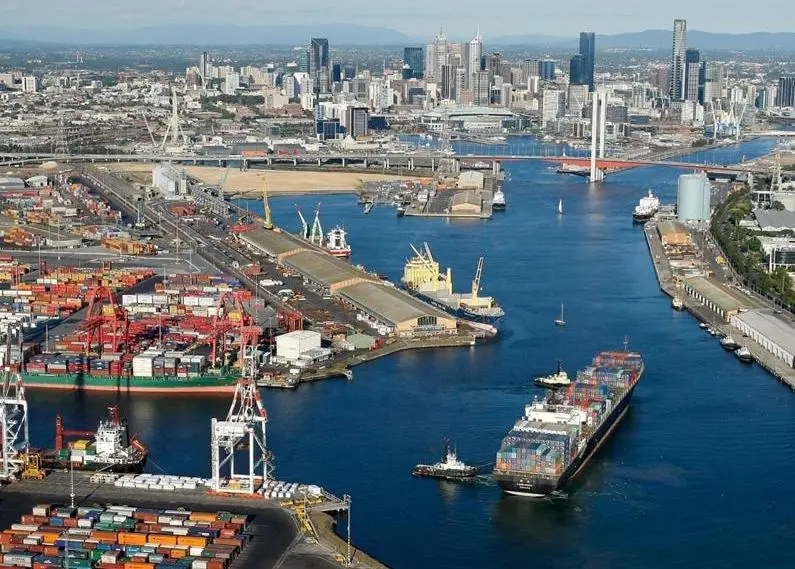
Australia’s leading container and general cargo port, the Port of Melbourne Corporation, broke new trade ground in the 2011-2012 financial year while also setting the foundations for “the most significant expansion in a generation”.
During the year to June 30, total trade volume rose 9.1% to a record 87m revenue tonnes and container throughput lifted 7.8% to a record 2.58m teu — representing about 35% of Australia’s total international container trade.
In non-containerised cargo terms, dry bulk climbed 20.9% to 4.2m revenue tonnes, new motor vehicles increased 0.1% to 4.7m revenue tonnes, breakbulk rose 8% to 4.9m revenue tonnes and liquid bulk lifted 21.4% to 6.4m revenue tonnes.
The port’s continuing growth has undoubtedly been enhanced by the aggressive commitment to infrastructure development of the PoMC, which was introduced in mid-2003 by the Victorian Government under the Transportation Integration Act.
Go deep
One of the most notable projects it has recently undertaken was the almost A$1bn (US$1.05bn) investment to deepen its Port Phillip Bay shipping channels. Completed towards the end of 2010, this development increased draught from 11.6 metres to 14 metres and instantly resolved an issue potentially affecting 60% of its containership callers at the time, as well as remedying an identified future constraint.
Expressions of interest have now been invited for the new A$1.6bn (US$1.68bn) Port Capacity Project, which includes the creation of a third container terminal in order to meet short to medium term trade growth and a purpose-built motor vehicle terminal.
PoMC chairperson Mark Birrell says this “historic expansion” of Webb Dock will consolidate the Port of Melbourne’s status as the pre-eminent container and car port in Australia and as a key economic asset for both the State of Victoria and the nation.
“Significantly, this infrastructure development will also underpin the port’s role in meeting the global trade needs of southeastern Australia – today and for years to come,” he says.
“Already the nation’s busiest destination for container and general cargo, the past year has reaffirmed the Port of Melbourne as the nation’s leading logistics hub – it’s Australia’s port. PoMC recognises that growth poses many challenges, but we remain focused on ensuring that the port operates in a sustainable and efficient manner.”
Money maker
The 2011-2012 year was also a notable one financially for the PoMC, with revenue rising 44.2% to A$349.3m (US$367.1m) and after-tax profit lifting 155.9% to A$99.8m (US$104.9m). However, PoMC chief executive Stephen Bradford notes the accounts were impacted by both an A$57.4m (US$60.3m) after-tax boost from the receipt of assets from the Department of Transport and an A$16.8m (US$17.6m) after-tax loss in superannuation investment due to a decline in the Australian Government ten-year bond rate.
“Taking into account the impact of these two abnormal adjustments, PoMC’s underlying profit of A$59.2m [US$62.2m] compares favourably with the equivalent A$39.3m achieved in 2010-2011 [a 50.6% increase],” he says.
“The underlying profit also underpins a strong balance sheet which is crucial for a self-funded agency, particularly as PoMC undertakes a significant programme of capital works to increase capacity for the container and automotive trades.”
In addition to the Port Capacity Project, the PoMC is also targeting the following during the 2012-2013 financial year:
- Longer-Term Port of Melbourne Development Strategy – determining the optimal balance between cargo handling demand and capacity requirements to meet projected growth across all trades in the medium to longer term;
- Port System Performance Monitoring Framework – enhancing PoMC’s understanding of systems performance to achieve maximum cargo handling capacity and efficient transportation to and from the port;
- Port System Strategy (Landside Transport Plan) – defining the transport network to optimise rail and road productivity;
- Stakeholder Engagement Framework – enhancing PoMC’s understanding and engagement with stakeholders to balance planning and development activities with optimised economic, social and environmental outcomes for Victoria; and
- Strategic Land Use and Interface Planning Study — providing PoMC with a suite of information and strategic options to ensure effective response to the evolving Melbourne planning and land use issues.
Related Articles
 CONTAINER & CARGO HANDLING
 CONTAINER & CARGO HANDLING