
Building a future
Dave and Iain Macintyre explain why a change in government has thrown the spotlight on Victorias port options
A landslide win for the Victorian Labor party has thrown open the question of where the state will choose to site its future container port, as a complement to the Port of Melbourne.
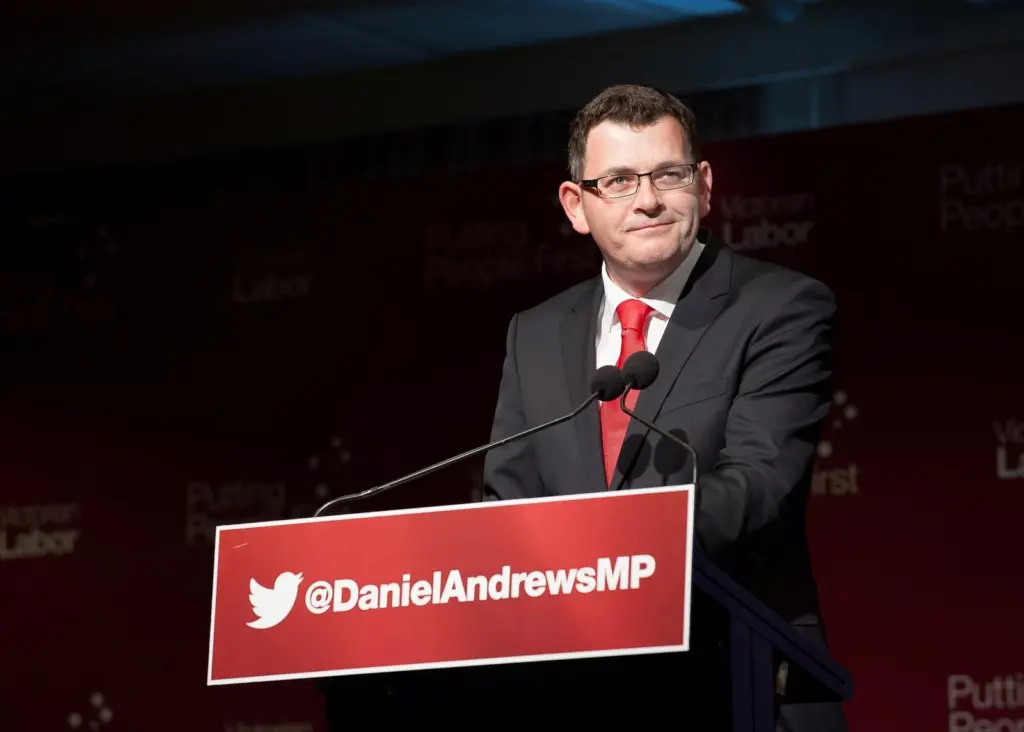
A swing of up to 3% against the ruling Liberals at the end of November tipped out the incumbent government of Dr Dennis Napthine after only one term in office; a feat which had not occurred in more than 60 years, and paved the way for Labor’s Daniel Andrews to be sworn in as Premier.
The location of Victoria’s second container port was one of the key points of difference between the Liberal and Labor parties during the election, with Labor favouring the Bay West option between Werribee and Geelong as opposed to developing Hastings.
One of Mr Andrews’s first acts was to appoint Luke Donnellan as Minister of Ports, who will pilot the new container port debate while Mr Andrews himself will personally oversee the sale of the Port of Melbourne.
Prior to the election, a new study appeared to give the Bay West option a significant boost, based on studies of the area’s subsea terrain.
Former World Bank ports consultant Gerry Byrne, coastal and environmental consultant Water Technology and independent property and construction practice Rider Levett Bucknall conducted the study and found there was no basalt offshore in the area of a possible port near Werribee.
Before their analysis, it had been thought that the western side of Port Phillip Bay sat mostly on basalt, making large-scale development too costly. The previous government however also held fast to the belief that any site in the west would be compromised by the need to deepen the heads, as well as significant dredging, which would run into environmental issues as well as be a cost inhibitor.
Whereas Hastings in the east is a natural deepwater port and will require minimal dredging.
Mr Byrne’s conclusion however was that some Bay West sites at least are feasible. He called on the government to undergo “a real comparative analysis of the total benefits and costs of Bay West and Hastings on the same basis”.
Further investigation
This fits with Labor’s pre-election stance that options to the west of Melbourne need to be investigated before a final decision is made on the location of Victoria’s next container port.
Minister Donnellan confirmed to Port Strategy that the new government is definitely going to open the door to new options.
“The Labor Government’s position is clear – a comprehensive and transparent cost benefit analysis would be undertaken to test how Bay West stands up against other possible sites, including Hastings.
“The Victorian Government will establish Infrastructure Victoria to provide independent and transparent advice about key infrastructure projects – to take the politics out of decision making.
“There are many factors that support Bay West as the appropriate site for Melbourne’s second port. A number of reports have supported locating a new port at Bay West on the basis of cost as well as for the advantages it has over Hastings which for example does not link to freight rail,” he said.
The freight industry’s view is that wherever the container port is to be established, it needs to be done quickly.
The Australian Peak Shippers’ Association commented that “we’re running out of time … We’re happy to work with the government on any issues and as far as the new port is concerned – just get it sorted.”
Attracting investment
Elsewhere in Australia, port development is also high on the agenda in different states, with the thought of privatisation – or at least attracting outside investors – a major driver.
Northern Territory chief minister Adam Giles has introduced two bills to parliament in order to establish a new regulatory model for the port of Darwin and other territory ports.
Mr Giles said the new model was not a proposition to sell the port, but a call for a long-term private investment, with the regulatory structure giving the private sector confidence of secure tenure.
Over in Western Australia, Fremantle Port has boosted its exposure to the container trade by opening three infrastructure projects worth A$65.6m (US$53.8m) in state and Federal investment – an industrial park on reclaimed land, an extension of the rail terminal at North Quay and the construction of a crossing loop at Spearwood.
The extension of the North Quay Rail Terminal line from 400 to 690 metres is designed to reduce turnaround time for trains and create a better interface with the two container terminals, increasing the port’s competitiveness and capacity for growth.
The crossing loop also increases efficiency and capacity by accommodating more freight train movements during the day and minimising delays.
Further south in Western Australia, the Southern Ports Authority, which comprises the former ports of Esperance, Bunbury and Albany, is bringing a new regional focus to port planning.
The merged ports will continue to have a locally-based port manager, and each port will operate as a separate business unit, but the new Southern Ports Authority will oversee strategic and port development, planning, policy and priority setting, financial planning and budget allocation.
Tauranga expansion
On the opposite side of the Tasman Sea, the rivalry between the two major North Island ports – Tauranga and Auckland – has spread inland.
Port of Tauranga is in the midst of a significant investment programme both within its own port gates and into the heart of the South Island as it seeks growth opportunities.
Having taken a 50% shareholding in PrimePort Timaru late in 2013 and assumed operation of its container terminal, Tauranga has recently secured resource consent to develop a 15-hectare intermodal freight hub at Rolleston near the South Island’s main city, Christchurch.
Work is now underway to construct the rail siding, pavements and infrastructure at the hub, which is due to become operational by early 2015.
Port of Tauranga chief executive Mark Cairns sees the Rolleston development, which is located within a 180-hectare industrial park, as emulating the highly successful MetroPort Auckland inland port.
“The hub is just 12 kilometres south of Christchurch, with very good town planning, having excellent road and rail connections,” he says.
“It will have a 500-metre rail siding, big enough for 75 teu trains. Exporters will be able to aggregate cargo bound for our container terminal at Timaru and importers will be able to efficiently access the fast-growing Christchurch domestic market from this well-located site also.”
Kotaki partnership
Underpinning this expansion is Tauranga’s deal with Kotahi, the freight management arm of giant dairy exporter Fonterra, and Maersk Line. This agreement will see Kotahi provide up to 1.8m teu of export cargo to the Port of Tauranga directly and “significant” volume to the Timaru Container Terminal over the next decade.
With Kotahi also committing to ship 2.5m teu with Maersk Line during the period, the latter has introduced a new 4,500 teu service to Malaysia and confirmed it will evolve to 6,500 teu vessels once the Port of Tauranga can accommodate them.
Port of Tauranga chairperson David Pilkington says tenders will soon be called to undertake the necessary harbour and channel-dredging work, which is expected to see his port able to begin accommodating bigger vessels by 2016.
“This NZ$50m investment will complete a NZ$250m capital expenditure programme that prepares us for the future.
“This programme includes an extension to our Sulphur Point wharves, an upgrading of our tug services, the addition of container cranes and straddles and our strategic investments in the South Island,” he says.
Big rival Auckland meanwhile is also embarking on investments to protect its own patch. In collaboration with the Port of Napier and cold storage and logistics firm Icepak, Ports of Auckland is developing and inland port and logistics centre at Longburn (Palmerston North), in the centre of the North Island.
A former freezing works with an existing cold store and main trunk line connection, the nine-hectare site is undergoing a NZ$20m investment to develop a cross-dock, container yard and wash facility to prepare containers to export-ready standard.
Ports of Auckland chief executive Tony Gibson says the development places the port gate on the doorstep of the region’s importers and exporters “creating opportunity for both and driving cost out of the supply chain”.
“Currently imports come south from Auckland but not much goes back,” he says. “This new facility will allow exporters to access this spare capacity, lowering freight costs all round.”
In partnership with Netlogix, Ports of Auckland has also launched an open and collaborative container logistics and distribution services network to specifically harness “empty latent capacity” throughout the country’s supply chain, called Nexus Logistics.
Historic dispute nears resolution
A three-and-a-half year industrial dispute between Ports of Auckland and the Maritime Union of New Zealand is about to draw to a close with the pending signing of a collective employment agreement.
Understood to be the longest-ever dispute on the waterfront, the at times quite bitter feud caused considerable disruption to New Zealand’s supply chain on numerous occasions.
Following a recent breakthrough in negotiations, MUNZ opted to withdraw from pending proceedings alleging the undermining of collective bargaining by the port company.
MUNZ president Garry Parsloe says the substantive issues around money, the length of the collective agreement and contracting out have now been settled and discussions were underway to clarify the finer details.
“The company will get a lot of the flexibility they want and all we want is some family time so we’re not under the hammer all the time,” he says.
“Right now there doesn’t seem that much between us. There really is no more need for negotiating. It is a matter of getting the [work] schedules together and then we can sign the collective.”
Despite the length of the dispute, Mr Parsloe says ultimately there were only “two or three issues” to be resolved when the parties came back together.
“The pressures of the argument over contracting out – because of the nature of where we have gone and the flexibility of rosters and so forth – have disappeared. As per any negotiations, sometimes the big things disappear when the little things are fixed.
“I am hearing back from my members on the docks that there is a better attitude, people are a little happier and feel that we have got somewhere. A happy workforce is a good workforce, so I assume both the port company and ourselves will be happy with it.”
New options for Melbourne sale
The Australian ports and shipping industry is waiting to see the final shape of the sale of the Port of Melbourne, after Labor’s election victory presented new options.
Pre-sale preparation is being undertaken by investment banks Morgan Stanley and Flagstaff Partners, and a scoping study for the privatisation previously completed by KPMG recommended a 40-year lease, supported by the federal government.
However Labor, which gained power in late November, has previously said it would prefer a longer-term lease of 99 years. Labor has also said that to provide any potential investor with certainty, it could sweeten the contract by offering the successful leaseholder the chance to also develop or lease the new port that is being mooted to serve Melbourne’s needs.
Melbourne currently handles about 37% of Australia’s container trade but is expected to reach its capacity of about 8m container movements a year about 2035, making the development of a new port a priority.
One thing that will not change is the commitment to go ahead with a sale, which the state needs to fund other infrastructure spending, particularly on rail. Labor has said it wants to make “very significant progress in the first calendar year”.
Interest is expected to be high. Brett Himbury, chief executive at IFM Investors, which bought the Sydney and Kembla ports in New South Wales for more than A$5bn, said there would be demand from investors for the Port of Melbourne.
Mr Himbury said providing the winning bidder with some rights concerning a potential future competitor would increase the appetite.
The sale is expected to raise between A$5bn-A$6bn.