




Breaking the mould
Innovation abounds in breakbulk handling and operations management. Alex Hughes investigates
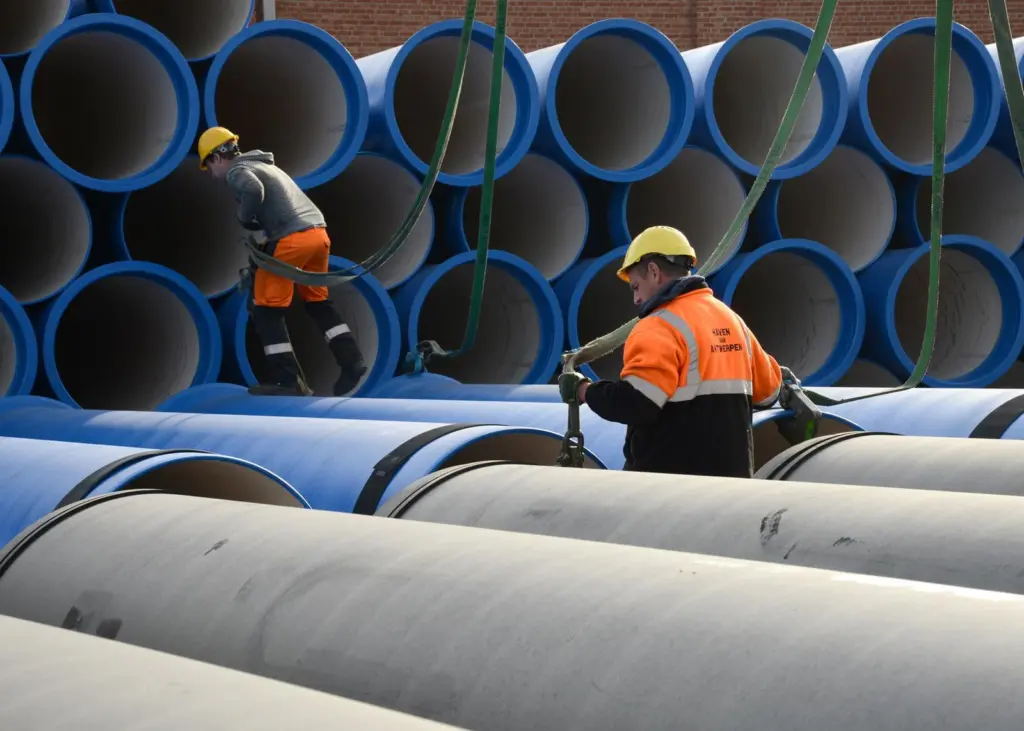
Breakbulk cargoes with their unique characteristics present somewhat of a port management challenge. They don’t neatly fit specialist container or dry bulk operating systems, leaving ports to break the mould to find a solution that fits.
Take Georgia Ports Authority, who has taken the somewhat unusual step of developing its own software to oversee the handling of breakbulk traffic. Information technology director, Bill Sutton, explains that the port handles a combination of containerised, bulk and breakbulk traffic, as well as being responsible for all warehouse operations.
NAVIS is used to manage the majority of its business needs. “While the software is excellent for containerised business – and very good in the control of the inventory of non-containerised cargo – it did not match our business needs for the reception and delivery of non-containerised goods. We therefore decided it was in our best interest to build front-end companion systems to manage the receipt and delivery of the cargo while managing the inventory itself on Navis,” he says.
Development of this software has taken place over the past two years, using a team of in-house staff, which includes designers, developers, EDI experts and end users. Mr Sutton additionally notes that: “A thorough cost-benefit analysis was performed prior to commencement of the project, assuring us our investment would be a worthy effort.” Furthermore, he adds that having such a system at Georgia “differentiates us in the market place”. Development to date – with the exception of the electronic transfer of manifest information (for both import and export), has been limited to landside operations, although vessel-related options will be considered in future phases.
Commenting on how GPA previously organised the handling of breakbulk traffic, he says: “Other automated tools were used to manage our accounts. However, they were just not robust or efficient enough, nor did they provide the level of reporting or resiliency as the tools that replaced them.”
Part of the design of the new software enables real time tracking of consignments to take place. Mr Sutton says: “To be efficient and cost effective in today’s logistics market place, providers just have to be able to provide real-time status of cargo.” He believes that GPA now has tools in place to allow it to offer better reporting to its customers and to provide more resilient systems. “The EDI we have enabled allows our systems to communicate real-time with our customers’ systems, providing a much more efficient reporting and processing tool for all parties involved in the process,” he says.
Maintaining pace
At the Omani port of Sohar, software programs used to control traffic are among the most advanced in the region, and are operated by global partners that have developed an international network of expertise and experience.
According to Edwin Lammers, executive commercial manager at Sohar Port and Freezone: “The speed with which technology is advancing means we must continue to review our systems in order to maintain pace with the industry. Last year, for example, we signed an agreement with Belgian firm, Phaeros, to provide a port management system that allows us to gather information on vessels that are planning to call at the port, track vessel movement, and generate invoices for services provided. This allows ships to request port services online, while suppliers are also able to access the system and better plan their resources. While not directly related to the loading and unloading of breakbulk cargo, the efficiency of vessel movements has a knock-on-effect on cargo handling.”
Nevertheless, real time tracking of breakbulk remains a little more challenging. The very nature of the cargo, he suggests, means that this is difficult but not impossible. For now, though, the port is relying on traditional methods.
In 2014, Sohar registered growth of 51% in the breakbulk sector. “As with any supply and demand relationship, this is a reflection of needs within local industries, as well as being down to a global marketing campaign that has enhanced our reputation as a significant logistics hub,” says Mr Lammers.
In future, he sees huge potential in breakbulk growth from China. One reason is the Gulf’s construction sector, which is a big generator of breakbulk and project cargo. Both Saudi Arabia and the UAE are increasing their spending on construction, while Oman itself awarded $3.53bn in infrastructure tenders in 2014.
“As demand for breakbulk imports grows, we aim to attract cargo volumes to Sohar. Unlike other ports, we have the space, competitive energy rates, and a skilled workforce to cater to Chinese and other investors in various global supply chains,” he says.
In captivity
As to whether the breakbulk traffic Sohar attracts is ‘captive’ or could conceivably go elsewhere, Mr Lammers admits that there is regional competition in this market, so “no traffic is ever truly captive”.
“Ports do have to have competitive rates, though, and that is where we are able to capture and retain business. For now, the traffic we handle is sufficient that we feel comfortable in using it as a springboard for further growth.”
Meanwhile, Mr Lammers does not subscribe to the school of thought that breakbulk will be subsumed by containerisation, which rose 4% globally last year.
“Unless something drastic happens, there are always likely to be goods that are more efficiently shipped outside of containers. Beyond the practicalities of moving breakbulk and project cargo, there is sufficient cargo to generate further growth. However, the current challenge is one of overcapacity, which has driven rates down and stretched the margins of the smaller carriers. But we do not expect that will affect the potential for attracting new business to Sohar,” he says.
In terms of whether the port will have to continuing investing in order to both retain existing breakbulk traffic and generate new flows, Mr Lammers notes that investment is under constant review, even though $15bn has already been spent in the port over the last 12 years.
“At the start of the year, we added a 100 metric tonne capacity Gottwald HMK 6407 crane at the multipurpose cargo terminal operated by C Steinweg Oman. This is a significant investment in itself, and is one which will support the growth of breakbulk cargo, especially as the number of ships and the volume of cargo handled at our terminal continue to grow. It is also an indication of the demand for project and breakbulk, which we have seen rise sharply in line with investment in major new road and rail projects in Oman and the across the GCC,” he says.
Antwerp pushes European status
Antwerp, which has been the largest European breakbulk port for many years, has also invested heavily in IT to enable breakbulk to be better handled: APCS (Antwerp Port Community System) platform connects all parties involved from shipper to carrier, including customs and other statutory authorities.
“We are convinced this is the best ranked IT system currently available today,” says the port authority’s senior business development manager Wim Dillen. “However, like any system, it will have to be continuously ‘evolved and adapted’ in order to meet customers’ expectations in a highly volatile world.”
He attributes Antwerp’s success in building up breakbulk traffic as a function of its location, 85km inland, meaning it is closer to the continent’s most important consumption and production areas, while still accessible by the largest vessels operated today.
“Often, Antwerp is referred to as a Flemish or Belgian port; it is not. It is a European port, reflected by the fact that over 85% of our total cargo volume originates from, or is bound for, neighbouring countries or even places as far afield as Russia, the Black Sea or the Mediterranean.”
Asked how he views the future of this market sector given the rise of containerisation, Mr Dillen points out that, in future, whatever can be containerised will be. However, even if total breakbulk volume declines, the market shares of ports still in the business may change. “The Port of Antwerp is confident that it will be able to defend and even increase its market share of breakbulk,” he says.
In September 2014, Antwerp port authority signed an MoU with its counterpart authority in Houston aimed at improving information exchange and business development. Explaining the move, Mr Dillen says that both ports are leaders in breakbulk on their respective continents and there is historical interchange of cargo between them. “We therefore will jointly look at maritime opportunities that might benefit both parties. Since 2009, for example, trade between us has increased by more than 50%, with growth of 8.5% in 2014 alone,” he says.
Related Articles
 CONTAINER & CARGO HANDLING
 CONTAINER & CARGO HANDLING