


Brighter future
Brazils deepwater Sepetiba foresees a turn around in fortunes in 2016. Alex Hughes reports
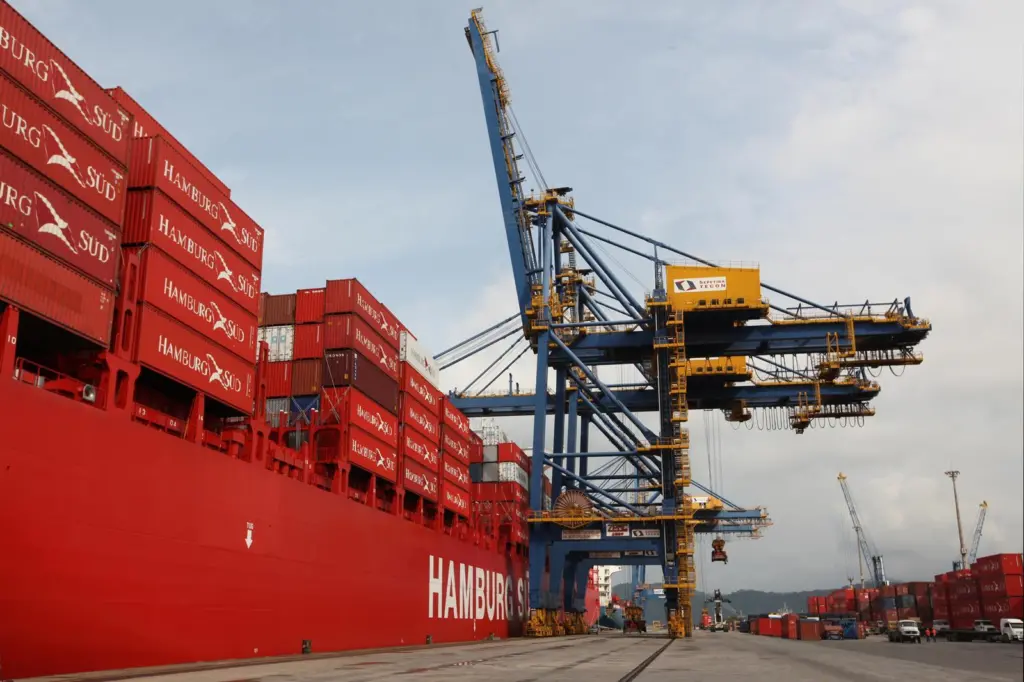
The Brazilian port of Sepetiba, in the western zone of Rio de Janeiro, reported throughput of 242,588 teu last year through its Sepetiba Tecon container terminal compared with 263,717 teu in 2014.
The 8% drop in volumes is attributed to the combination of a dire Brazilian market and the loss of several services. Marketing managing Silvana Ribeiro explains that Brazil is in a serious economic downturn, which has resulted in volumes falling across the board.
For 2016, she forecasts a recovery and hopes that some of the services lost in 2015 will return. “We are predicting a 15% increase in container throughput, returning us to the same level we had in 2014,” she says.
Nowadays, 53% of all movements at Sepetiba Tecon have Asia either as origin or destination point, with China responsible for 39% of the total. As a consequence, Ms Ribeiro anticipates that the slowdown in growth in China is having a considerable impact on Brazil’s economy. This, she says, is manifesting itself in two ways. Firstly, shipping lines are making more frequent “blank sailings” to try and maintain freight rates, which are at historic lows. Secondly, China is one of the main purchasers of Brazilian commodities and therefore its slowdown in growth will result in a drop in demand for these cargoes.
Sepetiba Tecon competes with terminals in the south east of the country, specifically in nearby Rio de Janeiro, where there are two close rivals. “Other than price, shipping lines prefer Sepetiba because of our deep draft, which allows larger vessels to be deployed and the amount of cargo shipped to be maximised. We’re also very efficient, being third in the national league table in terms of productivity,” she says.
As for capacity, the terminal can handle 660,000 teu annually, although plans exist to expand this to 1m teu. This will see the quay lengthened to 1,070 metres and an extra 60,000 square metres added to the stacking area. Dredging will bring the alongside draft to 16 metres, allowing several 14,000 teu ships to be handled simultaneously.
Changing cargoes
There are also changes in the types of commodities now being containerised, Ms Ribeiro notes. “A lot of pig iron is being shipped in container from Sepetiba, while containerised coffee shipments began to become quite common a few years ago.” Nevertheless, grains such as soya and wheat are not yet being shipped in containers, although Ms Ribeiro, says that in other ports, such as Santos and those in the south, which are much closer to the grain growing regions, such shipments are increasing exponentially. “The advantage of transporting these via containers is the possibility of capturing a slice of the business generated by small producers, providing distribution facilities, reducing costs and protecting grain from changes in the weather,” she says.
Year after year, she notes, vessel sizes seen at the terminal have grown, with the facility already handling the largest container vessels seen at any Brazilian port, suggesting that Sepetiba could become a natural hub port, especially given a draft of 14.3 metres, one of the deepest in the country.
“Given the current downturn, we aren’t expecting a large growth in vessel sizes over the next couple of years. But once the crisis is over, Brazilian terminals need to be ready to receive even larger ships,” says Ms Ribeiro.
Meanwhile, container traffic normally moves by road in Brazil, although there has been some migration to train as a means of cutting costs. In 2015, rail-hauled units grew by 20%, while Sepetiba is expecting an even larger rise in 2016. “Last year, we launched a new “Door-to-Door” product, which is an integrated logistics service that makes use of rail and this year we aim to expand this to various regions of the country,” she says.
Sepetiba Tecon essentially services three states in a radius of 500km, these being Rio de Janeiro, Minas Gerais and São Paulo, although the facility also targets business in Espírito Santo, Bahia, Mato Grosso do Sul and Goiânia. Rio de Janeiro is the main import destination, while exports are mostly generated by Minas Gerais.
As for investment, new software packages are to be introduced this year to allow more automation of the terminal, while over the next two years a dredging programme is scheduled, with two new cranes and 12 rubber-tyred gantry cranes to be bought.
Related Articles
 CONTAINER & CARGO HANDLING
 CONTAINER & CARGO HANDLING