


A digital future for shortsea
Data sharing, collaboration, digitalisation and innovation are all key to the future of the shortsea shipping market
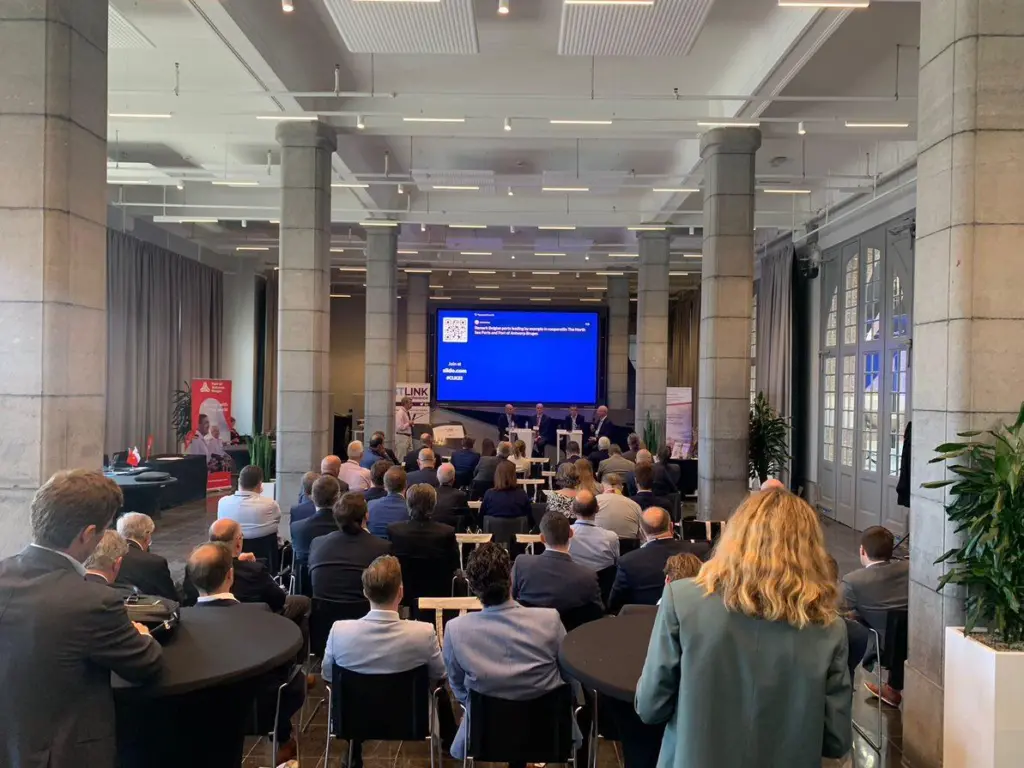
That was the take home from the number one event for the shortsea sector, back in person for the first time in two years at the Port of Antwerp-Bruges.
Coastlink, which took place from 11 to 12 May 2022, focused on key themes that are hot topics in the sector – digitalisation, innovation and collaboration and building back bigger and better after the challenges of the last few years.
Clear vision
The conference was opened by Michiel Vermeiren, manager maritime business & market intelligence at the Port of Antwerp-Bruges, who talked about the newly merged port which has a a clear vision to become a world port that reconciles economy, people, and the climate.
He said that by focusing on bolstering interconnectivity between the Antwerp and Bruges sites and achieving economies of scale in digitalisation, the unified port will contribute to the efficiency, reliability, and sustainability of the logistics chain.
One of the highlights from day one was the session by Nils Minor, general manager sales west & central Europe for Unifeeder, who highlighted some of the challenges facing the market in his keynote address.
Discussing the challenges with capacity constraints, port congestion and an increase in costs, Nils commented that his company has seen a transition from seasonal cargo levels to “a continuous high demand of cargo”, with the further challenge of managing increased tonnage rates and bunkering costs.
Nils went on to discuss the opportunities Unifeeder are developing in sustainable shipping and logistics. Whilst sourcing alternative fuel types and vessels, play a substantive role, Unifeeder are also investing in technology to track emissions throughout the entire supply chain providing transparency on data to clients and suppliers.
Improving efficiency
On day two of Coastlink, the focus was on improving efficiencies through digitalisation and innovation.
Ferhat Acuner, general manager of Navtek, focused on the decarbonisation of ports and specifically the work his company is doing on the Zero Emission Electric Ports (ZEEPORT) project.
The project takes a fully integrated approach that encapsulates the principles of circularity, water resources management, marine ecology, waste management and air quality. Its preliminary feasibility study includes the use of renewable energy sources – solar, wind turbines and biomass, to reduce CO2 emissions and noise pollution, driving forward greener and more efficient ports.
Coastlink 2023 will take place on 3 and 4 May at the UK’s Peel Ports Group, Port of Liverpool.
For full information and how to get involved visit the Coastlink website or contact Sally Wattam at swattam@mercatormedia.com
The sensible option
Catrien Scheers, Coastlink speaker and chair of Fast Lines Belgium, talks to GreenPort about why shortsea shipping makes sense, especially when it comes to the environment
What in your opinion are the opportunities for shortsea shipping?
The opportunities are plenty. Shippers should choose shortsea because it is a great alternative for traffic jams. With small coasters you can enter deep into the hinterland. Shortsea ships consume less fossil fuels per tonne/km than planes, trucks or trains.
Breakbulk shortsea and oversized and overweight cargo are a perfect match. Ships are getting bigger. These mega ships are not able to discharge in small ports and this is where shortsea steps in. Shortsea ships are ideal for transshipment. Shipping large volumes is often profitable by shortsea.
Whether you want to ship containers, trucks, windmill blades, name a cargo and there is a shortsea ship for it.
With a shortage of containers it is interesting to shift cargo back from containers to breakbulk shortsea and to look for cargo closer to home, also called near-shoring.
Brexit and the shortage of truck drivers are also a good reason to use shortsea shipping. When the UK voted for Brexit, we at Fast Lines Belgium decided to turn the Brexit shock into an opportunity. We rethought some of our customers flows starting from a blank slate. As architects of transport we looked for a solution to cut the UK land bridge, thus, avoiding extra customs formalities and not having to use trucks when there was a shortage of truck drivers.
Starting from March 2020, Fast commenced the Bel-Eire Lines service, which is a conventional breakbulk liner service connecting the Port of Antwerp-Bruges to the Port of Drogheda, shipping goods from an EU port to an EU port. Today, we ship all types of breakbulk and general cargoes such as steel products, bagged material, palletised goods, cargoes previously trucked via UK land-bridge to Ireland, smaller lots difficult to ship as full and complete cargo, project cargo and transshipment cargoes.
The cargo is shipped with Fast Lines Belgium’s box shaped coasters.
How does shortsea contribute to the 17 Sustainable Development Goals (SDGs)?
Transport is one step in the total lifecycle of a product. I gave a TED X Antwerp talk where I make a plea for one new game changing universal SDG label whereby the United Nations 17 SDG’s are the driving force and building block that makes the life cycle of all products fully transparent from ‘cradle to grave’.
This label would make shortsea visible. Like I mentioned, shortsea is a great alternative for congested roads making cities less congested. With small coasters you can enter deep into the hinterland. Shortsea ships consume less fossil fuels per tonne/km than planes, trucks or trains.
What initiatives is the Fast Group taking?
Fast has received the FORWARD Belgium (the professional association of the Belgian forwarders) SDG label.
We implement the SDG’s step by step and day by day. Firstly, SDG 5 gender equality: Fast supports women in shipping and trading (WISTA), gender diversity and inclusion.
It closely follows SDG 11 sustainable cities and communities: Shortsea shipping is a sustainable form of transport. As architects of transport we advise our customers about the most sustainable forms of transport.
SDG 3 good health and well-being: We take care of our people’s well-being e.g. during the pandemic.
SDG 14 life below water: We are installing ballast water treatment systems in our shortsea ships.
SDG 17 partnerships for the goals: We must build even cleaner and smarter shortsea ships. This comes with challenges. Shortsea ships are built with a lifespan of 30 years. Today the average age of shortsea vessels of sizes ranging between 2600 and 4500 tonne deadweight are 20+ years. There is a dilemma. At this moment we cannot sail emission free, yet and what is the appropriate propulsion of the future? What about autonomous sailing? Confusion is the name of the game. Shall we invest in old school ships on MGO, equipped for a full crew today? Will this type of ship become obsolete and if so, when?
We are working with stakeholders across the industry to find answers together because we cannot build the future of shortsea shipping alone.
What were the take homes from your presentation?
I started with a painting showing Antwerp during the 16th century.
Shipping and trading brought prosperity to Antwerp and made it the undisputed metropolis of the Low Countries. It also caused mass migration, shortage of housing and drinkable water. On top of that there was immense ship congestion. One young genius entrepreneur, Gilbert van Schoonbeke (1519-1556) found solutions to the problems raised.
Challenges are pert of life. In this ‘VUCA’ world we face major challenges too that affect our shortsea shipping industry like Covid, conflicts, lack of standards, overload of regulations and paperwork, technological disruption, cybersecurity, climate change, demographic changes…etc.
Let us shift up a gear and try to turn some of these challenges into opportunities.
The biggest challenge however is the implementation of the UN SDGs.
To conclude, challenges teach us to re-think together beyond bubbles and silos. We must work smarter instead of harder to create value and make our planet in line with the SDGs.
Related Articles
 COASTLINK GREENPORT
 COASTLINK GREENPORT