





Emission trading system – will it be effective?
As part of the Fit for 55-package published in July last year, the Commission issued a proposal to include emissions from maritime in the EU Emission Trading System (EU ETS).
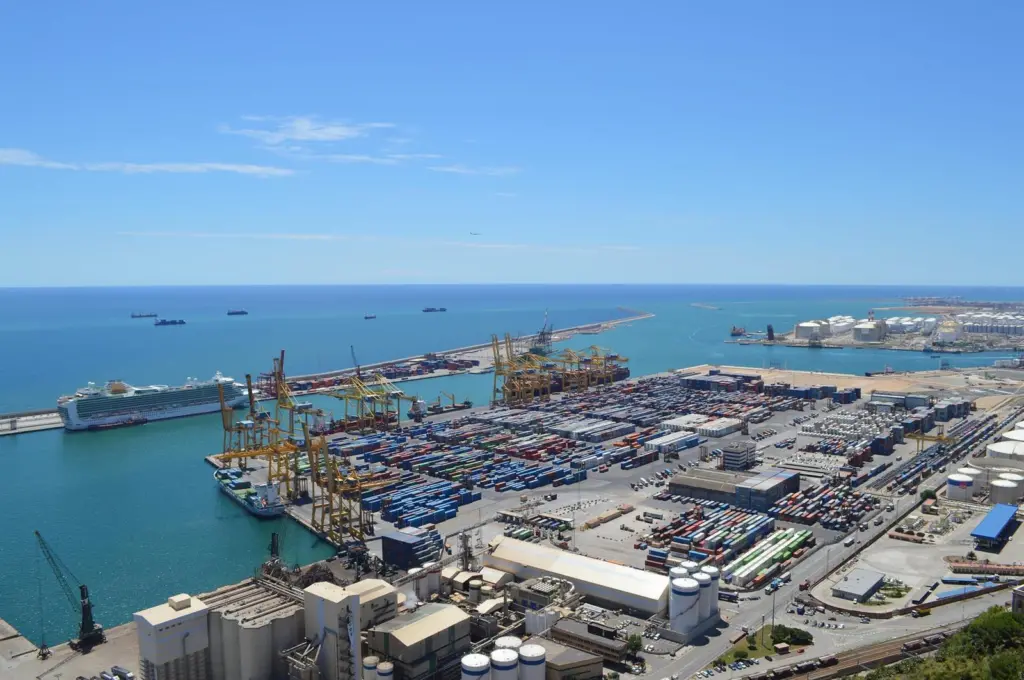
In essence, the proposal extends the ETS to voyages involving ports in the EU. For Europe’s ports, the greening of shipping is a priority and ambitious policies are needed to deliver significant emissions reductions from the shipping sector.
Putting a price tag on emissions could be a strong instrument to stimulate the sector to choose greener solutions. But this will require a robust ETS that makes it hard for individual vessels to avoid the system, effectively enforcing the polluter pays principle. However, considering the setup of the Commission proposal we fear that the effectiveness of this policy is at risk.
Why are Europe’s ports concerned? The Commission proposal for a maritime EU ETS will cover the emissions from all intra-EU voyages and emissions at berth (100%), alongside half of the emissions from extra-EU voyages (both incoming and outgoing voyages). At the end of each year, every shipping company that has called on ports in the EU has to surrender emission allowances to cover the emissions from their voyages, paying for these allowances based on a fluctuating carbon price (which has been fluctuating over the last months between 60 and nearly €100/tonne CO2).
ESPO believes that Europe should be a frontrunner in the green transition and go ahead where needed, in the absence of a global solution. However, the proposal for a regional EU ETS as proposed by the Commission could be avoided by ships in various ways. Such evasion could occur in several different ways and would create both carbon leakage and business leakage for Europe’s ports and the port ecosystem.
Let’s have a closer look at a few possible evasion scenarios.
Possible evasion
Under the current EU ETS proposal, if a deep-sea vessel coming from Asia calls at an EU transhipment port, the emissions from the Asia-Europe leg will account for 50%. The emissions from feeders travelling between the EU transhipment port and different EU ports will be covered 100%. Feeders carrying freight from the transhipment port to a non-EU ports will account for 50% of emissions.
If the same ship would call at a non-EU neighbouring transhipment port, where feeders would depart from different ports in or outside the EU, the result would be the following: the incoming leg Asia-Europe would not be covered by the EU ETS, and only 50% of voyages between the non-EU transhipment port and the different EU ports would be included in the EU ETS. Feeders going to non-EU ports would be excluded as well.
Depending on the ETS scope and the fluctuating price of carbon, there is a substantial risk that the current Commission proposal leads to the transhipment business of European ports moving away from the EU. Even more worrying is that such a delocalisation would not create any carbon savings – quite the contrary.
Furthermore, recent studies on the impact of ETS performed by ports show that the current EU ETS proposal could negatively impact on the connectivity of Europe’s ports, in particular in the Mediterranean. Deep-sea vessels arriving from outside Europe are currently calling at different major ports to load/ unload containers. Under the current EU ETS proposal, emissions will be accounted for 50% on the inbound leg to EU and for 100% during the different calls connecting European ports. To avoid this, the ship might choose a transhipment port outside Europe (outside ETS) from where feeders will serve all European ports (50% ETS). Alternatively, all container could be dropped off at one EU port, from where the distribution is done by lorries, which would lead to a modal backshift. Again, such pattern would substantially reduce the connectivity of major European ports without any gains in CO2 emissions.
Limited scope
Finally, the limited regional scope of the current EU ETS could reduce the attractiveness of some EU ports to be used as gateway for non-EU freight, which is being transported by rail or inland waterways to an EU port, from where it is being loaded on a ship for export. The ETS charge would make it less attractive to use an EU port.
On the basis of many talks with our members, we believe the risk of carbon leakage as well as business leakage for ports in the EU located in the North Sea, the Baltic, the Mediterranean Sea and the Black Sea is real and should be taken serious by the EU legislators.
We also need to acknowledge that the EU-ETS would negatively impact in particular on ports that are strategically important in EU logistic chains and are crucial to their regional economies. So far, there hasn’t been a thorough impact assessment on the impact of a maritime EU ETS based on real traffic flows.
Even if a global approach seems to be the only water tight solution to solve this issue, we think a proposal whereby non- EU neighbouring ports are considered as an EU port for the counting of the emissions could be a step in the right direction. We also believe that the EU should continue to ramp up its efforts to push for a global solution in IMO.
The debate is ongoing in the European Parliament and Council. We see some understanding for our concerns, but finding a workable and legally sound solution won’t be easy.
I believe that it is in the interest of everyone that strong support for an ambitious Green Deal and the greening of shipping is coupled with a careful assessment of the full impact of the policy proposals put forward to help deliver on these goals. Climate ambitions and the greening of the economy should create opportunities for the EU economy, not harm Europe’s competitiveness and cohesion without any decarbonisation gains. The ultimate goal must be to realise the green transition as soon as possible. This requires clear-eyed and factbased policy-making.
Related Articles
 INSIGHT & OPINION GREENPORT
 INSIGHT & OPINION GREENPORT
 PRODUCTS & SERVICES GREENPORT