![GreenPort[PortStrategy]](https://www.portstrategy.com/greenport/wp-content/uploads/sites/4/2026/09/GreenPortPortStrategy.svg)
The best green deal for ports?
The “Green Deal” will be one, if not the biggest priority of the European Commission under President Von der Leyen and here I’ll discuss why.
The importance of the “Green Deal” was largely confirmed when the Communication, setting out the objectives of this ambitious strategy, was launched mid-December 2019. Commission President Von der Leyen spoke about Europe’s “Man-on-the-moon moment” and said this Green Deal should become Europe’s new hallmark.
Since the publication of the Green Deal Communication and ambitions, ESPO has been continuously discussing with its members how this European ambition should be implemented and what should be the priorities for European ports, its stakeholders and customers in this context. In other words, what would be the best Green Deal for ports? Our views were gathered in a position paper released in March, during European Shipping Week.
Let me share our views with you.
Ambition
ESPO clearly welcomes Europe’s ambition to be the world’s first net zero emission area by 2050. Ports can be a key strategic partner in making the European Green Deal happen. It is however important that this ambition is delivered in the most effective way. Moreover, the competitiveness of Europe’s economy must be safeguarded and if possible, even strengthened. The term “Deal” is in fact very well chosen, since realising this objective will require an unprecedented level of cooperation across all policy departments and stakeholders.
European ports consider the greening of the shipping sector as a priority. Even if the shipping lines must be in the driving seat, Europe’s ports are committed to playing their part in helping the shipping sector to make this transition. We should however not work in isolation. Cooperation between ports and shipping lines is required and it goes without saying that energy producers, energy providers and cargo owners should also be involved. Most progress can be made by setting clear goals for emission reduction, while leaving it to the stakeholders concerned to choose the best technology in achieving those goals. A clear goal-based and technology neutral approach will ensure the uptake of clean fuels for shipping, support innovation and avoid stranded assets.
Roadmap
To help the energy transition of the shipping sector, each European port should develop a roadmap featuring a detailed plan for facilitating the greening of the shipping sector. These roadmaps should take account of each port’s particular circumstances (such as vessels, traffic segment, and geography). Cruise or ferry terminals might need for instance other solutions than containers terminals and short sea shipping will be able to use other technologies than deep-sea traffic. The roadmap should also be accompanied by a timeline which engages all relevant stakeholders: The port, shipping lines and the energy sector (producers and providers). As part of the roadmap, European port managing bodies should properly assess the need for investments in clean fuel infrastructure.
In the context of the Green Deal discussions, ESPO members also reflected on the emissions at berth. Even if we realise that, at least for CO2, such an emission reduction standard at berth is in itself not sufficient to achieve the decarbonisation of shipping, we are open to start the discussion not only for CO2 emissions but also for NOx, SOx and PM emissions. We believe that such a standard should initially address berths close to urban areas and should target specific segments of shipping such as cruise ships and ferries. The standard should then subsequently be expanded to all segments of shipping taking into account progress on the development of clean technologies. Over time, we believe that the objective of zero emissions at berths is achievable.
In our position, we agreed that by 2030, CO2 emissions from ships at berth and in ports should be reduced by 50% on average and across all segments of shipping.
Market-based
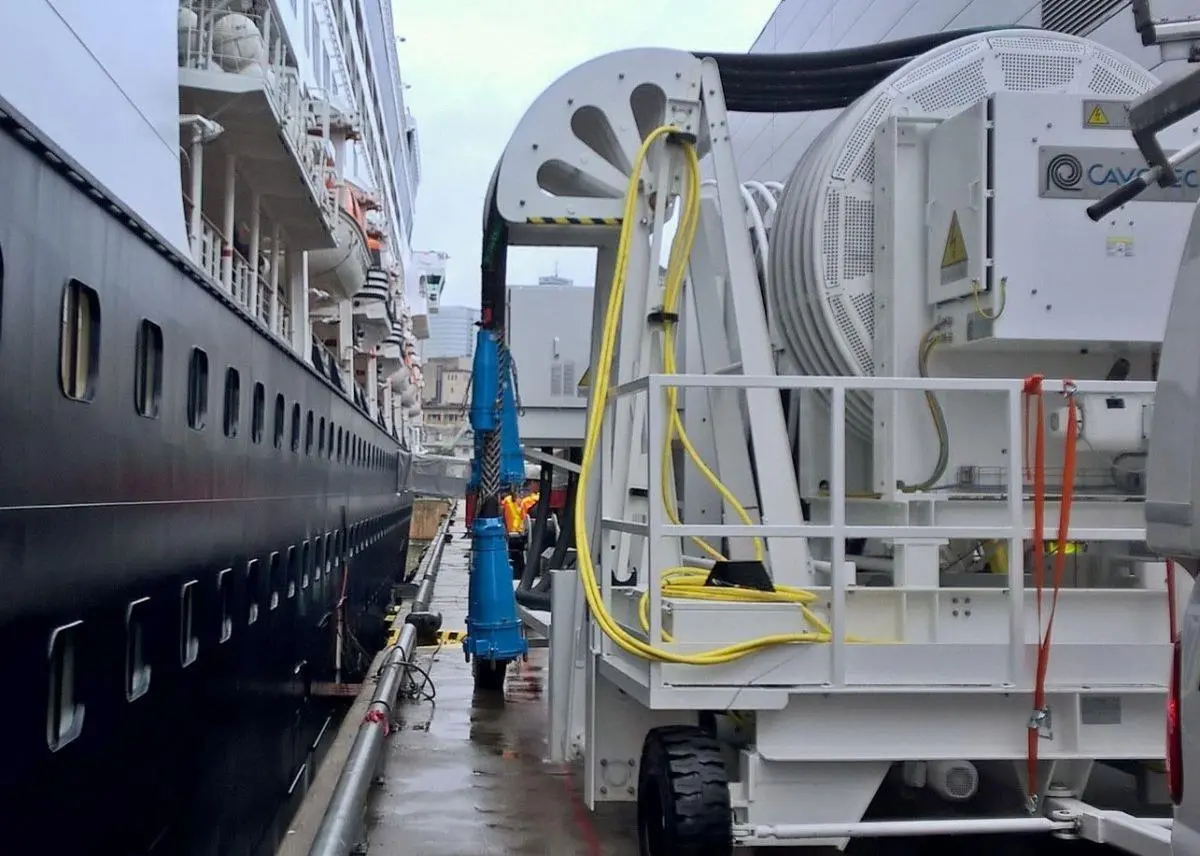
As regards Onshore Power Supply (OPS), ESPO is supportive of a policy framework that encourages investments in this technology and which at the same time takes away the barriers for use. However, we believe that investments in OPS must be assessed case-by-case against other green solutions and must be seen in the context of the rapidly evolving zero-emission propulsion technologies (including hydrogen and ammonia).
One of the barriers to the use of OPS is certainly the taxation. The review of the Energy Taxation Directive should therefore introduce a permanent tax exemption for OPS and should in fact be extended to all sustainable clean fuels.
LNG’s role as a transition fuel should also be recognised. Since many ports have engaged themselves in LNG infrastructure projects in their ports, on the basis of the current EU policy framework, they want certainty about the support for investments made from 2021 to at least 2027.
As ESPO, we favour a global approach when it comes to market-based measures. The EU should increase the pressure on the IMO to roll out meaningful measures by 2023. Any European proposals such as an Emission Trading Scheme (ETS), a levy or an innovation fund should be thoroughly examined in view of safeguarding the competitiveness of the EU’s port sector.
We noticed that the Green Deal Communication is making a plea for rail and inland waterways as the sustainable hinterland modes for freight. We support that role but would like to stress that Motorways of the Sea and Short Sea Shipping can be just as effective as rail and inland waterways in providing an alternative to road transport. In addition, our members see a crucial role for pipelines in the transport of certain commodities and the implementation of certain decarbonisation technologies.
Whereas everything possible must be done to limit climate change, we must also increase our resilience to climate change. Seaports and waterborne transport should definitely be seen as a priority in that respect, as rising sea levels and extreme weather conditions could have a profound impact on their operations. We therefore fully support the commitment of the Commission to adopt a more ambitious strategy on adaptation to climate change.
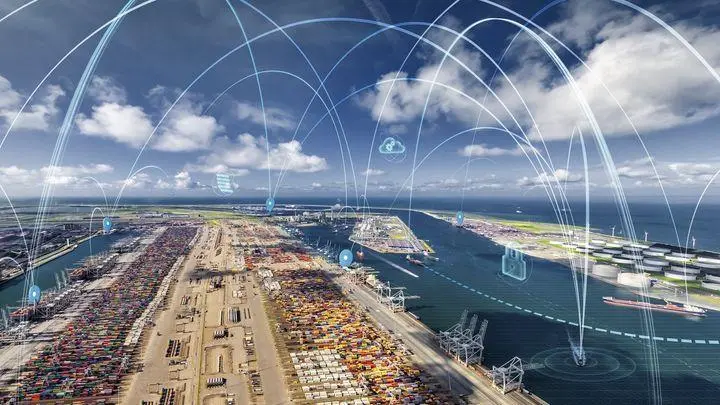
Digitalisation is often mentioned in the context of decarbonisation and greening and as ESPO we also see it as a valuable instrument. Digitalisation will increase the transparency in the supply chain and can help create awareness of the carbon and environmental footprint of the whole supply chain. By improving the communication, gathering and exchanging real-time information among different parties, logistics processes can be optimised and transport infrastructure and means (avoiding empty trucks, trains and ships) can be used in a better way.
Walk the talk
Overall, we believe that greening “the port” means much more than greening the transport side. Many European ports are important clusters of energy and industry. These ports are players and partners in achieving the energy transition. The port managing body must support the industries in the port in their pathways to a more sustainable future.
Finally, we ask policy makers to walk the talk. If Europe really believes in this Green Deal ambition, they should invest in it, invest in a sustainable future. Extensive support from the Connecting Europe Facility (CEF) is an absolute prerequisite for investments in clean fuel infrastructure in ports, especially if there are mandatory provisions on the installation of certain technologies. Support will also be important for turning port areas into clean energy hubs and for ensuring connectivity to clean energy grids.
The Green Deal was expected to steer all Commission initiatives in the coming years. The Commission sees it as a growth strategy. It remains to be seen whether the current COVID-19 health crisis with its unprecedented economic consequences risks to mess up the whole Green Deal agenda. Will Europe succeed to merge these two enormous challenges into a Green Recovery plan?
Related Articles
 INSIGHT & OPINION
 INSIGHT & OPINION
 INSIGHT & OPINION