![GreenPort[PortStrategy]](https://www.portstrategy.com/greenport/wp-content/uploads/sites/4/2026/09/GreenPortPortStrategy.svg)
The battle for the space to get greener
Isabelle Ryckbost, secretary general, ESPO, discusses the impact the EU’s Nature Restoration law could have on port development
The proposal sets an overarching objective that the EU should strive towards restoration measures covering at least 20% of Europe’s land and sea areas by 2030 and a restoration of all ecosystems in need of restoration by 2050.
This Nature Restoration law has turned into one of the most discussed and controversial European proposals that have been issued over the last four years. It divides the Parliament, industries and even countries.
Both Council and Parliament are split between those who want to have this Nature Restoration law and even strengthen it further and those who fear that it will be a major game stopper for any new investment project, in particular those that are needed to deliver on the net-zero ambition Europe has put forward.
The opponents see a conflict between these nature restoration targets and Europe’s climate ambitions, since the latter will require the development of a new energy landscape which will come with lots of new infrastructure, investments and space.
What does it mean for Europe’s ports?
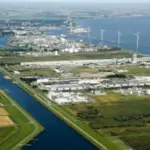
Ports are often located in or near different natural areas. Ports in Europe have thus a long-standing experience working with the protection and restoration of natural areas, working with the legal and scientific processes set out in relevant EU legislation, especially the Water Framework Directive (WFD) and the Marine Strategy Framework Directive (MSFD).
Already in 2006, together with the European Commission, ESPO developed an ESPO Code of Practice on the Birds and Habitats Directives. In addition to working closely with existing EU legislation, different ports have been going beyond legal requirements in their efforts to combine sustainable port operations with the promotion of biodiversity and habitat restoration.
Notwithstanding, ESPO has expressed its concern about some of the provisions of the heavily discussed Nature Restoration proposal. We fear that the proposal will introduce another layer of complexity in nature restoration efforts which currently appear problematic.
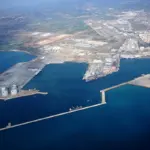
Being partners in realising the energy transition, Europe’s ports are together with all relevant stakeholders planning important investments to facilitate the production, supply, storage, conversion and transport of renewable energies and this will require space, lots of space.
One of the main conclusions of the 2022 Royal Haskoning DHV Study on “The new energy landscape: Impact on and implications for European ports” is that new energies and technologies require much more space than fossil-based energies, e.g. hydrogen needs up to five times more.
On top of that, we need to consider the ambitions put forward in the recently released Net-Zero Industry Act. By 2030, 40% of the needed net-zero technologies and 10% of the needed critical raw materials should be produced in the EU. Again, ports will be instrumental in achieving these targets, either by being the location for these industries, or by playing a central role in enhancing the connectivity between these new manufacturing sites and the EU markets.
Some of the ports in the North of Sweden illustrate this very well. Both the extraction of critical raw materials in the local mines and the production of green steel (thanks to the proximity of green energy) will be booming in the coming years. It will imply a substantial capacity expansion of the ports in the neighbourhood, including upgrading the access from both the sea and the land side, as well as a need for a better connectivity between these ports and the rest of Europe. This will imply new infrastructure and space.
So yes indeed, I believe that it could become difficult, at least in some regions and in particular in the smaller countries, to meet the 20% target for nature restoration along the lines of the Nature Restoration proposal and at the same time, deploying all the infrastructure and finding the space for projects that must help us to deliver on climate ambitions.
Is there a way out?
It should not be either or. I think that over the past years, ports have shown at several occasions that economic activities and the protection and promotion of natural areas can coexist.
We believe that the Nature Restoration legislation should ensure a stable, unambiguous legal framework for safeguarding and restoring natural ecosystems in the context of economic activities, particularly for long-term investments, such as ports.
Secondly, as ESPO we stress the importance of coherence, between this new Nature Restoration law and existing European and national legislation, as recently defined policy initiatives and objectives set out in the European Green Deal, the REPowerEU plan and the Net-Zero Industry Act. For people in the field working on new projects and investments, it is difficult to understand how to work at the same time the new proposals for easing the permitting and also understanding the new and complex procedures put forward in this Nature Restoration law.
When writing this article, we are awaiting the vote in the Parliament’s responsible Environment Committee (15 June) and the possible agreement on a position in the June Environment Council. It remains to be seen if one or both of these are sending the proposal back to the Commission drawing table.
If the Commission has to rewrite it, it is maybe a good idea for the different DGs to work together to avoid inconsistencies and ensure that all ambitions are covered, not one at the cost of another.
Related Articles
 INSIGHT & OPINION
 INSIGHT & OPINION
 INSIGHT & OPINION