![GreenPort[PortStrategy]](https://www.portstrategy.com/greenport/wp-content/uploads/sites/4/2026/09/GreenPortPortStrategy.svg)


Dealing with distractions
Ports shift their attention away from their core business, says Martin Rushmere
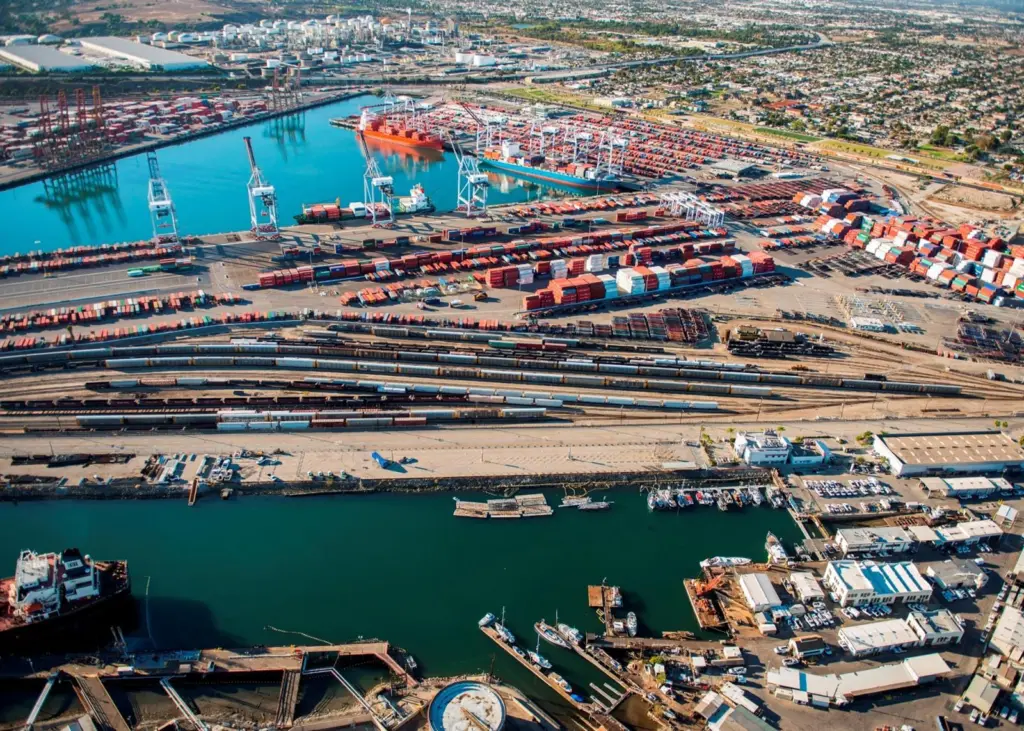
Navel gazing, personal feuds, pressure from outside commercial interests, resignations and internal enquiries are occupying decision makers on the West Coast and in some cases distracting attention from the main job of attracting and dealing with cargo efficiently.
The distractions are mostly at the big container ports. Smaller operations, especially bulk operations, are dwelling more on the main aspect of dealing with the goods and traffic. And their efforts are proving successful.
Among the most noticeable is Olympia in Washington. This has become the main conduit for fracking sands (ceramic proppants) from China to the boom state of North Dakota, where thousands of oil wells are being dug. Having secured a two-year contract with Rainbow Ceramics of Houston, the port is forecasting a 40% jump in revenue at its marine terminal to $4.5m in the next financial year.
Another smaller port, Portland, has suffered disappointment in the last six months because of labour hostility. Much of this has been over ICTSI, which took over Terminal 6 and which has been accused by the unions of employing cheaper, though unionised workers. Federal judges mediated on the dispute and traffic has resumed, but is likely to be down as much as 15% over 2011.
And, like so many other ports, its expansion plans are mired in community opposition and environmental activism. A plan to develop 500 acres for a new terminal at West Hayden Island is still in the public review stage, two years after the proposal was first made. No significant progress is expected soon.
Portland has also suffered from activist protests in Oregon and Washington against wheat terminals, which led to bulk carriers avoiding the region altogether.
Demand drops
California is coping with its own problems. Volumes at Los Angeles showed an unexpected 3% decrease in loaded containers in October, a telling sign of a nervous US economy. The increase for the year so far is 4.7% over 2011, against the budgeted forecast of 3%.
Unlike its neighbour Long Beach, the port is at least able to concentrate on capital development. Port spokesman Phillip Sanfield calls the $1.2bn programme for the next five years “aggressive”. In the financial year to July 2013 spending will total $285m, with the TransPacific terminal taking up $127m. The terminal work is almost all to do with gates for heavy vehicles and roadway shifting and re-alignment.
Another $125m is being spent on a new rail marshalling yard at Berth 200 (the West Basin).
These projects are an illustration of what one engineer calls “navel gazing.” “Besides the huge costs involved – a feature of even small civil engineering jobs nowadays – they do little to increase capacity and prepare for changes in container handling over the next few years,” he says.
Concerns aside
Economist Paul Bingham of CDM Smith notes that ports in general have stepped back from serious contemplation of capacity and related issues. “Possibly it’s because they have been working at below capacity since the 2007 slide and don’t have to worry about it at the moment.
“I am not that confident the ports will have the ability to act promptly once demand takes off again. Politicians have become complacent about the situation and are happy not to have to worry.”
Mr Bingham lauds Los Angeles for starting a long overdue revision of its Master Plan.
For its part, Long Beach is engulfed in local political squabbles. Two members of the governing port commissioners have been accused of skullduggery by a colleague, with much discussion of lawsuits and calls for resignations. The selection of a site for a temporary head office during the construction of a new building has turned ugly with the intervention of the city’s mayor and insults traded about city hall interference in port domestic affairs.
“The port is in transition and it’s not a very nice scene,” says a senior official of a shipping group. “Politics is dragging it down and employees are in fear of their jobs, while skilled people are looking to move.”
A shipping line executive agrees. “The carriers are wondering what’s going on. They want to be assured that rates, terminal leases and conditions will stay the same. This is not to say that terminal operators are looking elsewhere and carriers are wanting to shift – but this could develop if the friction continues.”
Sports mania
At San Diego the port faces an unexpected challenge in the form of property developers who have become the new owners of the city’s main newspaper. They have publicly declared their intention to disband the port authority and force the shutdown the main breakbulk terminal and build a commercial complex, including a sports stadium.
For the moment, the port continues regardless. The shoreside power project at the terminal is unchanged in scope and timeline.
Seattle is also dealing with America’s mania for sport. Public clamour led to the city in November agreeing to build a sports/entertainment stadium, seating more than 50,000 people, right next to the port. At the very least there will be severe congestion and harbour delivery delays.
Says Seattle media spokesman Peter McGraw: “From a traffic report done by arena supporters, games have a potential of bringing anywhere from 700,000 to 1,000,000 additional vehicle trips [a year] to the area. We are concerned that without proper traffic mitigation, that these vehicles may make it difficult to move trucks hauling cargo from our terminals on to roads and rail located nearby.”
Doomsters maintain that much of the progress in cutting pollution will be undone, with heavy vehicles spending much of their time idling – one of the ailments that the environmental plan has tackled.
Dire straits
Oakland’s woes dwarf all others. Traffic is down 5%, the chief executive has summarily left over an ethics scandal involving the use of business credit cards for parties in a Houston strip club, his deputy has been suspended for the same reason, a worker has been killed on the job, workers are threatening to strike and a $120m lawsuit has been launched against the port over an agreement with Ports America for the long-term lease of Berths 20-25 under a public private partnership.
The lawsuit is the most damaging in the long term. SSA Terminals says its income suffers because of the conditions of the 50-year lease with Ports America, the first of its type in the port’s history.
Observers say the essence of the agreement is that Ports America was granted the lease in exchange for building facilities and infrastructure.
Says Mr Bingham: “The outcome could alter the future structure of PPPs in the US. The warning is that such deals should not be done in isolation with individual parties, but must involve everyone.”
According to one observer, the strategic lesson from the Oakland debacle is the danger in seaports and airports being combined in the same business unit.
“Oakland had bet heavily on air passenger services growing unhindered and borrowed accordingly for expansion. Then the recession arrived and the traffic literally flew away, leaving debts. So, they started trying to shift money and resources away from the seaport, while scrambling around to get more business there as quickly as possible. The PPP seemed like a wonderful injection of liquidity.”
Oakland’s advantage is that container traffic has nowhere else to go in Northern California. San Francisco has shut down 90% of its container operations over the last 15 years. (An attempt to revive mineral shipments from Nevada and Utah has lost steam because the mines are limiting operations).
In contrast, Tacoma (sometimes called the Puget Sound Junior Partner) is buoyant. Thanks almost entirely to the Grand Alliance shift from Seattle earlier in the year, container volumes are 12% higher than 2011 and breakbulk is 87% more.
Related Articles
 NORTH AMERICA
 CONCESSIONS & INVESTMENTS