![GreenPort[PortStrategy]](https://www.portstrategy.com/greenport/wp-content/uploads/sites/4/2026/09/GreenPortPortStrategy.svg)



Brazil – the tribulations of modernisation
The Brazilian president announced a new ports modernisation programme this week – the ‘Logistics Investment Program for Ports’ which aims to encourage better management and infrastructure of Brazilian ports.
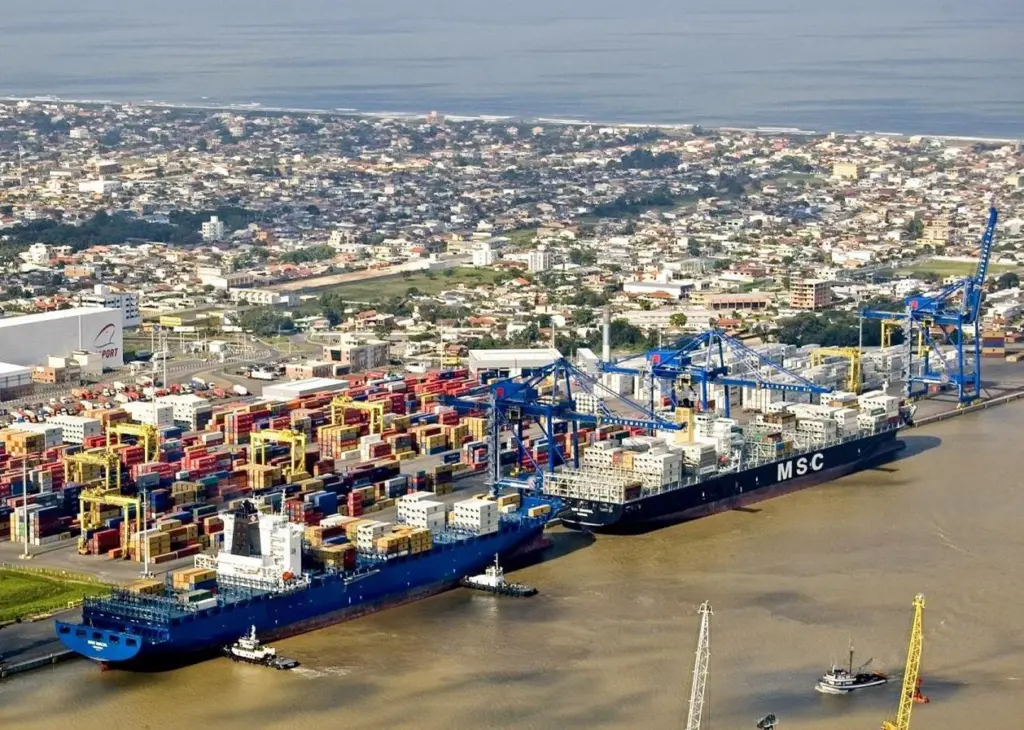
The reality is that these measures have been postponed several times, while seasonal congestion and bottlenecks continue to be recurring realities in many Brazilian ports.
The modernisation package will include a huge boost to encourage the expansion of private investment in the sector – to the tune of R$54bn (US$26bn). But there will also be reforms to the current legal and regulatory structure of the port industry whichwill reflect new orientations in the public-private-partnership framework.
Private terminals will now be allowed to handle third party cargo in future and selection criteria for terminal concessions will be the lowest tariff to the user with the highest payment to the government as hitherto – in both cases the government will call the shots.
Drewry Maritime Advisors points out that although the news looks positive on the surface, a series of thorny issues could result.
It says there is currently a bitter rivalry between concessionaires in public ports and private terminals in the container segment and that the new reforms are ripe with potential for further conflicts on the issue of the “level playing field.”
Also, contracts at 98 terminals of all types and sizes have expired or about to expire. The expectation was that these contracts would be extended, but for over half, the government has decided they should be re-tendered. Drewry says that these orientations are “dividing the private sector, displeasing the incumbent operators and rejoicing the outsiders.”
But this might not necessarily be bad. Michel Donner, senior advisor, Drewry Maritime Advisors, said: “The changes are likely to contribute to unlock the badly needed capacity expansion of the port system, and will bring up a host of new business opportunities for private investors, albeit possibly with lower profitability levels.”
Related Articles
 SOUTH AMERICA
 SOUTH AMERICA
 SOUTH AMERICA