![PortStrategy[GreenPort]](https://www.portstrategy.com/wp-content/uploads/2026/09/PortStrategyGreenPort.svg)



Carbon dioxide capture solution project
Five Swedish energy companies have joined forces to discover the smartest way to transport up to two million tonnes of captured carbon dioxide annually from facility to quayside.
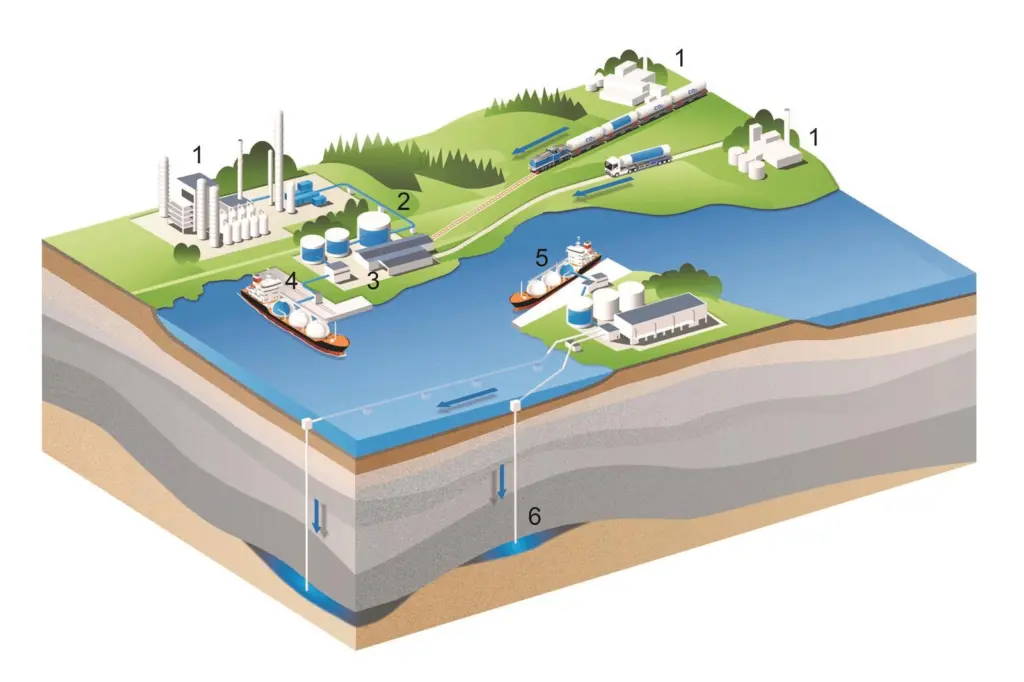
At the Port of Gothenburg’s Energy Port, various locations suitable for building a future facility for intermediate storage and liquefaction of carbon dioxide are being investigated.
“Our remit was to investigate the possibility of creating an optimised logistics and intermediate storage chain, the ultimate aim being to transport up to two million tonnes of captured carbon dioxide each year from facility to quayside,” said Hesam Mortazavi, project manager at the COWI consulting group.
Sustainable infrastructure
In May, the CinfraCap project (which stands for Carbon Infrastructure Capture) commenced a prestudy commenced to determine whether a joint solution could be found for an efficient, sustainable infrastructure for captured carbon dioxide.
Every aspect of this undertaking is being examined in detail, both on the drawing board and out in the port.
The team has since identified a potential site close to the quayside that could work and is working on ideas about the configuration of the new pipelines down to the quayside.
“As it will be a costly project to implement and maintain over time, it is vital that we have an established investment framework in place for both the facility and the pipelines and that we take full account of future operating costs,” said Isabella Herstad-Norin, process manager for CinfraCap at COWI.
“However, there is a commercial upside in the fact that the companies can sell emission rights and by doing so reduce their carbon emissions when they use CCS technology,”
The CinfraCap prestudy will be completed in March 2021.
It will complement a number of other ongoing research and development projects, including Preem CCS, ZEROC, and Northern Lights, which is a full-scale carbon dioxide repository project being run off the west coast of Norway.
The project is a collaborative venture between Nordion Energi, Göteborg Energi, Renova, Gothenburg Port Authority, Preem and St1.
* Image key
1. Carbon dioxide capture facilities.
2. Liquid carbon dioxide is transported through pipelines from capture plants nearby and by truck or railway from plants further away.
3. CinfraCap reception site with temporary storage at the Port of Gothenburg.
4. Liquid carbon dioxide is loaded onto a ship using loading arms.
5. Receiving terminal from where liquid carbon dioxide is unloaded and pumped into rock formations 3,000 metres below the seabed.
6. Porous rock, with impermeable rock above, where liquid carbon dioxide is returned.
Related Articles
 ALTERNATIVE FUELS GREENPORT
 NEWS
NEWS