![PortStrategy[GreenPort]](https://www.portstrategy.com/wp-content/uploads/2026/09/PortStrategyGreenPort.svg)


Dredging Helps to Clean Up the Oslo Fjord
Port of Oslo Takes Action to Clean the Contaminated Parts of Oslo Fjord to Improve Navigation and Safe Vessel Traffic
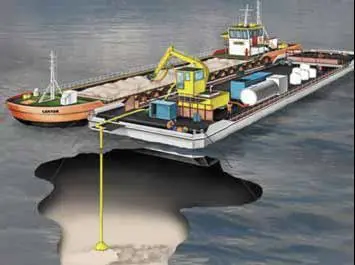
For many years environmental contaminants, which had been discharged along the coastline of the Oslo Fjord, still contaminate the sea bed. Large quantities of untreated sewage and surface water had been released in to the Oslo Fjord since the end of the 1800’s, until purification plants were installed and which were upgraded in recent times. Torild Jorgensen the Project Manager of Port of Oslo presented the Oslo Harbour Remediation Project ‘Oslo Fjord Clean Up’ at the GreenPort/EcoPorts 2008 Conference. The aim of remediation of the contaminated seabed is to remove contaminated material from the harbour basin, thereby preventing the dispersal of environmental toxins in the inner Oslo Fjord and to improve navigation depth in the interests of safe vessel traffic, and to carry out urban renewal measures. The Clean Up project is part of an integrated plan of remediation measures for marine areas within the Oslo Fjord, which is timed to support the ongoing construction of an immersed tunnel in the port area. Participants in the remediation process include the Port of Oslo; the Norwegian Pollution Control Authority (NPCA), which has set the parameters for dredging operations and the requirements to be met; Secora, responsible for dredging and disposal and the Norwegian Geotechnical Institute, tasked with monitoring, dredging and disposal operations to ensure compliance with NPCA directives.
Seabed is not defined as hazardous waste
The seabed in the port area contains polychlo rinated biphenyls (PCBs), tri-butyltin compounds (TBTs), polyaromatic hydrocarbons (PAHs), mercury (Hg), lead (Pb) and cadmium (Cd). Moreover, manufacturing industries formerly situated along the coastline released large quantities of untreated sewage and surface water from the end of the 1800’s. Although not acutely toxic, these substances can enter the food chain and stored in the body’s fatty tissue and liver and combined with other environmental toxins they may be harmful in the longer term. However, the contaminated seabed is not defined as hazardous waste. More than 90 per cent consists of sand, silt and clay, 5-10 per cent organic matter (leaves and dead algae), heavy metals and organic environmental toxins. The Clean Up is a cost-sharing collaboration between the City of Oslo, the Port of Oslo Authority, the Norwegian Public Roads Administration and developers in the port area. The NPCA has also made funds available. Approximately NOK 130m will be spent on cleaning up the port, in addition to remediation of marinas, bathing areas and rivers.
Polluted area will be capped with clean clay…
Some of the contaminated sediments will be capped, which involves covering the polluted sediments with clean material to ensure toxins cannot contaminate marine organisms. The contaminated sediments will be capped using clean clay recovered from the tunnel construction project.
… Some will be dredged
The remainder of contaminated sediments will be dredged and stored in a disposal facility. Mechanical or hydraulic dredging methods will normally be employed, although neither mechanical nor hydraulic dredging are perfect. While the small quantities of water accompanying the collected sediments in mechanical dredging are a major aid to subsequent disposal, this method may stir up and disperse particles and also capacity is relatively small. Hydraulic dredging has higher capacity and causes little suspension and dispersal of material. However, large quantities of water may be taken up which may substantially increase the costs of disposal. The method is also sensitive to waste on the sea bed. Secora has been contracted by the Port of Oslo for the dredging of 500,000m3 of contaminated sediments from the harbour basin in Oslo and it has so far proceeded as planned along with transport and placement into the deep-water deposit site. The dredging vessel uses an excavator fitted with a specially designed grab, which loads the materials directly onto a barge. The grab has a specially designed ‘lid’ which closes when the bucket is raised to the surface, thereby reducing spillage and suspension. The operator controls the grab using information fed into a system of maps showing the level of the present seabed and the thickness of the layer to be dredged. Sensors on the dredger combined with map presentation enable the operation to be carried out in real time. By this means the sys-tem records the progress made in the dredging area.
Contaminated sediment will dispersed in deep trenches offshore
Mechanical dredging requires a plan for disposal of the dredged material. Shore disposal areas can be established where there is a need both to reclaim land and to dispose of sediments. The disposal area is first walled in, after which the sediments are placed inside the wall. Most of the dredged sediments will be stored in a deep-water deposit site located near the head of the Oslo Fjord. The contaminated sediments will be placed on the seabed and covered with clean sediments to prevent the dispersal of environmental toxins. The selected basin is at some depth, approaching 70m, and is encircled by relatively shallow natural barriers that minimise the risk of dispersal beyond the facility.
Why is the dredged material not stored ashore?
Disposal ashore has drawbacks, for example extensive transport and disposal area requirements and risks for future run-off. The solution to move the material to a deep water disposal facility is considered to be safe and the overall best solution for clean up of the Oslo Fjord area.
Why won’t pollutants leak from the facility?
The deep water deposit site will be established in a natural depression in the seabed, 60-70 metres below the sea surface. After the contaminated material is capped, dispersal of pollutants will be greatly reduced. Moreover, the cap is thick enough to ensure the safety of marine animals inhabiting the sediments.
Why not leave the contaminated material where it is?
This is not an option since environmental toxins will constantly be stirred up from the sea bed due to port activities and activities in shallow marinas.
What is being done to check that the deposited material will remain stationary after the job has been done?
Once the disposal has reached completion the facility and the cap will be regularly monitored. The Port of Oslo is required to demonstrate that no pollution is transported through the cap, and to survey animal life on the seabed. The NPCA will determine when monitoring can be scaled back.
Related Articles
 ALTERNATIVE FUELS GREENPORT
 NEWS
NEWS