![PortStrategy[GreenPort]](https://www.portstrategy.com/wp-content/uploads/2026/09/PortStrategyGreenPort.svg)


EC appoints 11 new TEN-T coordinators
The European Commission has appointed eleven European coordinators for each of the nine core network corridors of the trans-European transport network (or TEN-T), as well as for the European Rail Traffic Management System (ERTMS) and for Motorways of the Sea.
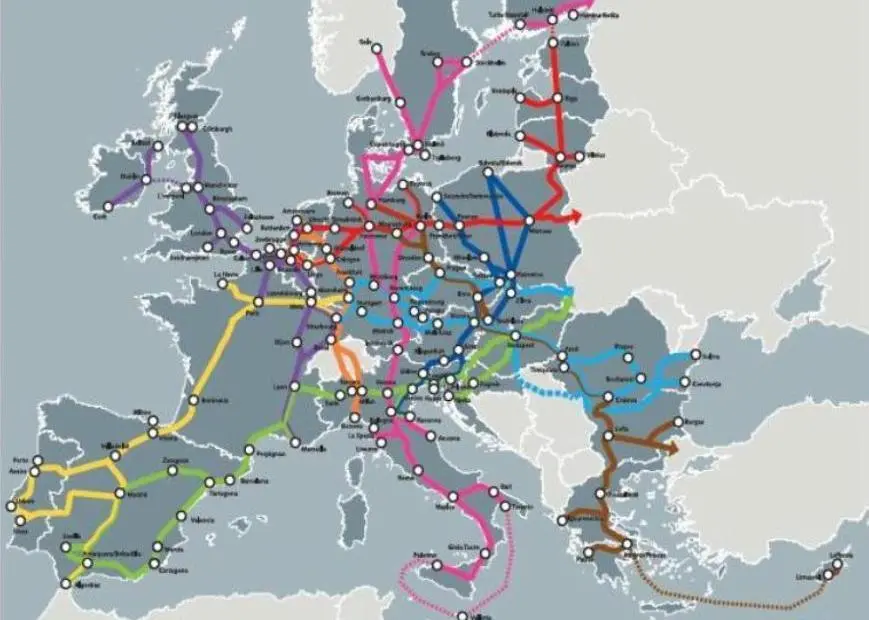
In 2013 the European Union adopted new Guidelines for the Trans-European Transport Networks (TEN-T) and an accompanying financial instrument, the Connecting Europe Facility (CEF). These policies set the new framework for EU funding for transport infrastructure. The TEN-T Guidelines establish nine multi-modal core network corridors, where infrastructure projects are to be implemented as a priority. The new approach requires a stronger coordination between actors along a given corridor, including infrastructure managers from different modes of transport.
The coordinators will be responsible for coordinating priority transport projects and reporting back to the Commission. The new coordinators will now enter into contact with Member States authorities and ministers to discuss the framework for cooperation and implementation of their mandates.
The following coordinators were appointed:
• Pavel Telička (North Sea–Baltic corridor)
• Pat Cox (Scandinavian–Mediterranean corridor)
• Carlo Secchi (Atlantic Corridor)
• Péter Balázs (North Sea–Mediterranean corridor)
• Laurens Jan Brinkhorst (Mediterranean corridor)
• Karel Vinck (ERTMS)
• Karla Peijs (Rhine–Danube corridor)
• Former Spanish Foreign Minister Ana de Palacio will be responsible for the Rhine–Alpine corridor
• Former German Minister for Transport Kurt Bodewig takes on the Baltic–Adriatic corridor
• MEP Brian Simpson (Motorways of the Sea) and
• MEP Mathieu Grosch (Orient/East–Med corridor)
The TEN-T Guidelines and the Connecting Europe Facility offer a number of opportunities for the ports. It is important that the ports themselves make the most of this opportunity to take part in the development of the TEN-T network. To further enhance this, however, some remaining aspects still need to be clarified. This is in particular the case for Motorways of the Sea and for the support to sustainable freight transport services that is outlined in Article 32 of the TEN-T Guidelines. Funding in the magnitude of €150-200m is to be made available for sustainable freight transport services, but it is still unclear what type of activities will be eligible under this heading. The predecessor of this instrument, the Marco Polo Programme, was heavily criticised for distorting competition between transport operators. Similar problems could be avoided in future by focussing the funding on infrastructure investments rather than transport services.
Related Articles
 ALTERNATIVE FUELS GREENPORT
 NEWS
NEWS