![PortStrategy[GreenPort]](https://www.portstrategy.com/wp-content/uploads/2026/09/PortStrategyGreenPort.svg)


EU wants ports equipped with LNG facilities
The European Commission has launched a Clean Fuel Strategy. This is an ambitious package of measures to ensure the build-up of alternative fuel stations across Europe with common standards for their design and use.
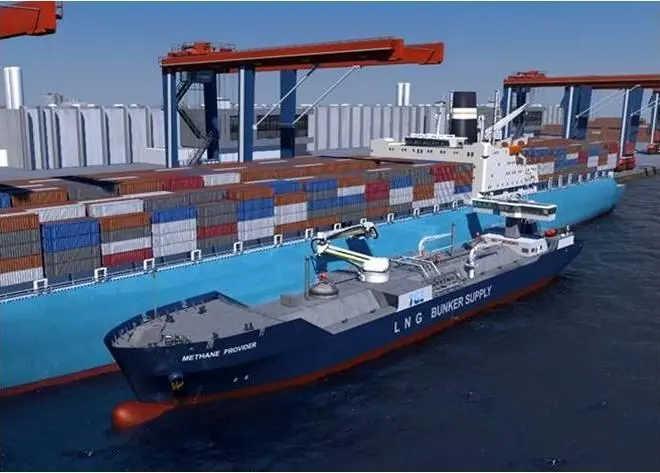
Policy initiatives so far have mostly addressed the actual fuels and vehicles, without considering fuels distribution. Efforts to provide incentives have been un-co-ordinated and insufficient. The new proposal consists of a Communication on a European alternative fuels strategy and a proposed Directive on the deployment of alternative fuels infrastructure. The package addresses all transport modes and its overall aim is to diminish Europe’s dependency on oil for its mobility and transport.
For maritime transport, the legislative package focuses on the development of Liquefied Natural Gas (LNG) infrastructure and the promotion of shore side electricity for vessels at berth. Within the proposed Directive, the Commission introduces an obligation for TEN-T core seaports to be equipped by 2020 with publicly accessible LNG refuelling points for both maritime and inland waterway transport. A similar obligation is introduced for core inland ports by 2025. In addition, the Commission introduces a more generic requirement for ports to be equipped with shore side electricity installations for waterborne vessels, provided this would be cost-effective and effectively lead to environmental benefits.
Related Articles
 ALTERNATIVE FUELS GREENPORT
 NEWS
NEWS