![PortStrategy[GreenPort]](https://www.portstrategy.com/wp-content/uploads/2026/09/PortStrategyGreenPort.svg)




German terminal digitalises customs
HPC Hamburg Port Consulting has been helping a German terminal to digitalise and automate the customs clearance processes for import and export traffic with the UK to improve speed and efficiency.
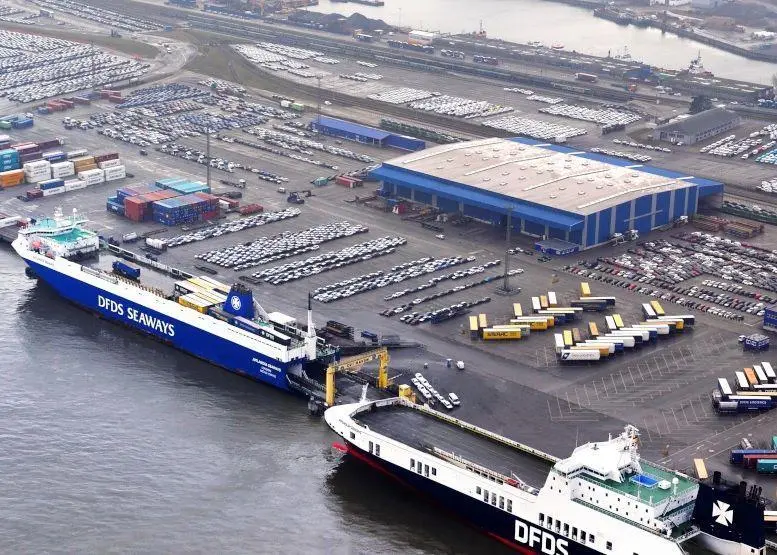
Run jointly with IoT strategy software provider compacer, the project at the deepwater terminal Cuxport saw HPC implement project and integration management for the provision of interfaces for terminal-side customs clearance post-Brexit.
“In order to be able to offer the same level of quality and reliable goods clearance for our customers in the post-Brexit era, the digitalisation of customs clearance plays a crucial role,” said Hans-Peter Zint, managing director of Cuxport.
Torsten Neubert, senior IT consultant at HPC, added: “Within a short project period, we are pleased to have not only been able to support Cuxport with the provision of the necessary IT infrastructure for customs clearance, but also to have set the course for further automation.”
Info flow analysis
HPC’s IT consulting specialists analysed all information flows relevant for customs. They then developed data network models that break down data silos and connect processes between external and internal data sources.
Using its business integration suite edbic, compacer provided the technical data and process integration platform on which the data models were implemented.
Based on a comprehensive interface analysis and specification as well as a database for the storage of customs-relevant data, edbic enables efficient communication with the customs clearance and disposition system as well as the shipowners’ IT systems. edpem, compacer’s process event monitoring tool, also provides continuous monitoring, making processes visible and transparent.
Rhenus has a 74.9% share in Cuxport and HHLA Container Terminals has 25.1% share.
Related Articles
 ALTERNATIVE FUELS GREENPORT
 NEWS
NEWS