![PortStrategy[GreenPort]](https://www.portstrategy.com/wp-content/uploads/2026/09/PortStrategyGreenPort.svg)


Kiel invests in greener cargo handling
Germany’s Port of Kiel is investing in greener cargo handling equipment, environmental technology and initiating a modal shift from road to rail.
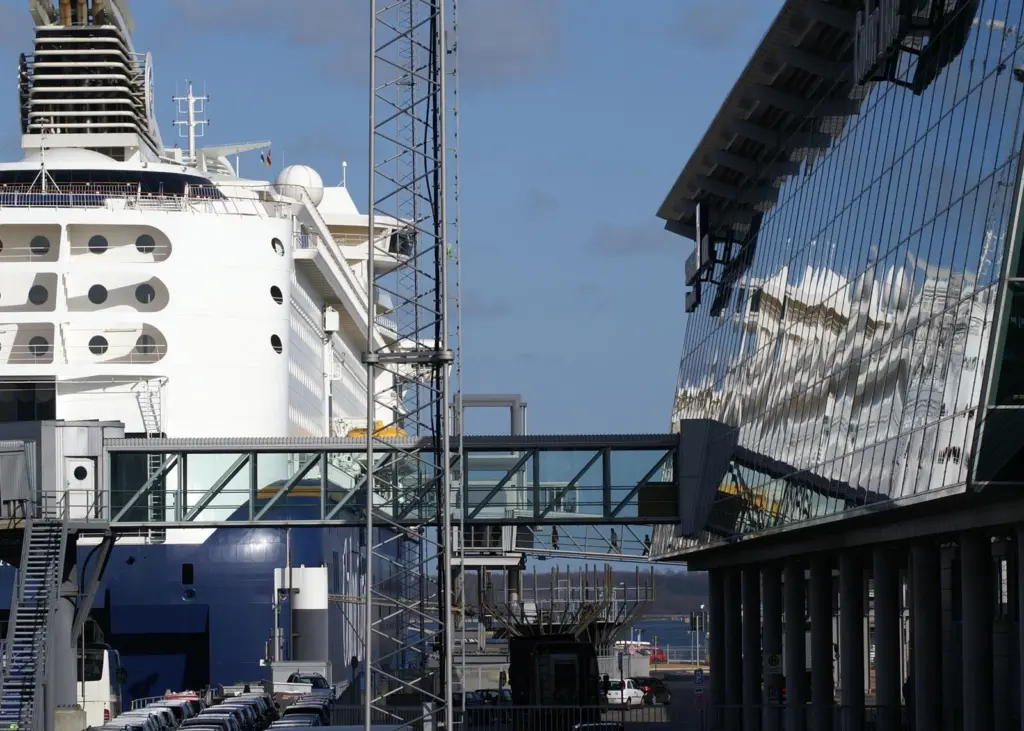
The port is undertaking a project to expand the pre-storage area for trucks at the Ostuferhafen including the creation of a third switching track at Schwedenkai terminal and the creation of an onshore power supply facility at the Norwegenkai terminal.
“The onshore power supply plant at Kiel’s Norwegenkai terminal will be the pilot plant for onshore power at the port of Kiel. Over the course of the following years we then aim to also build a combined onshore power supply plant for the cruise terminal Ostseekai as well as Kiel’s Schwedenkai terminal,” said Dr Dirk Claus, managing director, Port of Kiel.
Green plans
The first step in the Port of Kiel’s green cargo handling plan is to completely re-design the entrance area to Kiel’s Ostuferhafen terminal which will result in additional pre-storage space for truck and cars.
From a green point of view, the project will combine previously separated pre-storage areas and minimise travel paths at the terminal itself. But it will also allow trucks to use the connecting road to the city ring road.
To improve the efficiency of the port’s ship/rail intermodal transport performance, Kiel is planning to pursue two rail expansion projects. Firstly, the marshalling yard Kiel-Meimersdorf is being upgraded to enable cargo trains of a length of 740 metres to enter.
Secondly, the entrance area of Kiel’s Schwedenkai will be equipped with a third switching track. The building works for this €1.25 million project are expected to be completed at the end of next year.
From 2019, the aim is to supply both Color line vessels with 100% green onshore power whilst stationary in berth. To realise this project an investment sum of over €1 million is needed. To reduce the high costs of purchasing electrical power in Germany, the port is campaigning for an exemption of onshore power from the EEG-levy.
This will generate an economic incentive for ships to take onshore power which will further reduce the air pollution emissions of the ships during their time at berth.
Related Articles
 ALTERNATIVE FUELS GREENPORT
 NEWS
NEWS