![PortStrategy[GreenPort]](https://www.portstrategy.com/wp-content/uploads/2026/09/PortStrategyGreenPort.svg)


Need for a Swedish integrated port policy
A study on the impact of mega-ships on Gothenburg by the Organisation for Economic Co-operation and Development (OECD) says that an integrated ports policy is needed in Sweden to ensure Gothenburg stays competitive.
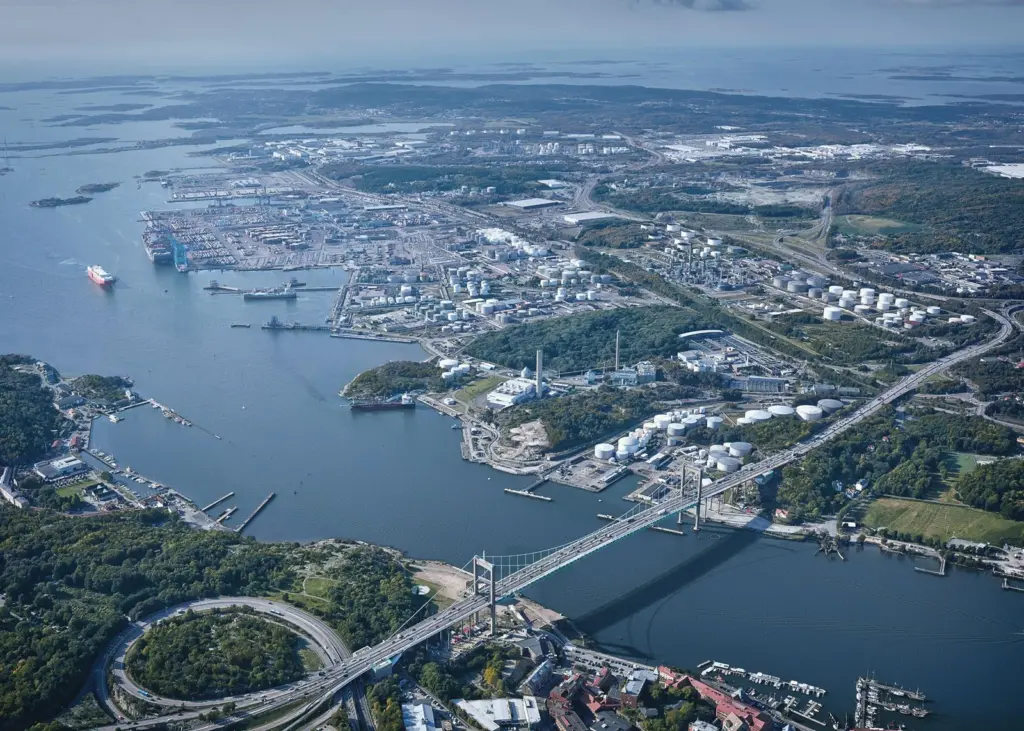
This action needs to include improvements to the maritime access to the port. This is important to tackle the constraints to the depth of the port access channel and the depth of the container berths to attract more direct calls.
It added that this should be realised in clear public investment decisions, eg with respect to improving maritime access, hinterland connectivity, dry port development and short sea shipping.
Another barrier in the way of Gothenburg’s competitiveness is that despite the port’s dominance in the national ports system, various new container port projects have emerged in Sweden, backed by local governments that own them and want to make them local revenue sources.
This fragmentation could mean a duplication of infrastructures and risk of de-concentration of cargo flows with the risk of undermining the Port of Gothenburg’s ability to attract direct calls and threatening its competitiveness.
The port is doing its bit to attract more direct calls.
On the green front, Gothenburg has been working hard to mitigate negative effects from mega-ships. It has introduced differential tariffs for shippers and giving them incentives to use cleaner fuels when they come to the port.
Continuing with this strategy, the port changed its tariff structure in 2015 so it would be based on the Environmental Ship Index (ESI) and the Clean Shipping Index (CSI) classifications for ships.
Discounts also apply to ships using liquefied natural gas (LNG) as a fuel with 20% of general ports tariffs up to the end of 2018.
OECD argues that with the port doing its bit it’s now time for a unified ports policy to protect the port’s interests.
The study was carried out as part of a programme on the impact of mega-ships at the International Transport Forum (ITF).
Related Articles
 ALTERNATIVE FUELS GREENPORT
 NEWS
NEWS