![PortStrategy[GreenPort]](https://www.portstrategy.com/wp-content/uploads/2026/09/PortStrategyGreenPort.svg)






Ports make the transition to 5G
The transition to 5G is leaping ahead with a French port moving from trials to commercial roll-out.
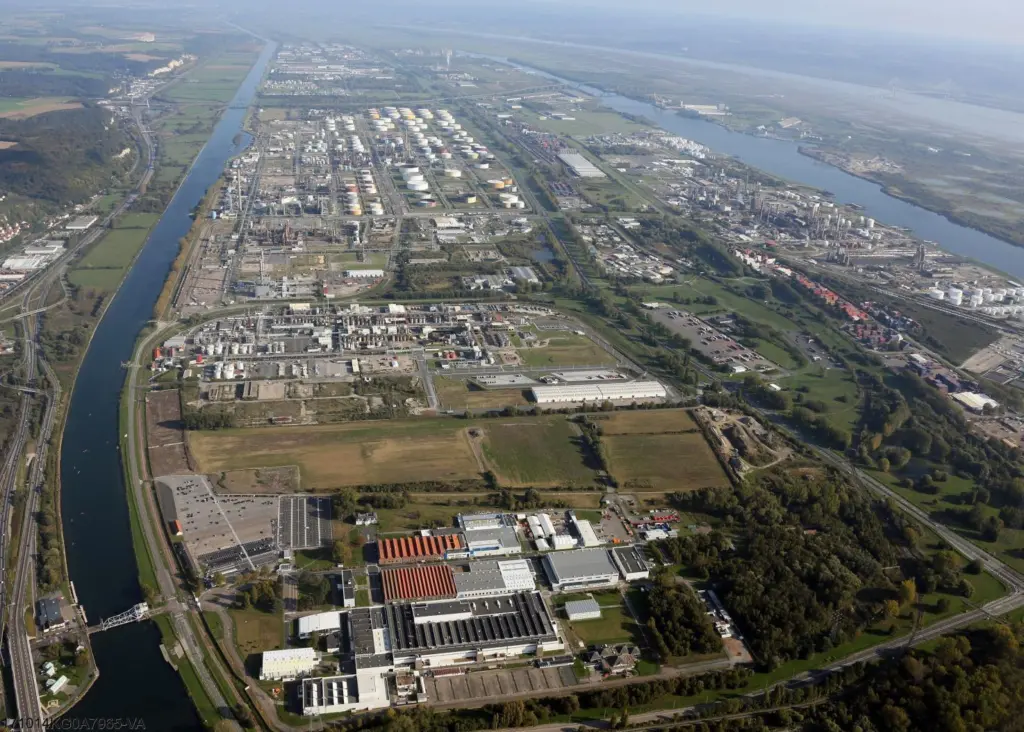
For HAROPA Port of Le Havre, 5G will allow better communications between sea and land enabling it to optimise safety and improve sustainability by gathering multiple types of environmental data.
“The trials conducted with our partners have led to the identification of new applications, demonstrating that 5G’s reliability and flexibility make it a particularly suitable data communication solution for future industry and the Seine Axis ports,” said Antoine Garibal, director of strategy at Siemens France.
“This ambitious, rigorous approach based on co-construction is the right solution for the requirements of industrial companies, providing greater resilience, competitiveness and sustainability.”
Smart port
Formed back in 2018, as part of the Smart Port City programme, Le Havre’s “5G Lab” collective was formed with three industrial corporations – Nokia, Siemens and Électricité de France (EDF).
The objective was to identify application scenarios that could, after some experimentation, be developed across the Seine Axis ports.
One of these scenarios is to field-test 5G’s technical capacity to manage electricity grids, including micro-grids.
A major step forward has since been made in the city and port 5G trials. Orange, the French telecoms operator, has announced the roll-out of 5G, which will boost the projects currently in their test phase.
France isn’t the only country taking a step forward in terms of 5G though.
In the UK, Verizon Business is working with Associated British Ports (ABP) to deploy private 5G at the Port of Southampton. Delivered in partnership with Nokia, Verizon’s private 5G platform will provide the port with a secure, low-latency private network connection.
The deployment will not only address the immediate problem of loss of onsite data communications as a result of poor Wi-Fi connectivity, it will also help enable the use of new technologies such as real-time analytics, the Internet of Things (IoT) and Machine Learning.
Related Articles
 ALTERNATIVE FUELS GREENPORT
 NEWS
NEWS