![PortStrategy[GreenPort]](https://www.portstrategy.com/wp-content/uploads/2026/09/PortStrategyGreenPort.svg)



Results for climate conscious
A European port has reduced its total carbon emissions by nearly a third in a five-year period.
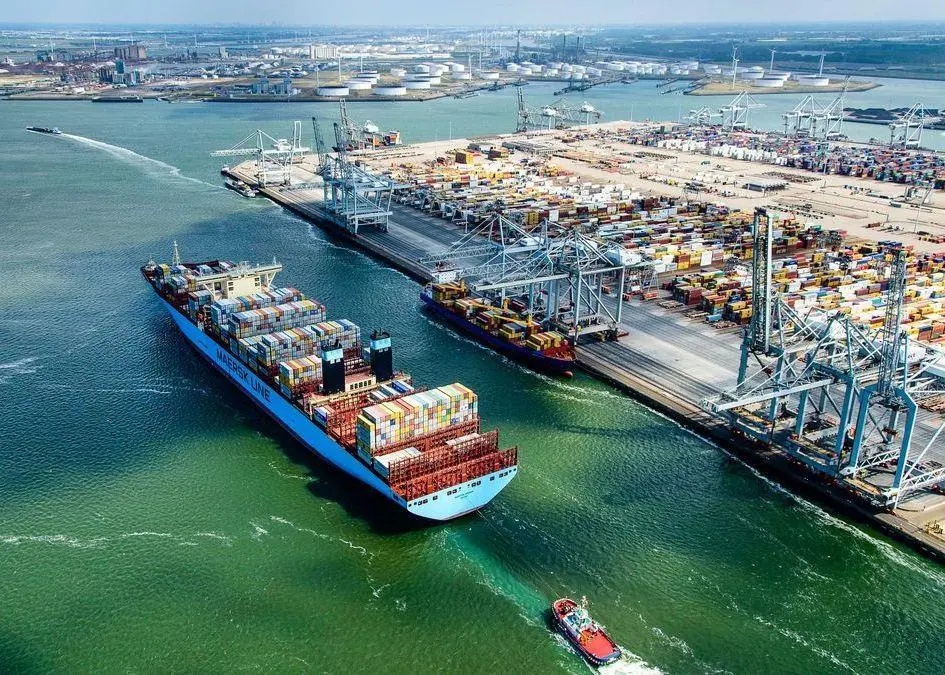
In the period 2016-2020, the Port of Rotterdam reduced its total carbon emissions by no less than 27%. Nationwide, the volume of greenhouse gases released into the atmosphere fell by 14% in the same period.
In 2020, Rotterdam achieved a 12% reduction in emissions, compared to 8% in the Netherlands as a whole. As a result of this swift decrease, companies in the port of Rotterdam are currently responsible for 13.5% of the Netherlands’ total carbon emissions: a share that several years ago was 16%.
Renewables are making a difference
The port’s total emissions volume combines those released by industrial production (refineries, chemical companies) and electricity generation (gas and coal-fired power plants).
Last year, Rotterdam’s power plants cut their carbon emissions by 1.9m tonnes (21%) – in percentage terms equivalent to the national figure. While a share of this reduction can be attributed to lower power consumption, this is mainly thanks to a substantial (over 40%), nationwide increase in the generation of electricity from renewable sources (solar, wind and biomass).
The carbon emissions of Rotterdam’s industrial sector fell by 1.1m tonnes (7%), while industrial emissions nationwide remained at the same level. These reduced industrial emissions are a consequence of economic contraction over the course of 2020. This slump led to reduced demand for oil and chemical products, forcing local industry to scale back its activities.
In 1990, the port released over 20m tonnes of CO2 into the atmosphere. Until 2016, this volume increased to over 30m tonnes as a result of the expansion of existing companies in Rotterdam and the arrival of new ones. From 2016 on, the port was able to report substantial reductions. By 2020, emissions were close to the total volume recorded 30 years ago, while at the same time the port area increased by 20% and the annual throughput by some 50%.
Related Articles
 ALTERNATIVE FUELS GREENPORT
 NEWS
NEWS