![PortStrategy[GreenPort]](https://www.portstrategy.com/wp-content/uploads/2026/09/PortStrategyGreenPort.svg)






Rotterdam works to conserve honey bees
Rotterdam is taking its preservation role seriously by helping conserve the Dutch honey bee and creating a new colony at the port.
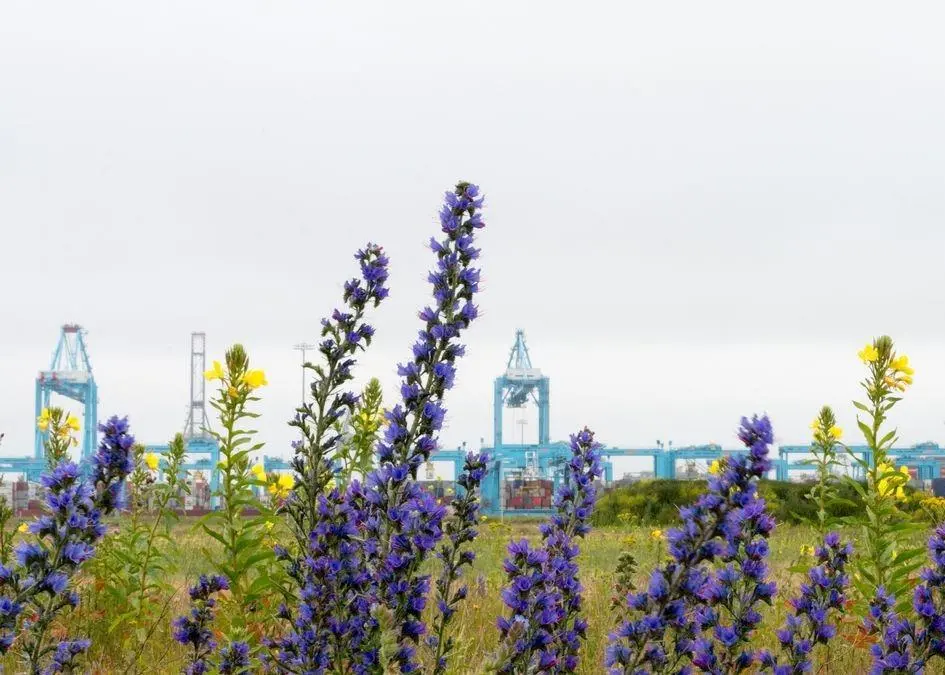
The port authority has created a new colony of honey bees on the Maasvlakte in the verge next to the Stenen Baakplein in its newly created ‘Honey Highway’, flower beds planted last year by primary school children from Brielle.
“This sea of flowers is in line with our policy for sustainable development of the port. We specifically focus on and create extra room for bees,” said Ronald Paul, COO of the Port of Rotterdam Authority.
Biodynamic approach
This is the first time the Port Authority has placed a bee colony in the port area and it has appointed a dedicated beekeeper to take care of the bees using a biodynamic approach to beekeeping that will result in what it calls a hardy bee species.
The Honey Highway was launched as an initiative of the Port Authority in cooperation with its new beekeeper Deborah Post.
Ms Post said that the 5,000 square metres of perennial flowers at the Stenen Baakplein and the flowering shrubs in the Geuzebos should provide sufficient pollen and nectar for the bees to comfortably make it through the winter.
She wants to take even greater steps for the conservation of bees, bumblebees and butterflies and rapidly reintroduce them to the Netherlands on a large scale.
To this end, she has spearheaded creating a permanent paradise for bees by sowing 44 different perennial native species of flower seeds along the verges of motorways, railway tracks and provincial roads and dikes.
Related Articles
 ALTERNATIVE FUELS GREENPORT
 NEWS
NEWS