![PortStrategy[GreenPort]](https://www.portstrategy.com/wp-content/uploads/2026/09/PortStrategyGreenPort.svg)





Sediment dumps used as bird habitat
A port in Spain is the first in the country to bring together the management of sediments from maintenance dredging with the creation of a habitat that favours the diversity of aquatic birds.
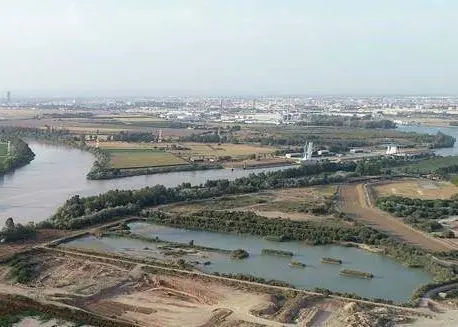
The Port Authority of Seville (APS) and the Spanish National Research Council (CSIC) have recorded a total of 52 species of aquatic birds in the Port of Seville’s land-based dumps, where the Port of Seville deposits the sediments extracted from the navigation channel during maintenance dredging campaigns.
In 2019, the port authority applied a protocol drawn up by the CSIC to encourage the presence of birds and to set up alternative areas for aquatic birds in the Doñana area.The protocol has consisted in adapting the dumps with artificial islands and dikes. The birds have used these spaces as areas for refuge, feeding and reproduction once they were adapted after the 2019 campaign for the maintenance of the navigation channel.
“Thanks to the collaboration between the scientific community and the Port of Seville, we have been able to bring together the operational functions of the land-based dumps with their environmental value, creating a place of interest for the community of aquatic birds in the estuary,” said Rafael Carmona, president of the Port Authority of Seville.
The port authority has maintaining the water level at the dumps without this depending on the hydrological cycle. In this way, birds have been able to have alternative wetlands at times of low rainfall, between spring and summer. This season, winter rainfall has been low, so the role of shelter in the dumps has become more important.
So far in 2020, nine species have successfully nested in the dumps.
Related Articles
 ALTERNATIVE FUELS GREENPORT
 NEWS
NEWS