![PortStrategy[GreenPort]](https://www.portstrategy.com/wp-content/uploads/2026/09/PortStrategyGreenPort.svg)






Significant progress for Bremenports
Bremenports has published its fourth GRI report which shows significant progress in the area of sustainability.
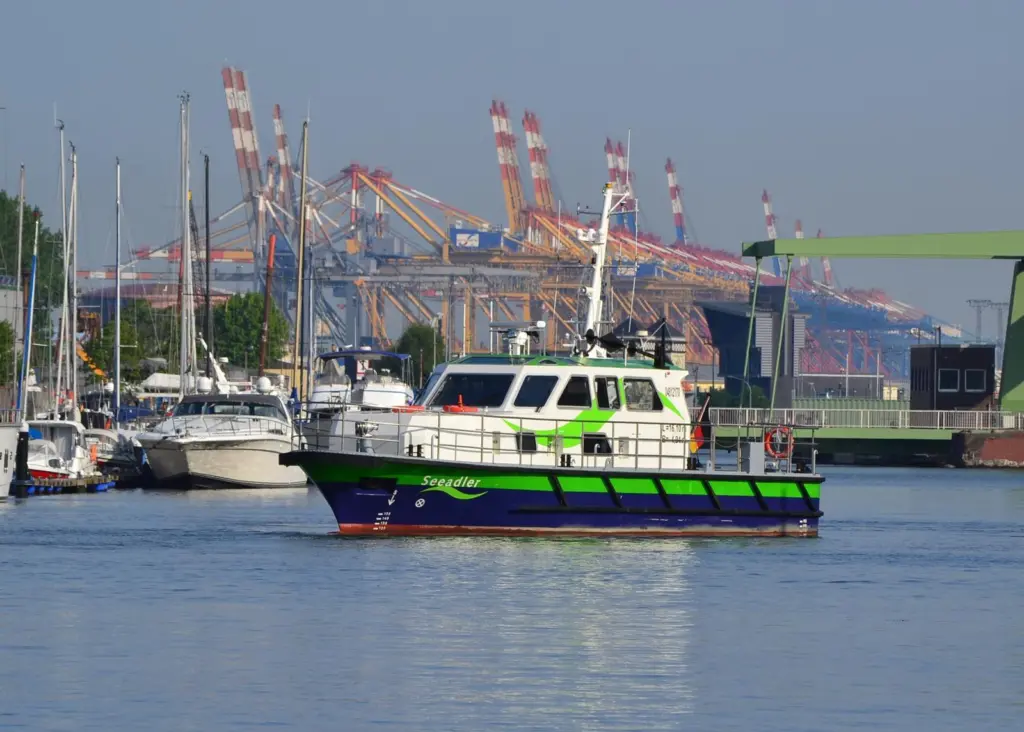
Bremenports’ share of renewable-based electricity has increased by almost 100% over the past year, and energy consumption is believed to have been reduced by about 10% compared to 2012.
Every third and fourth ship, which equals 28% of all ships, calling at the ports of Bremen provided an ESI-Scored and were more environmentally friendly than the legal standard – this is up from 11% three years ago.
Martin Gunthner, senator for economic affairs, labour and ports of the free hanseatic in the City of Bremen, said: The commitment [to sustainability] is also gaining recognition outside of the cities of Bremen and Bremerhaven. The most recent example of this was when the European Sea Ports Organisation (ESPO) presented bremenports with an award for the Luneplate concept.”
He added: “The ESPO Award 2016 acknowledges the overall concept for the natural spaces of high value that were created to offset, to high international standards, encroachments into nature due to such port construction projects as Container Terminal 4.”
Biodiversity activities of bremenports on more than 1000 ha on the Luneplate in the south of Bremerhaven led to the biggest nature protection site (1400 ha) in our Federal State “Free Hanseatic City of Bremen”.
This is the area which bremenports received the ESPO award for in 2016, with 31% of the total port area still used as habitat site.
In container transport the share of hinterland volumes increased to 43% compared to 36% in 2012; but still 57% is transshipment volume.
Robert Howe, managing director of Bremenports GmbH, continued: “The 2015 report is a document which yet again reveals considerable progress.”
He went on to explain: “For example, within the “economic” category, both the port management company and the special assets Ports report a substantial increase in sales revenue over the previous year. Within the “environmental” category, the proportion of electricity generated from renewable sources rose to just under 100 %. On the “social” front, with a trainee rate of 10.2 %, we are taking responsibility for the younger generation.”
The report was prepared in accordance with the internationally recognised GRI G4 Guidelines and underwent a rigorous external assurance by KPMG.
For the report, a focus was placed on the update of key figures as well as on the fine-tuning of the greenports programme: an ambitious bundle of sustainable initiatives and measures.
Related Articles
 ALTERNATIVE FUELS GREENPORT
 NEWS
NEWS