![PortStrategy[GreenPort]](https://www.portstrategy.com/wp-content/uploads/2026/09/PortStrategyGreenPort.svg)


UK port closes in on carbon neutral ambitions
One UK port’s ambitious carbon reduction plan has been approved to enable it to press forward with plans to become the first net carbon neutral UK port by 2030.
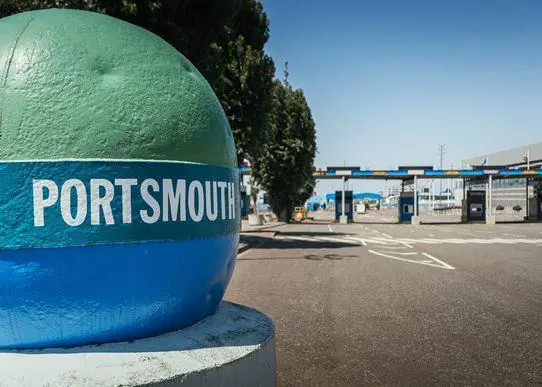
Portsmouth International Port’s (PIP) plan has been approved by Portsmouth City Council, which owns and operates the port. The plan sets out a road map that will help fulfil the port’s carbon neutral 2030 ambition, and the first zero emission port as part of the government’s Maritime 2050 strategy.
Mike Sellers, port director at PIP, said: “We need to take bold action if we’re to meet our goal to be the UK’s first zero emission port, and play our part in tackling this pressing issue.”
PIP’s plan includes maximising the use of solar panels and battery storage technology; installation of wind turbines across the site; ‘Living walls’ introduced around the perimeter of the port; fast charging points for electric vehicles installed at the terminal building; and the replacement of diesel vehicles at the port with electric versions. Vehicles that cannot be replaced with electric-powered equivalents will be upgraded to those that comply to the latest emission standards.
Extensive work has already taken place. The terminal building uses wind catchers on the roof of the building for ventilation, and sea water harvesting for heating, cooling and toilet flushing.
The latest linkspan uses ‘soft-start’ electric motors to reduce electricity consumption, and lighting across the port has been upgraded with LED technology. Air quality sensors are also being installed across the port.
Portico, who operate the international cargo terminal at the port, have made a switch to cleaner Gas to Liquid (GTL) fuel.
The plan will now be submitted to the Department for Transport for formal approval.
Related Articles
 ALTERNATIVE FUELS GREENPORT
 NEWS
NEWS