

OMC helps green ports dig deeper
Australian maritime engineering company, OMC International, is helping ports prepare for larger loads and bigger ships while still remaining ‘green’.
The company’s award-winning, web-based under keel clearance (UKC) management technology, DUKC, can increase port capacity with less capital dredging because it can create the channel depth profile which matches the depths requires for the ships transiting. OMC says this maximises the value of every centimetre dredged while minimising harm to the surrounding marine ecosystem.
It is also said to enhance safety which reduces the risk of ship groundings and consequent environmental disasters.
Under favourable conditions, DUKC can allow large ships to safely sail up to 1m deeper – allowing them to carry more than 15,000 extra tonnes of iron ore or coal. According to OCM, every extra centimetre of draft that a large bulk ship can be loaded means around an extra 150 tonnes of cargo which, depending on the price/tonne, could add more than an extra AUS$15,000 per cubic metre in revenue.
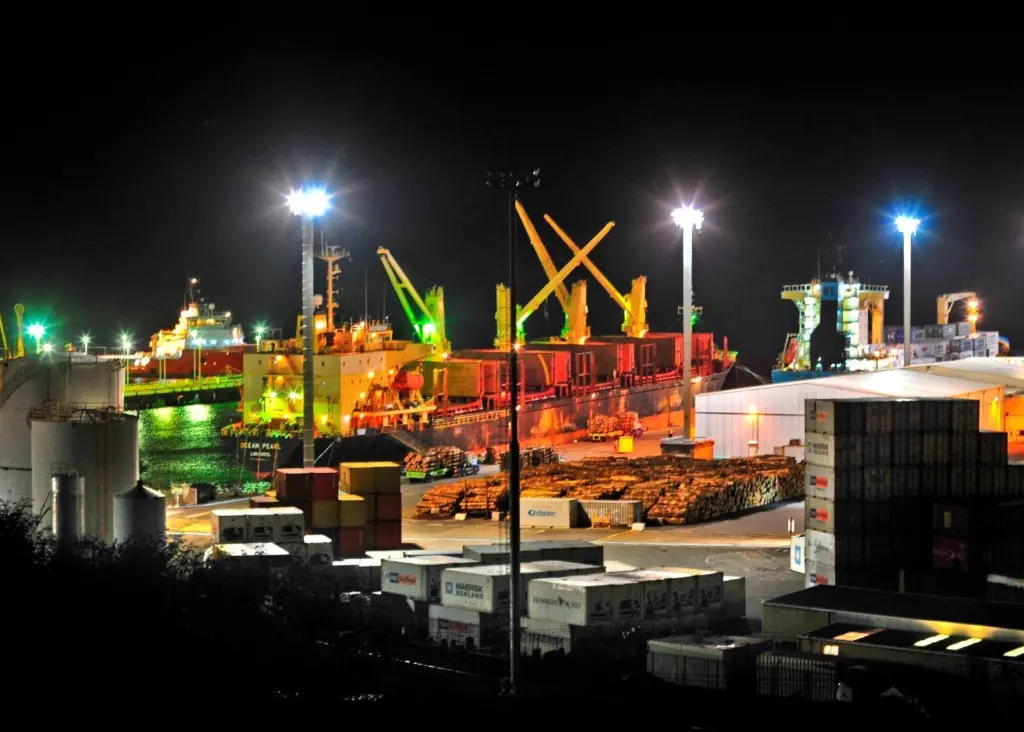
One port already using the DUKC Series 5 is New Zealand’s Port Taranaki. Where the software reduced the port’s planning costs by around 50%. Operations manager at the port, Captain Ray Barlow, said: “If we were to achieve the aims we had set we had a clear choice: spend NZ$15m dredging or adopt DUKC plus minimal dredging and spend under NZ$1.5m.”
Systems are also already operating in most major Australian ports, and in New Zealand, Europe and North America, but now the company is focusing its efforts on South America, including Brazil and Chile.
“We are particularly focused on the South American market because of the potential for DUKC to increase productivity at some ports whilst decreasing the risk of grounding that the larger bulk ships may present,” explained Dr Terry O’Brien, executive director.
“A challenge for many South American ports is the limited depths in the access channels as well as coastlines exposed to swells that can generate significant wave induced ship motions,” he added.
The software also means the number of ships needed to employ is reduced, as is the dead freight and carbon emissions by fewer sailings overall for the same tonnage.
Related Articles
 ALTERNATIVE FUELS GREENPORT