



On the Move
Jordans only commercial port currently handles annual traffic of around 20m tons. Situated on the Red Sea, it occupies a unique location, being virtually at the crossroads of Israel, Egypt and Saudi Arabia, as well as within striking distance of emerging new markets in Iraq. Alex Hughes reports.
Nasim Alahmad, VP for Transport and Infrastructure of the Aqaba Development Corporation, says that container throughput is especially encouraging, having risen 15% in 2004 upon reaching 360,000TEUs, although this is expected to double over the next ten years. APM Terminals was awarded a twoyear contract to develop the box terminal in March 2004, which is due to expire at the end of the current financial year. However, Alahmad explains that this agreement will then be converted into an equal joint venture partnership with the port, which will allow development of the terminal to continue, as expansion will boost capacity to 3m TEUs/year.
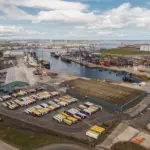
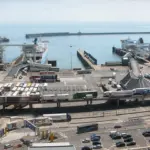
At present, boxes are handled at a facility in Aqaba’s Central Port location, where a neighbouring ferry terminal effectively prevents lateral expansion. However, a new ferry terminal will be built in the South Port area and the management of the facility outsourced to the private sector.
Behind the existing box terminal, a new container logistics village is to be built, for which the Aqaba Development Corporation has issued a tender seeking a private sector developer. Given current throughput levels at the port, traffic for this initiative is virtually guaranteed, with Alahmad stressing the political stability of Jordan as one of its key selling points.
With tourism in the region on the increase, the existing ferry service, which currently links Aqaba with Egypt, is expected to continue to see year-on-year traffic growth. At present, it carries around one million passengers and 250,000 vehicles annually, of which 70,000 are trucks conveying commercial traffic.
“Most of this ro-ro commercial traffic originates in Egypt and serves Jordan and the Gulf states, ” Alahmad points out, adding that around 60% of the passengers are religious pilgrims, many of whom are undertaking the Haj to Saudi Arabia.
“Now that we have been successful in attracting a private sector operator to run the container terminal, we intend to launch a second tender in 2005 in search of a management company interested in the revamped ferry terminal. After that, we intend to invite bids for all our existing terminals, at the rate of one a year, ” says Alahmad.
ATTRACTING THE PRIVATE SECTOR Indeed, Aqaba has strong liquid and dry bulk traffic; phosphates and fertilisers are exported, while crude oil is imported. However, as part of the overall port master plan, a brand new oil terminal is to be built in the South Port region, while plans exist to site a revamped phosphates terminal in the same area, as the existing Main Port is returned to the city for commercial and leisure development.
“There is definite potential growth in phosphate exports and fertilisers, which makes this terminal particularly attractive for the private sector, ” Alahmad emphasises.
Additionally, there is strong general cargo and other ro-ro businesses, the latter having boomed in the last couple of years as Iraq has waived all import duties on second hand cars, leading to massive imports arriving from Japan, China and South Korea. However, new regulations have now come in force which favour enhanced trade in new vehicles, although general Iraqi transit traffic shows no sign of falling away.
Aqaba’s other major advantage vis-a-vis regional competitors is its Special Economic Zone, where companies simply pay 5% of their net profit annually in tax if they locate there; there is no sales tax.
Tourism is also on the increase, so ferry trade is expected to rise with it, while materials for the reconstruction effort in Iraq continue to be channelled through the port.
“Much of the future development of the Port of Aqaba will be taken forward by the private sector, ” stresses Alahmad. “The role of the Aqaba Development Corporation is twofold: to act as an enabler in this privatisation process and also to make sure that non-profit making facilities are available. In this respect, our establishment of an international school here in Aqaba is a good example of where we are prepared to step in to provide the sort of supporting infrastructure that would not necessarily interest private developers.”
Related Articles
 NEWS
NEWS
 CONTAINER & CARGO HANDLING
 OPERATIONS