



One careful owner
The secondhand crane market is still languishing, depressed by a flood of units. Alex Hughes reports
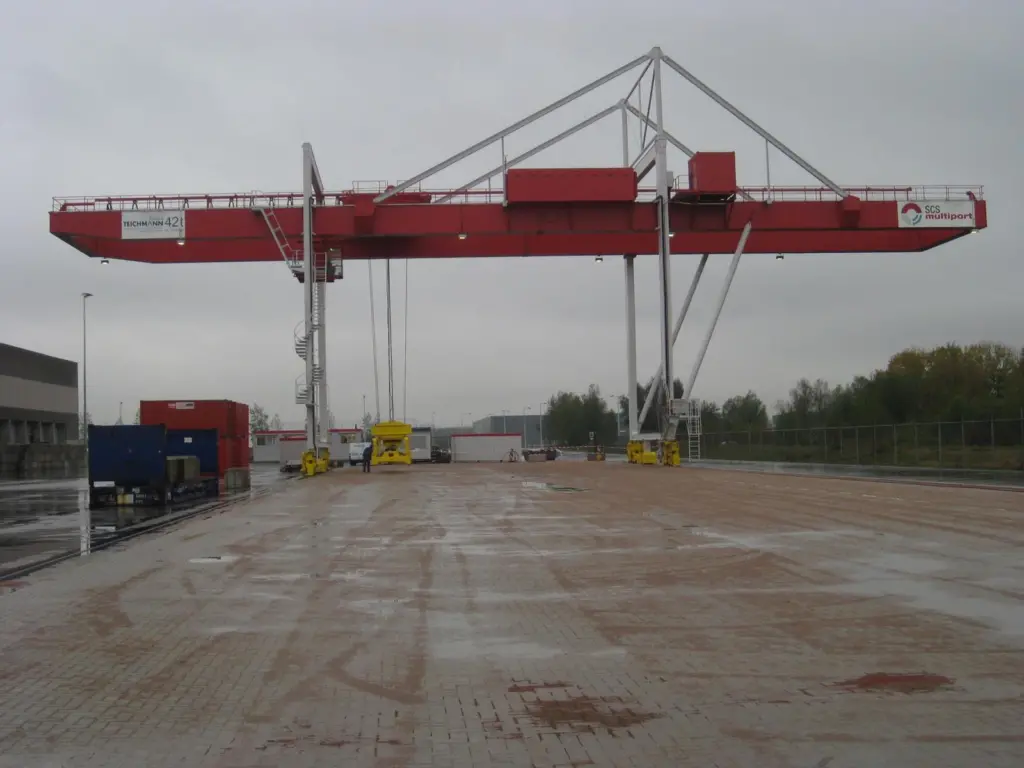
The economic downturn has not, as anticpiated, boosted sales of secondhand equipment. Indeed, hopes for a boom as ports sought out cheaper quayside machinery appear to have been dashed and then trampled by the arrival of original equipment manufacturers on the secondhand scene, hoping to secure a new revenue stream.
Marseille-based Container Terminal Services (CTS) has an established secondhand equipment business, dealing in unwanted or life-expired equipment – such as ship-to-shore cranes and mobile harbour cranes – sourced from ports in the Le Havre-Hamburg range and sold on to operators in South Europe, North Africa and West Africa. In addition, smaller machines, such as reachstackers, fork-lift trucks and empty handlers are also traded, although company spokesperson Anthony Martin-Garin points out that, given transport costs, these tend to be sold close to the area where they were originally bought.
He explains that, at the moment, a lot of equipment is becoming surplus to requirements in France. This is the result of the new Port Law reforms, which have seen terminal operations transferred to private sector companies. The new owners are not obliged to buy existing equipment, and as a result older cranes are being sold on, flooding the market. The current downturn means some equipment is also being shed to align supply with demand.
“Le Havre is proving a good source of second hand equipment for us,” says Mr Martin-Garin. “We are picking up cranes at good prices, some of which we are selling on to ports in south Europe.”
However, many of the company’s traditional customers are strapped for cash and unwilling to make purchases because of uncertain market conditions. German secondhand specialist Teichmann confirms this trend, with managing partner Ralf Teichmann confiming that, in some areas, there has been an increase in the number of machines being offered for sale.
“The quality of some of these machines is not always as good as we are looking for. A lot of the quayside gantry cranes being offered are quite old, which makes them less attractive. Up until recently, there were also few nearly new cranes coming onto the market. However, insolvencies have increased the supply of these, but the asking price has often proved unattractive,” says Mr Teichmann.
At CTS, Mr Martin-Garin identifies two distinct types of customer for secondhand equipment, both with their own idiosyncrasies restricting sales. The first, smaller operators, don’t have sufficient resources to buy new equipment and will often seek out a reachstacker with 10,000 hours on the clock and sweat it for a further five years.
“Some start up operations cannot justify buying new. But because a refurbished unit will be half the cost of a brand new machine that often becomes a viable option for some businesses,” he explains.
As for the second, bigger operators, they dip into the second hand market to acquire equipment in a hurry in response to a sudden surge in traffic.
Mr Teichmann agrees. He points out: “Many older cranes still have first class steel structures, so if these can be professionally overhauled, repaired and, if necessary, equipped with new components, then the end result is a unit that is as good as new. During a refurbishment, we can mechanically and electrically out shop a crane that is compatible with new units at just 50%–70% of the price of a new one.”
The company does not accept that buying secondhand could potentially mean that the new owner will have to deal with inherent problems that prompted the previous owner to offload the crane in the first place. Indeed, it is suggested that brand new cranes can often be worse, since they are assembled on site using parts and components sourced from around the globe, some of which may have compatibility issues. It can sometimes take up to two years before a brand new crane will completely settle down.
“This type of problem has invariably already been resolved in a refurbished unit. In many cases, cranes are sourced from terminals or users that do not need them any more because of a change in business volume; there is nothing inherently wrong with them. In other cases, the pre-owned crane has been replaced by a faster or larger unit and is therefore surplus to requirements,” says Mr Teichmann.
All cranes are thoroughly inspected by the company’s workshop personnel and any necessary repairs undertaken. All damaged components are replaced and warranties issued. All new components get full 12–24 month guarantees; steel modifications 6–12 months; while all other components that are inspected are guaranteed to be in full working condition at commissioning.
CTS’ main business remains gantry cranes and mobile harbour cranes, where a refurbishment package can actually add significant value to the product sold. Furthermore, given the specific operating conditions of most cranes, it can be quite difficult matching them to potential new owners, but this is one of CTS’ specialities.
“Sometimes, operators simply don’t want a crane any more and will offer it for free or for a nominal price and we can transfer this equipment to somebody else, because the only cost is transport and refurbishment. In addition, we have partners who will adapt each crane to the specific requirements of the buyer.”
On other occasions, the original purchaser will have problems with a piece of equipment because it’s not perfectly adapted to their operating conditions. However, CTS can often find a better fit for it in the second hand market. This can either be as part of a turnkey contract, involving transport and refurbishment, or simply identifying a suitable crane, leaving everything else up to the purchaser.
“If necessary, we will supply written guarantees at the time of purchase,” says Mr Martin-Garin. “We can also bundle spare parts into the end price.”
Asked if there are purchasers for virtually any age of second hand equipment, he recalls that cranes from around 1980 have been sold on by CTS. But he emphasises that, on occasions, a crane becoming available may have been designed for a particular rail span and lifting height which is replicated at only three of four other terminals in the world. In that type of situation, invariably an interested purchaser may simply be located too far away for anybody to profit from such a transaction. On occasions, CTS will therefore simply buy the structure and create a new crane.
“A brand-new post-panamax crane costs around €6m ($8.1m); we can deliver a refurbished unit at half that price and sometimes for even less,” he says.
As for Teichmann, it specialises in pre-owned cranes, especially refurbished ship-to-shore and barge gantries, rail-mounted gantry cranes and also level luffing jib cranes. These are customised by the company before being shipped out to the client. Overhauls overseen by its engineers mean that delivery times have to be agreed with sub-contractors, which also encompasses the acquisition of replacement components. In this respect, there can occasionally be a shortage of resources.
However, Teichmann’s customer service does not end once the unit is handed over. It will, for example, undertake a yearly safety inspection using its own personnel and also offers a 24-hour service covering repairs and re-conditioning. Parts supply is also not a problem. At handover, all technical documentation related to the unit is packaged in with the crane, including workshop manuals and drawings, as well as a test certificate.
Related Articles
 NEWS
NEWS
 CONTAINER & CARGO HANDLING
 OPERATIONS