


Other options for paying the bill
For the past eight years, Virginia Port Authority (VPA) has funded equipment purchases either by issuing bonds or as part of an instalment purchase programme, writes Alex Hughes.
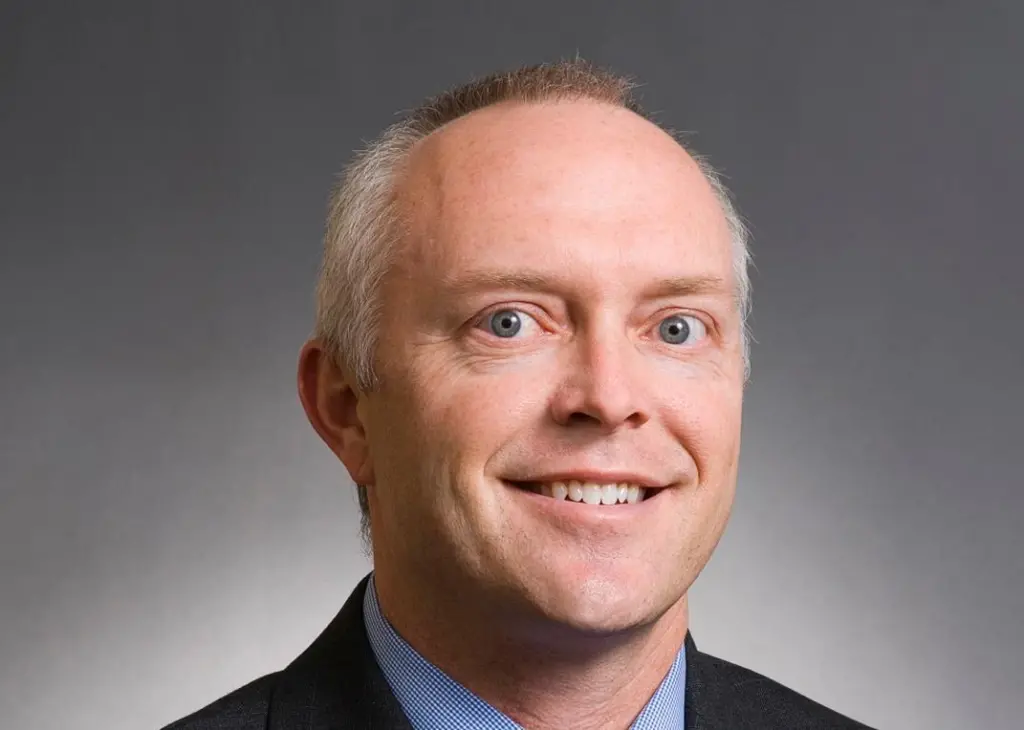
VPA finance director Rodney Oliver says that, under normal circumstances, the bond market would not be a particularly attractive route for terminals looking to secure competitive interest rates. Average equipment purchases placed by VPA tend to be in the region of $10m, whereas the bond market is really only competitive with issues of upwards of $50m.
However, if a new terminal is being built, it makes sense for the owners to bundle the acquisition of quayside gantry cranes in with capital works and offer the market the opportunity to bid for the subsequent bond issue.
“The interest rates we can secure through bonds are generally as good, if not better, than those we can get through the instalment purchase programme,” says Mr Oliver.
The VPA is in a somewhat unique position in the US, in being a political subdivision of the Commonwealth of Virginia and therefore a non-taxable entity, he explains. It therefore has no need to offset equipment purchases against tax. Because of its tax status, those financial institutions lending it money do not have to pay any state or federal tax associated with that loan. This means that the VPA can invariably secure highly competitive interest rates, since many banks and financial institutions have every incentive to lend money to it.
“In the last six or seven years, interest rates have been extremely attractive. However, with the financial crisis that hit us a couple of years ago, a lot of those entities that previously lined up to provide us with finance have gone out of business. Nowadays, there are fewer entities in the market but, significantly, there are also fewer borrowers. So, even though there is less need for capital investment because of the depressed state of the economy, rates have remained pretty attractive,” says Mr Oliver.
He points out that, by using the instalment purchase route, VPA becomes owner of the equipment from day one, although the financing entity retains first lien on the equipment. Compare this to an operating lease, where ownership would remain with the financing entity, although the balance sheet would reflect the monthly or quarterly payments associated with that lease.
Repayment periods negotiated by the VPA can vary. For larger pieces of capital equipment, such as quayside gantry cranes, purchases are paid off over a maximum of 15 years, while for more mobile units, such as straddle carriers, a period of up to ten years is preferred.
Mr Oliver says VPA has in the past looked into taking finance offered by
OEMs but invariably this proved much more expensive. He speculates that manufacturers tend to offer finance to terminals that might otherwise struggle to secure finance, or to terminals in which they have some form of equity stake. However, for all other terminals the open market can invariably provide more competitive rates.
One of the OEMs prepared to help secure financing for potential customers is Konecranes. Trade finance director Matti Malminen says that, under normal circumstances, terminals have broadly two choices when acquiring handling equipment: either to lease or to choose debt financing.
The former is often the more convenient option for more mobile equipment, such as FLTs, reachstackers or straddle carriers, since leasing does not tie up a customer’s resources at the bank; most countries also offer distinct tax advantages, too. Significantly, equipment manufacturers will often bundle a servicing contract in with the leasing package, which can be an important element in maintaining residual value in the equipment when the lease period comes to an end.
As for debt financing, the overall costs can be lower, plus the purchaser retains ownership of the equipment at all times. “That then essentially leaves the customer free to do what they want with the machine,” he says.
For larger pieces of equipment, leasing is not normally an option, so the only available finance resource in most cases is to look to third party funding.
Konecranes can assist customers to find financing from third parties. The starting point is to obtain a Buyer’s Credit, which would be issued to the OEM by well-known finance institutions. These can be investment banks or multilateral entities such as the European Bank for Reconstruction and Development (EBRD), IFC and NIB. In many cases, they make use of Export Credit Agencies to guarantee all or part of these transactions.
When the deal has reached a stage whereby the customer’s bank is ready to advance the necessary loan, Konecranes can, if required, make use of Post Finance Documentary Credits, which are a feature of longer-term transactions. They are issued by the purchaser’s bank and then re-guaranteed by European banks that habitually work with Konecranes.
“In some instances, we will even provide financing (Seller’s Credits), adding credit to the transaction for a particular period, along with all financial charges, thus slightly increasing the value of the crane. In these cases, Konecranes, requires a guarantee/commitment from the customer’s bank (normally a Deferred Payment Documentary Credit or avalised Bill of Exchange). In only a few exceptional cases will we assume the risk directly on to our own books,” Mr Malminen emphasises.
Asked whether Konecranes ever incorporates a buy-back clause as part of equipment leasing agreements in order to make purchases more attractive, he observes that, mostly, this would be extremely difficult to do. Only in the case of FLTs, which are easy to transport and where there is a very good second-hand market, would it even consider this.
Significantly, for Ports of Auckland (POAL), the key consideration is less about the source of funding and more about maximising return on investment. “Future capital expenditure programmes will be driven less by the financial markets or by opportunities related to the availability of funding, and more by careful strategic planning to ensure just the right (and just-in-time) capital investments are made to meet demand.”
A spokesperson says the overall impression is that financial markets, despite the turmoil in recent times, remain highly competitive. Relationships, however, remain very important and, if anything, are even more important than prior to the global financial crisis. The drivers, however, have changed from a “build it and business will come” approach to growth, to a “be sure of business coming and then invest appropriately”.
“No one wants to get caught out, so, going forward we are going to concentrate on ensuring we made prudent capital expenditure at all times,” stresses the spokesperson.
Related Articles
 PORT & TERMINAL NEWS
 INSIGHT & OPINION
 PORT & TERMINAL NEWS