![PortStrategy[GreenPort]](https://www.portstrategy.com/wp-content/uploads/2026/09/PortStrategyGreenPort.svg)






Cargo thieves getting smarter
Cargo theft is evolving into more sophisticated and strategically planned operations, with organised criminals increasingly using fraud, impersonation and AI-driven techniques to exploit supply chain vulnerabilities.
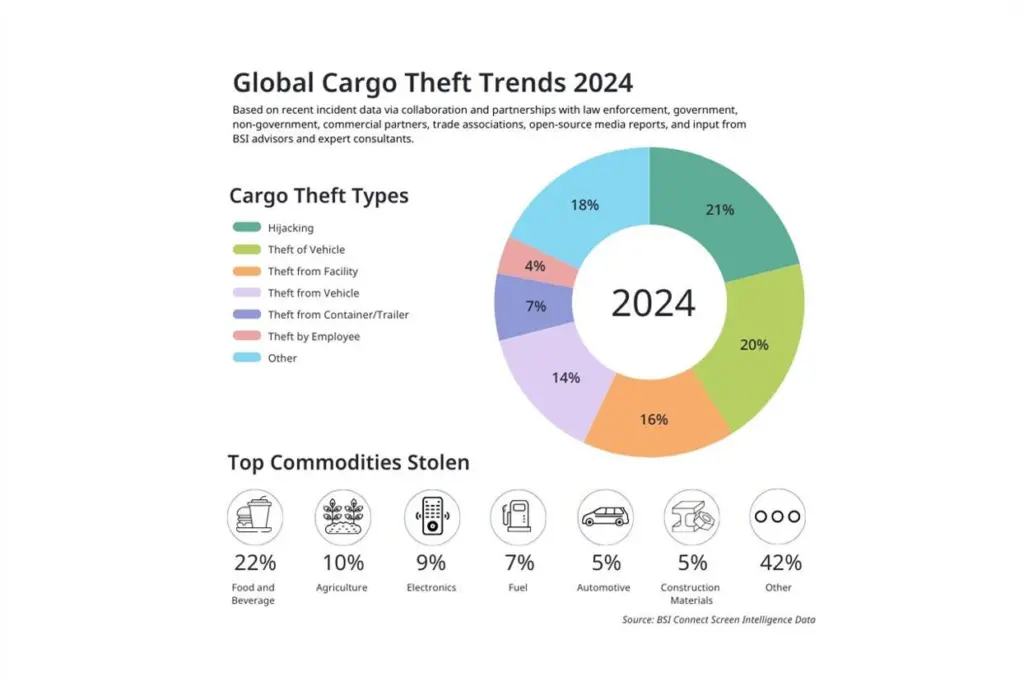
This is the finding of the ‘BSI Consulting and TT Club 2024 Cargo Theft Report’ which gives a detailed analysis of targeted commodities, prime locations for theft and evolving strategies used across the world.
“The growth in strategic crime, defined as that using deception, fraud and advanced planning is the most remarkable finding in our report,” said Tony Pelli, global practice director for security & resilience at BSI Consulting.
“The degree of sophistication used shows that organised crime’s knowledge of supply chain vulnerabilities is deepening.”
The report showed that food and beverages were most frequently stolen (22%), 76% of thefts involved trucks and nearly half occurred when cargo was in transit with theft from facilities down from 25% in 2023 to 18%.
Regional hotspots include Brazil, Mexico, India, USA, Germany, Chile and South Africa. Most significant perhaps was the growth in ‘strategic’ and internet-enabled theft.
“The burgeoning use of the internet, though available for nefarious action for some years, is constantly spawning new technologies and should not be overlooked,” said Mike Yarwood, managing director, loss prevention at TT Club.
“Techniques such as harnessing AI to create phishing emails, deep fakes and malware aimed at accessing sensitive freight information and reports of attacks targeting cloud-based storage services are becoming more common.”
The report recommends that cargo movers and other stakeholders increase their cybersecurity, particularly around the use of email, and consider using tracking services to vet and monitor third-party contractors.
Related Articles
 EXPANSION & DEVELOPMENT
 CONTAINER & CARGO HANDLING
 PORT & TERMINAL NEWS