Shaping the environmental future for ports
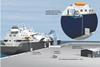
Many of the world’s harbours are located in city environments where noise and emission pollution from docked ships is a growing concern. With this in mind, port cities, port authorities, ship-owners, industry suppliers and regulators are now focusing on the decade old technology known as shore-to-ship power, for which universal electrical standards are on the verge of being ratified by IEEE, ISO and the IEC, says John Penny, General Manager LV Power Converter Products Discrete Automation and Motion division.
Often the shore supply is not at the same frequency as the ship. ABB’s power converter technology supply allows commercial ships calling at ports and shipyards to turn off their diesel engines and tap into cleaner energy sources. Having successfully delivered the world’s first shore-to-ship power connection to the port of Gothenburg, Sweden in 2000, ABB has not only the core technologies but also the experience required to make the complete connection, onboard and onshore.
Embracing shore to ship power
ABB has a comprehensive range of Static Frequency Converter (SFC) solutions from the very high power and efficiency PCS 6000 medium voltage converters to the highly flexible and reliable PCS100 SFC products which are based on a low voltage modular topology. Both designs allow ships operating at one electrical frequency to connect to the shore at another frequency. Growing environmental and legislation compliance pressure is seeing many port authorities, shipping companies and shipyards embracing shore to ship power. ABB is a market leader in this new but fast growing business and have many global installations, recently supplying an 8 MVA PCS100 SFC to Jurong Shipyard in Singapore, the largest application for ABB’s low voltage technology. Other PCS100 SFC applications have been; Viktor Lenac shipyard in Rijeka Croatia, to help improve quality of power and reduce maintenance costs, the Swedish port of Gothenburg, supplying electrical power to a large number of Stena Line vessels using the port, and the port of Ras Laffan in Qatar. ABB’s medium voltage SFC products are also shaping the environmental future for ports, with a project consisting of a 6.25 MVA PCS 6000 that is helping to ensure environmental compliance at the Swedish port of Ystad. “It is important to us that our services are environmentally friendly. Besides, we calculate that the effects on the environment will turn out so positively for Ystad’s inhabitants that the total socioeconomic balance will be on the plus side”, said Björn Boström, Managing Director of the Port of Ystad.
With ABB’s shore-to-ship power connection, a large cruise ship can cut fuel consumption by up to 20 metric tons and reduce CO2 emissions by 60 metric tons during a 10-hour stay in port – equivalent to the total annual emissions of 25 European cars. It is no surprise then that interest in shore-to-ship power is growing, not only for environmental but also for economic reasons. Shore-to-ship electric power supply, also known as “cold ironing,” is a sensible choice for greener ports and fleet. The solution enables ships to shut down their diesel generators and plug into an onshore power source while berthed. Most of the world’s ships generate power at 60 Hz, which creates a special challenge for many parts of the world where the shore frequency is 50 Hz. Converting voltage is relatively easy with an electrical transformer but converting frequency is very challenging which is where ABB’s SFC technology comes into its own. Hans Nyberg, Project Manager at Stena Line commented on the PCS100 SFC they have installed, “most ships run at 60 Hz as by increasing the frequency, you can get more power from the engines. ABB’s PCS100 SFC technology allows continued operation while the ship is docked without pollution or noise. That is the greatest advantage.”
With an ABB shore-based power connection, a ship is able to turn off its engines without interrupting its port services, such as loading and unloading, hoteling at berth or any other activities that consume power at berth. The connection and disconnection of the ship takes as little as 15 minutes, and administration of power supply and consumption is handled by the port operator. Establishing a shore-to-ship power connection necessitates investment by both ship owners and port authorities or terminal operators in the form of either a retrofit of existing assets or construction of new ones. The ship needs an additional electrical switchboard, cables connecting it to the ship’s main switchboard, and, in many cases, a step-down transformer. The port requires a substation with breakers and disconnectors, an automated earthing switch, a transformer, protection equipment such as transformer and feeder protection relays, communications equipment to link ship and shore, and in most cases a frequency converter to adapt the frequency of electricity from the local grid to match that of each vessel. Further, a cable-management system is needed for either the port or the ship.
Such technology is now readily available, and given the environmental pressures port companies face and it is no surprise that shore to ship power is gaining considerable attention. It is increasingly appearing in regulations and discussions in the European Union, the United States and within the United Nations’ organisation for maritime policy, the IMO. EU directive 2005/33/EC regarding the limitation on the sulphur content of fuel oils used by ships while ‘at berth’ in ports within the European Union, which went into effect on January 1, 2010, exempted ships using shore-based electricity from a rule requiring use of reduced sulphur-containing marine fuels while in port. In the United States, legislation proceeds state by state; California, a regulatory forerunner, has begun to require shore side electricity connection for some ship types. At the IMO level, new restrictions on the allowable sulphur content in fuels improves the economical case for onshore power, without explicitly mandating or supporting it. Onshore power supply is a well-established technology, which is already available at several ports, including those in the United States, Belgium, China, Canada, Germany, Sweden, Finland and the Netherlands. With a new set of global shore side electricity standards on the verge of ratification, the practice is expected to rapidly expand for all major types of ships and ports worldwide.
ABB’s solution
Static Frequency Converters (SFCs), which are a safe, economic and highly efficient solution converting the grid electricity to the appropriate load frequency. Historically rotating machinery has been used but this is inefficient and has high operational and maintenance costs. ABB’s leading-edge frequency conversion technology guarantees a seamless automated power transfer of the ship load from the onboard power plant to the onshore source and back.
This solution contributes to a significant reduction of fuel and lubrication oil consumption, which means less pollution and improved financial benefits. Shore-to-ship power is especially applicable to ships operating on dedicated routes, and vessels that consume large amounts of power while in port. This could bring real benefits for terminal operators whose ferries berth each day for a fixed number of hours.
Versatility, integrity and unrivalled flexibility
The PCS100 SFC systems are configured as an arrangement of modular redundant rectifiers and inverters controlled by a power electronic controller. This unique line-up produces sine wave voltage to supply the output load. Should any module fail the system will continue to operate normally with slightly reduced capacity. The converters also allow for the control of reactive power on the ship as well as on the shore side and bi-directional power flow. This feature permits maximum flexibility in adjusting the system to suit the customer’s needs. The PCS100 SFC is suited for low-power applications, with a power rating of 125 KVA to multi MVA. The modularity and scalability of these systems enable multiple units to be paralleled, which makes the solution adaptable to the different power requirements of ships and to a variety of port infrastructures.
The PCS100 SFC has a small footprint design and can be placed indoors or outdoors. This gives the customer flexibility with the physical and spatial layout to harmoniously fit to the surrounding architecture. The PCS 6000 systems are based on the highly reliable and efficient medium voltage IGCT (Integrated Gate commutated Thyristor) and are suited for applications up to 120 MVA. This suits a centralised port electrical reticulation system where one large converter supplies 60 Hz to docking stations remotely located.
For more information, please visit http://www.abb.com/.