





Take sustainability accounting to next level
Reporting on sustainability can help organisations work towards better practice. Michele Witthaus looks at trends in this type of disclosure by ports.
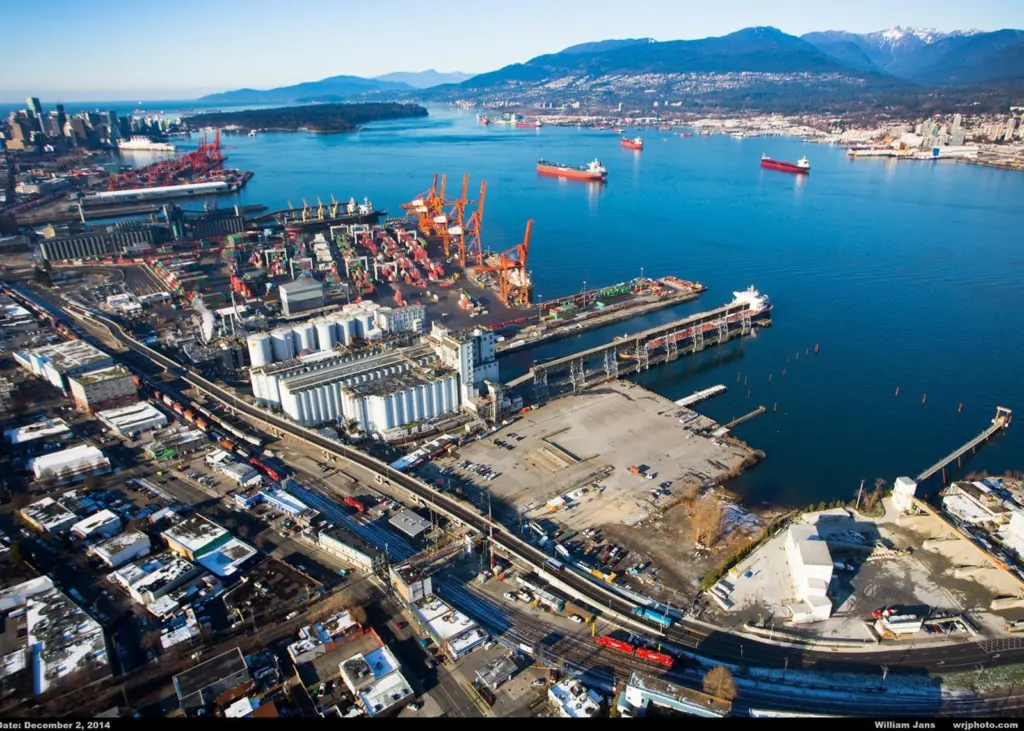
As logistics and transport hubs, ports have multiple complex impacts on those who work in or live near them, as well as on the wider regions where they operate.
Increasingly, ports today are taking action to make their operations more sustainable. But how many of them are sharing information on what they do in the form of sustainability reporting? Evidence suggests that while some ports are slow to adopt this kind of reporting, those that are disclosing their impacts are seeing multiple benefits.
Tiedo Vellinga is Professor Emeritus Ports and Waterways, Delft University of Technology, and was previously a manager and strategic advisor at the Port of Rotterdam, one of the earliest adopters of formal sustainability reporting in the sector. He lists “stakeholder-inclusive processes, transparency and shared responsibility” as the main advantages of sustainability reporting, but believes that ports in general still lag behind other organisations in understanding what it can do for them. “Most of them still need to be made aware of its benefits and the port authority can be a good co-ordinating body to orchestrate the process,” he says.
“The level of awareness differs greatly and depends upon the maturity of sustainability leadership within organisations,” says Jason Sprott, director at Sprott Planning & Environment, which advises ports on planning, governance and policy. “Reporting in a balanced way – which is really what sustainability reporting is all about – is a very sound way of communicating with a range of stakeholders. It helps communicate that sustainability is not just about ‘green’ projects, solar panels or wind turbines. It should communicate a balanced approach to corporate strategy and project delivery.”
Transparency commitment
The Vancouver Fraser Port Authority (VFPA), which facilitates trade through Canada’s largest port, has undertaken formal sustainability reporting for several years. “In 2010, VFPA was among the first ports globally to issue a sustainability report in accordance with the Global Reporting Initiative Sustainability Reporting Guidelines,” says Ronan Chester, manager, strategic environmental initiatives. “The decision to begin sustainability reporting was driven by the organisation’s commitment to increase transparency and accountability on sustainability performance in the Port of Vancouver, and a desire to engage our stakeholders on sustainability.”
Initiating sustainability reporting was a step on a bigger journey for the Port of Auckland, says Matt Ball, head of communications at the Port of Auckland. “We wanted to become a sustainable business and have developed a sustainability framework which maps out our path to do so. As we go down that path, it follows logically that we should report on our efforts to do so. Another important element in the decision is our desire to be open and transparent with the community about how our business operates.”
Mr Ball says of the reporting process: “It has been very valuable in reframing our business strategy along more sustainable lines. We do have improved relationships with stakeholders, but I wouldn’t say that’s the result of our shift to integrated reporting. It is probably more accurate to say it’s the result of our changed approach to stakeholder engagement and greater openness as a result of our move to a more sustainable business model.”
Reporting provides an important opportunity for reflection, says Mr Chester. “The process of tracking and analysing and discussing sustainability performance naturally leads to insights that improve sustainability strategy. Sustainability reporting also presents an excellent opportunity for engaging stakeholders. We have found that stakeholders appreciate the opportunity to participate in identifying material topics and providing input on our approach to reporting, and we have benefited from their input.”
Shareholder demands
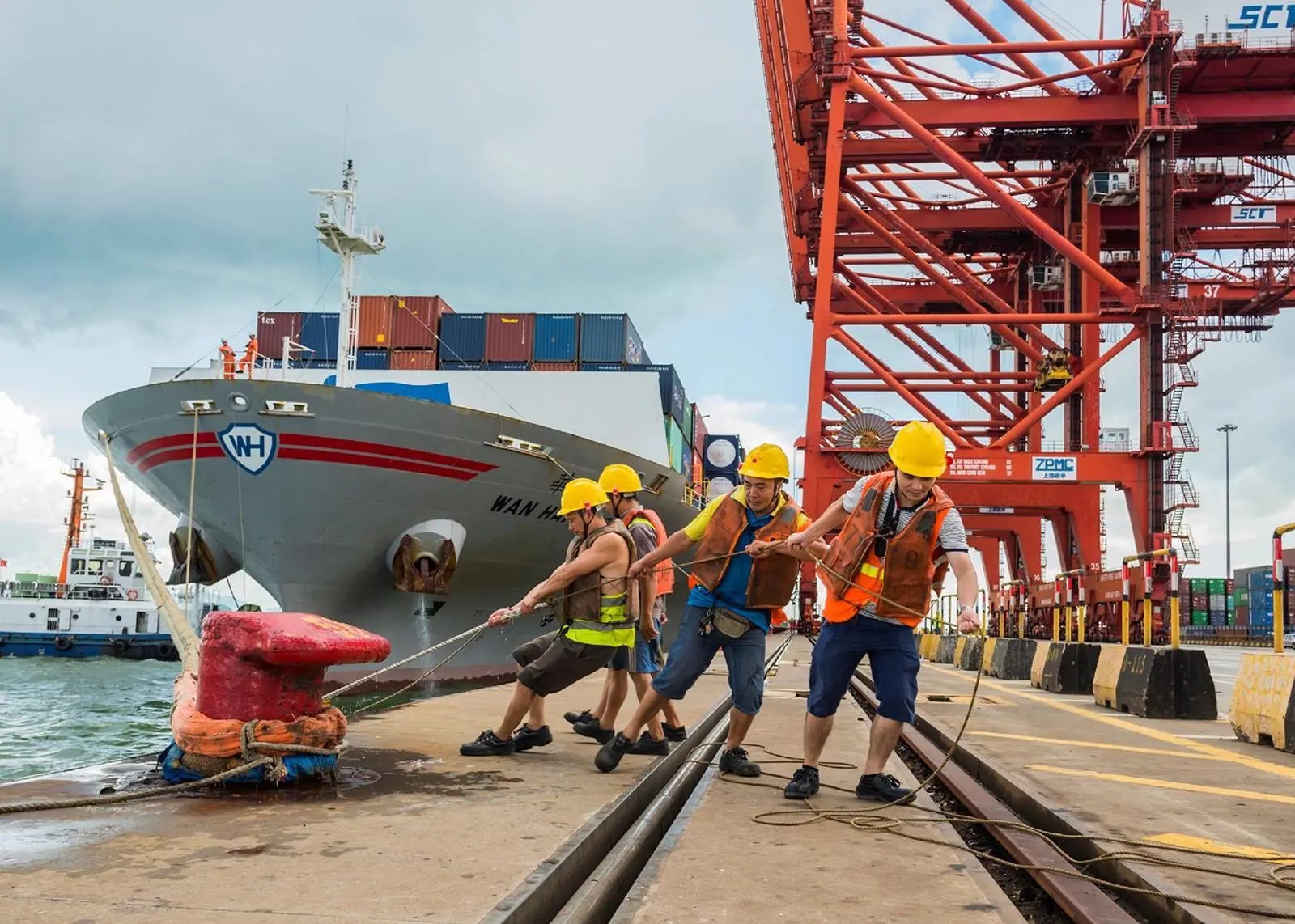
China Merchants Port Holdings (CMPort), the largest public port developer, investor and operator in China with investments in mainland China, Hong Kong and other countries, is a relative newcomer to this type of reporting, having released its first sustainability report in 2016 in compliance with Hong Kong Stock Exchange rules. A representative of CMPort’s management says: “Before that, our corporate governance report also included environmental information. On the operating level, even without a report we already had environmental and social responsibility. But it creates a channel for us to be more transparent to the public on this issue.”
This transparency is increasingly important to shareholders of CMPort, says the organisation’s spokesperson: “Some of our shareholders have expressed their gratitude that we now have this standard of framework of reporting. It has generated quite a positive response from those investors and shareholders who are concerned about environmental, social and governance issues.”
As a non-shareholder, financially self-sufficient corporation, established by the government of Canada, VFPA engages diverse stakeholders to obtain their feedback and input regarding the port’s activities. “We convene sustainability reporting panels consisting of roughly two dozen representatives from industry, government, Aboriginal groups, non-government organisations, and local communities that help us identify material topics and provide feedback on our approach to reporting,” says Mr Chester. “This has generated excellent insights, and has improved our understanding of their sustainability interests, which in turn has improved our approach to sustainability reporting.”
The commitment to disclosure that is at the heart of sustainability reporting inevitably places new demands on ports. Mr Vellinga says that in his experience, the biggest challenge is “to convince port management that it is not so much about the content of the reporting and the exact formulation of the key performance indicators, but it is most of all a process that a port must go through with its stakeholders.”
Telling the tale
At its simplest, reporting is about storytelling, says Mr Sprott. “If the story is understood, stakeholders (internal, external, community, regulators) are much more likely to understand the strategic pathway and aspirations of the port – including why projects are being undertaken and what the port is doing to reduce and minimise impacts, whilst maximising benefits.”
For CMPort, telling the story of the organisation’s sustainability impacts is more complicated when reporting on joint venture partnerships than subsidiaries of the organisation. But it says the challenges are worthwhile when it comes to building corporate relationships. “We can generate a report and show that we are doing a green port, with social responsibility. It helps us to build up our operations.” The positive effects extend beyond the organisation: “It creates a behaviour – everybody likes to disclose what they have done.”
Vancouver is a ‘landlord’ port authority with the terminals operated by third parties and experiences challenges in reporting on sustainability performance for activities outside of its operational control. “These activities have the greatest sustainability impact and are of the greatest importance to stakeholders,” says Mr Chester. “Finding a meaningful way to report on, and influence, these activities is extremely challenging. Planning and executing a sustainability report, obtaining and managing the data – these things all take a considerable amount of time that can strain resources.”
Finding a Suitable Framework
Of the established approaches to sustainability reporting, the Global Reporting Initiative (GRI) framework (whether adhered to in full or simply referred to) is most widely used by organisations worldwide. However, it has been criticised for not offering port-specific guidance. Mr Vellinga notes that because ports face operating conditions that are different from those in other sectors, a working group of World Association for Waterborne Transport Infrastructure and the International Association of Ports & Harbours (PIANC-AIPH) has produced draft sectoral guidance for ports that will in future be included in the GRI Standards framework (similar to the existing provisions for airports).
The Integrated Reporting (IR) approach devised by the International Integrated Reporting Council is also popular among ports seeking a holistic view of their impacts. Auckland’s Matt Ball says the port chose integrated reporting because “we didn’t want separate sustainability reporting as we agree with the view that sustainability should be an integral part of a business, not a separate business unit.”
The World Port Sustainability Program, which launched earlier this year, uses the United Nations Sustainable Development Goals (UN SDGs) as its basis to help ports assess their impacts. Sprott Planning & Environment’s Jason Sprott says he favours a combination of the SDGs as a ‘platform’ in conjunction with a formal framework such as GRI. “The benefit of using the platform is twofold – helping to test and shape corporate strategies upfront, and then helping ports report at the end of the financial year. Mapping the SDGs at the front-end (during strategy development) and back-end (at reporting time) will bring substantial benefits for ports, in our view.”
Whatever approach ports opt for, it is important to remember that sustainability reporting is not the key factor in determining whether they are actually reducing their sustainability impacts, says Ball. “What’s most important is having a sustainability strategy embedded across all business units. That changes mind-sets in the business and leads to positive change for the business and the community. Reporting then comes in after, and it allows transparency, so that the community can see how well (or not) you are doing, which grows trust and partnership.”
Related Articles
 OPERATIONS
 PORT & TERMINAL NEWS
 OPERATIONS