





ESG goals assessed
How are attitudes to ESG evolving in the shipping industry? Felicity Landon reports on a new report from Watson Farley & Williams, and a webinar that discussed the findings
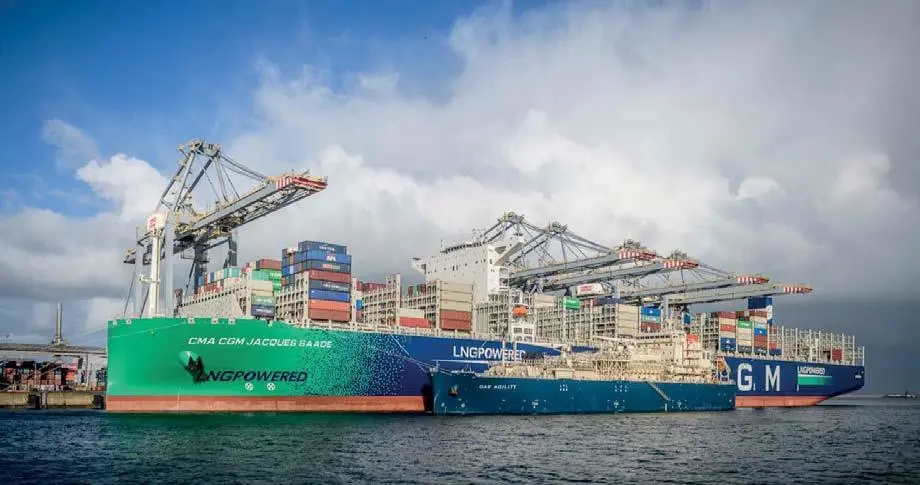
The shipping industry now has a better understanding of how long it will take to meet Environmental, Social and Governance (ESG) goals; shipowners want to be more collaborative to pursue innovation; and shipowners are more concerned about choosing the right technology than how to pay for it. These are some of the findings of ‘The Sustainability Imperative – Part 2’, launched by Watson Farley & Williams (WFW) in March 2023.
The report surveyed industry executives and managers, following up on similar analysis from 2021; the aim was to explore how attitudes have evolved, who is shaping today’s ESG agenda and how sustainability squares with geopolitical challenges such as the war in Ukraine.
The report concluded that decarbonisation remains the main challenge: “Which green technologies will work at scale to help achieve it, how can their adoption be incentivised and who will pay for the transition? Fortunately, shipping now has a greater appreciation of the task ahead.”
A webinar organised to discuss the updated findings was dominated by questions and challenges around new fuels for shipping.
The panel of speakers did not zoom in on the challenges for ports when it comes to storing and supplying ‘future fuels’ (and associated investments) when shipowners have yet to make firm decisions or commitments, although the report did note that one of the thorniest challenges to emissions reduction is how to build up the fuelling infrastructure to support any new propulsion technologies developed: “A substantial number of ships ordered over the last two years burn alternative fuels, but the number of facilities that can supply these alternative fuels around the world remains limited.”
ALTERNATIVE FUELS REAPPRAISED
Virtually all shipowners are now considering using alternatives to bunker oil within the next five years, said the report. However, fewer (compared to 2021) favour LNG or LPG as alternative fuel sources, “perhaps due to rocketing gas prices and because these are viewed as transition fuels”.
“Replacing gas as the top choice among alternatives are biofuels, followed by hydrogen and wind and solar power. Methanol and clean ammonia are also more popular than they were two years ago, while batteries have slumped, possibly because storage technology is not advancing as quickly as expected and shipowners see technology and proven results as important factors in supporting one technology over another.”
Lizzie Roe, WFW Partner and Webinar Moderator, said: “The main ESG topic dominating headlines is the journey to Net Zero. Alternative fuels are very much at the heart of every discussion of decarbonisation.”
There had been a notable shift, she said: “Earlier, when we were asking shipowners what alternative fuels they were considering in the next five years, LNG was listed as the clear favourite – about 60 per cent picked this. Now that response has fallen significantly. Only about 35 per cent picked LNG as one of their options.”
Paul Taylor, Global Head of Shipping & Offshore at Societe Generale CIB, said a 35 per cent uptake on LNG was still ‘a very good figure’.
“We are seeing a lot of our clients investing in LNG propelled vessels. Certainly, there is no slowdown in momentum of LNG in investment, in my opinion,” he said. “It says more about the momentum in the industry – there are multiple options for shipowners and we are going to see an increase in the uptake of them all. Ship owners are already investing in methanol vessels, for example, taking the plunge on the supply of fuels.”
However, Martin Cresswell, Technical Director at the Hong Kong Shipowners Association, highlighted the cost of fitting out a ship for LNG, which was “just too expensive” for smaller vessels.
“Also, there is the variable cost of LNG. Since the start of the war in Ukraine, the price has soared, and it has become very transparent that basically it is not going to be cheaper than fossil fuel for quite a long time.”
Bud Darr, Executive Vice President, Maritime Policy and Government Affairs at the MSC Group, noted that tech readiness for methanol had increased substantially, making this an option as ‘ready for market’ as LNG.
The market as a whole is taking a change in direction, with different influencing factors in terms of decarbonisation and alternative fuels, said Roe. She posed the question: “To what extent do you think there is responsibility on larger shipowners to share some of the findings and outcomes of their research to make sure the industry as a whole is shifting? Smaller shipowners might not have the same resources to invest but if we want to succeed [with Net Zero targets], it has to be a movement of the industry as a whole.”
Larger, better resourced companies have an obligation to help the rest of the industry to decarbonise by sharing the knowledge they have gained along the way, said Darr. “We have a special obligation as larger shipowners to be transparent, so the rest of the industry is able to learn from that and benefit and join the energy transition – because we all need to get there, not just some of us.”
Cresswell pointed out that a lot of the relevant information is held by the shipyards, which benefits owners ordering ships. “A lot of the technology gets transferred to the shipyard. The shipyard is going to be the recipient of this information. Classification societies also have this information and are going to share it out. So, it will cascade down quite quickly, I believe.”
FINANCE INFLUENCE
Access to financing was highlighted as an issue in the survey, said Roe. “Financiers were listed as having the most influence in terms of decarbonisation. Financiers are key stakeholders. Could banks do more to support energy transition?”
Gerbrand Vroegop, Managing Director and Head of Transport & Logistics APAC at ING, said: “We identified nine sectors in which ING is active where we think we can make the biggest impact in contributing to the Net Zero target by 2050. Shipping was one – cement, power generation and aviation were also included.
“We have integrated climate alignments in our commercial decision processes and credit decision processes. It means if we have a new proposal, we have to show senior management what the AER is for the new asset and, if it is above the pathway, have to show what the owner is going to do to improve it.”
Several of the panel noted a realisation across the industry that decarbonisation of the shipping industry is going to be more challenging than was perhaps previously anticipated by many.
Vroegop said: “You realise it is a lot more complex than when you knew less.”
He said: “Expect acceleration in the coming years, because when we get a better understanding and the right alignments, we should see again a much more positive view.”
Related Articles
 NEWS
NEWS
 CONTAINER & CARGO HANDLING
 OPERATIONS