




Taking sustainability to the next level
Michele Witthaus reports on a trend towards collaborative port initiatives for sustainability.
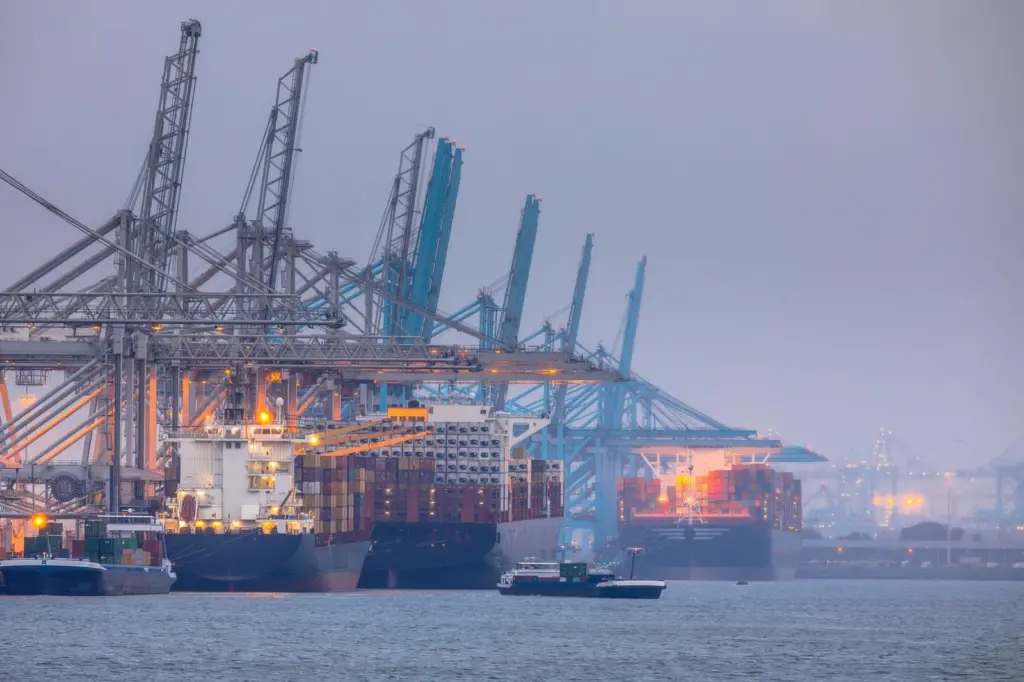
Port bodies have long fostered close co-operation between their members on environmental issues. Organisations such as the European Sea Ports Organisation (ESPO), the World Association for Waterborne Transport Infrastructure (PIANC) and the International Association of Ports and Harbors (IAPH) have worked together over the years to share best practices and consider emerging threats and opportunities. Now some of these alliances are being formalised, giving rise to new bodies, and they are being joined by newly formed groups with ambitious global lobbying agendas for ports and port services.
Launched in Antwerp in March 2018, the World Ports Sustainability Program (WPSP) grew out of the World Ports Climate Initiative (WPCI) that IAPH set up in 2008. The new programme is guided by the United Nations’ Sustainable Development Goals (SDGs) and aims to enhance and co-ordinate future sustainability efforts of ports worldwide while fostering international co-operation with partners in the supply chain. Its main areas of focus are resilient infrastructure, climate and energy, safety and security, community outreach and port-city dialogue, governance and ethics.
“In the first instance, we started updating and upgrading the climate tools that IAPH developed under WPCI,” says Dr Patrick Verhoeven, managing director for policy and strategy at IAPH. “This has already resulted in a new audit tool on LNG bunkering that was presented in September this year. We are also in the process of updating the Environmental Ship Index project.
“The aim is to set out a number of priorities in terms of infrastructure, operations and governance and work with global institutional partners, including IMO, the World Bank and UNCTAD, to develop this agenda in concrete terms,” he adds. A regional conference held in Africa last September resulted in a pan-African ports agenda as a regional WPSP project.
Founding partners
The five founding partners of WPSP are IAPH, the American Association of Port Authorities (AAPA), the Global Network of Cities and Ports (AIVP), PIANC and ESPO. Two structural partners have also joined: the International Cargo Handling Coordination Association (ICHCA) and the International Association of Dredging Companies (IADC). The most recent addition to the organisation’s membership roster is Ports Australia, which became a partner in September 2018.
WPSP complements a number of initiatives led by other organisations, such as the Port Call Optimisation Task Force of the International Harbour Masters’ Association (IHMA), the Navigating a Changing Climate project of PIANC, and the Maritime Anti-Corruption Network. “We are also in close talks with our colleagues at ICHCA to set up a project on cybersecurity,” says Dr Verhoeven.
The main focus for the coming year is on the SDGs, which form the basis of WPSP. “We are looking at ways to help port managers integrate these 17 goals in their corporate governance,” says Dr Verhoeven. “Some ports have already started to adopt this systematic approach, including private ports that are driven by investors. With more and more port authorities in the world being corporatised, sustainability will become a key element of port governance.”
Other ways in which WPSP hopes to encourage the sustainability efforts of ports include a series of awards and scholarships. Also, IAPH plans to produce the first World Ports Sustainability Report in autumn next year.
Climate competition
WPSP is not the only initiative announced this year that explicitly seeks to address global ports’ sustainability issues. The World Ports Climate Action Program (WPCAP), launched in September 2018, is a co-operative venture between the ports of Hamburg, Barcelona, Antwerp, Los Angeles, Long Beach, Vancouver and Rotterdam.
“We are developing a really targeted programme with milestones, to reach results in a unified framework,” explains Victor Schoenmakers, director corporate strategy, Port of Rotterdam. Mr Schoenmakers describes the programme as “kind of an open system but not just a Memorandum of Understanding (MoU) type of thing. You have to, in my view, contribute in a real-world perspective.”
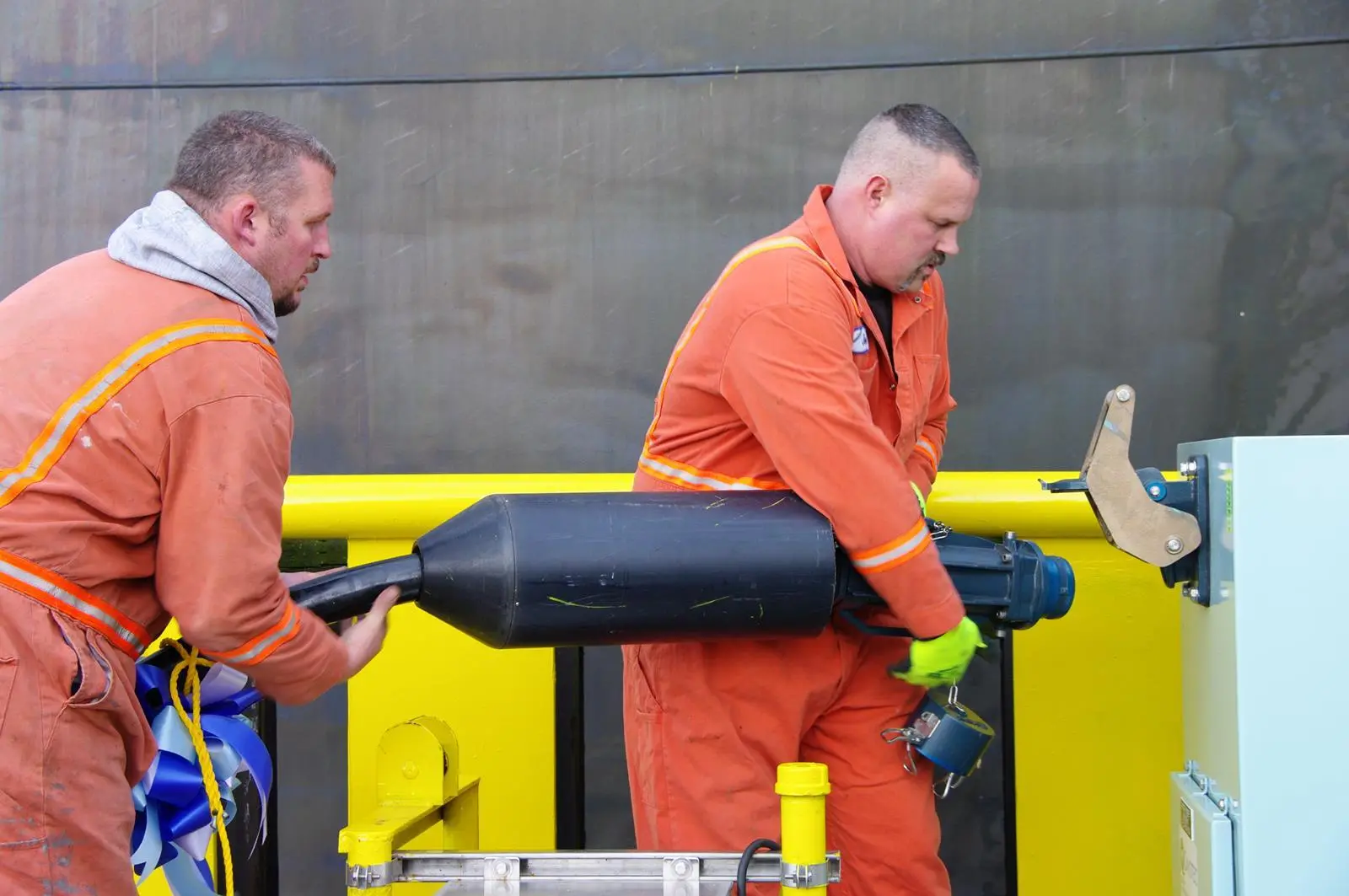
The ports participating in WPCAP will cooperate on topics including fuel, shoreside power and digitalisation. “We will work on a political level to create a mass towards legislative or policymaking bodies like IMO.” Mr Schoenmakers says that there are plans for ports to work in pairs or groups of three ports to tackle issues identified by the programme.
Attracting major ports in Asia, such as Singapore and Guangzhou, is on WPCAP’s agenda, he adds. “We have tried to get Asian ports also onboard but until now we were not successful in that. I understand the need for time in getting consensus to agree the objectives and also the allocation of people and funds, but that will come.”
The drive towards uniting large numbers of regional ports for sustainability co-operation has been underway in Europe for several years. Launched in 2012 and updated in December 2017 in conjunction with FEPORT’s Environment, Safety and Security Committee, the EEEG/FEPORT Guidance for Greenhouse Gas Emission Footprinting is a major initiative for container ports by a group of port holding companies that accounts for 75% of all containers handled in the European Union. Participants include APM Terminals, Contship Italia, DPWorld, ECT, Eurogate, HHLA, Hutchison Portholdings and PSA.
Meanwhile, national port associations such as the British Ports Association (BPA) are also leveraging their scale to show their commitment to sustainability. In August 2018, the BPA launched a sustainable development charter for its 350 ports, terminals and port facilities, saying that it is committed to working more closely with conservation bodies, government, and its members to promote better stewardship of the marine environment. Mark Simmonds, policy manager at the BPA and leader of the initiative, said at its launch: “We are putting forward some policy proposals for improving the sustainable development framework in the UK. This builds on our input into the government’s consultation on the UK’s future environmental principles.”
What’s new?
So what can the new programmes aiming for global reach contribute to the sustainability of the world’s ports that cannot be achieved by existing bodies? Dr Verhoeven says of WPSP: “Compared to other initiatives, this is the first holistic sustainability programme for ports. Other programmes and initiatives focus on one pillar, such as climate, environmental management or city-port relations. WPSP integrates all dimensions and has an easy entry level: the programme has an open online portfolio where all ports in the world, regardless of their size or ownership, can share their sustainability projects.”
He sees WPSP as playing an important role as a platform for ports that are keen to develop new sustainability initiatives and want to seek partners. “Through IAPH, WPSP provides the connection with global policy makers and institutions.”
For Mr Schoenmakers, who describes the WPCAP programme as “a coalition of the willing”, momentum driven by high visibility is a critical factor. “I think it is very important to have frontrunners that take the lead, along with a backup system of other ports, to make very visible that it is a serious business.”
Avoiding Duplication of Effort
Getting it right on crucial multilateral issues is a keen focus for WPSP. Patrick Verhoeven from programme facilitator IAPH advises that ports “benefit from each other’s knowledge and networks” to avoid duplication. “That is what I see as the main strength,” he says. “At IAPH we had port call optimisation in our own work programme, but we decided that it was better to team up with the already existing IHMA initiative rather than start something on our own.”
He adds: “We are not membership-driven. We want to make sure that all relevant international port-related organisations are onboard as partners and I think we are getting close to that objective already. As the programme grows, we could consider bringing other partners in, for instance from the broader supply chain or from major think-tanks or research institutes. I don’t exclude individual port or company memberships in the future, but that is perhaps premature for now.”
He adds that the programme’s climate projects are closely related to the ongoing discussions in IMO on the GHG strategy for shipping. “Ports have a role to play in that strategy. Some ports are clearly leaders in this field, especially in Europe, North America and certain parts of Asia.”
IAPH is currently working with the Canadian delegation in IMO to prepare a resolution that will encourage governments worldwide to support port initiatives and developments that will facilitate reduction of GHG emissions of ships. That includes measures such as onshore power supply and bunkering facilities for clean fuels, but it also covers more basic things such as good infrastructure connections and efficient ship-to-shore communication.
Dr Verhoeven says that this resolution is planned to be discussed at the next MEPC meeting in May 2019.
Related Articles
 OPERATIONS
 PORT & TERMINAL NEWS
 OPERATIONS