


Ngqura dredging system protects environment
South Africa’s Port of Ngqura is helping ensure operational safety and protect the environment as the first port in the world to have a fixed jet pump sand bypass system for dredging.
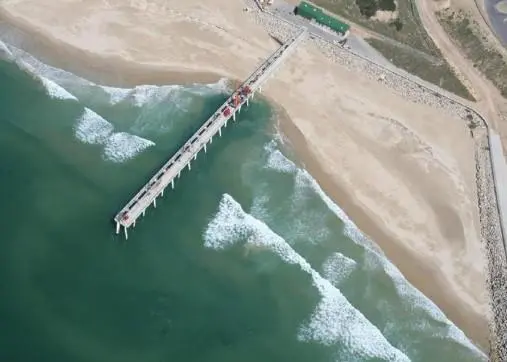
Use of the computer-controlled sand bypass system has enabled the port to meet its dredging targets of 240000t of sand per year, said the government-owned Transnet National Ports Authority, which manages Ngqura. As well as ensuring vessels can enter and exit ports safely, dredging helps to halt beach erosion and sand build-up in the ports. This assists with navigation, flood control, coastal development, mining and environment management.
“This is an achievement as we are complying with the Record of Decision (environmental legislation) which stipulated the strict conditions to be adhered to in the development of a port of this nature in an environmentally sensitive area,” said Mandilakhe Mdodana, environmental manager for the Port of Ngqura.
“The Port of Ngqura is the only port in South Africa to have a Record of Decision for its construction and operation. This means that it is the only port that was subjected to environmental legislation during its entire development, operation and will be during its future development,” Mr Mdodana added.
Mimicking nature
The sand bypass system consists of jet pumps which mimic the natural longshore drift of sand along the coast. This is achieved by pumping the sand from the up drift (west) section of the coast to the down drift (east) section of the coast. Sand is captured in a sand trap and pumped via pipelines to a discharge point on the opposite end of the port. Both capturing and discharging occur in the wave zones.
The system is a “fixed dredger” which operates cost-effectively when compared to a mechanical dredger.
Related Articles
 AFRICA GREENPORT
 AFRICA GREENPORT
 AFRICA GREENPORT