![PortStrategy[GreenPort]](https://www.portstrategy.com/wp-content/uploads/2026/09/PortStrategyGreenPort.svg)






Ospreys get new homes in Port Hedland
Osprey nesting platforms on port navigation aids in Port Hedland’s inner harbour have been increased from three to five as part of a project by Australia’s Pilbara Ports Authority to replace ageing channel markers.
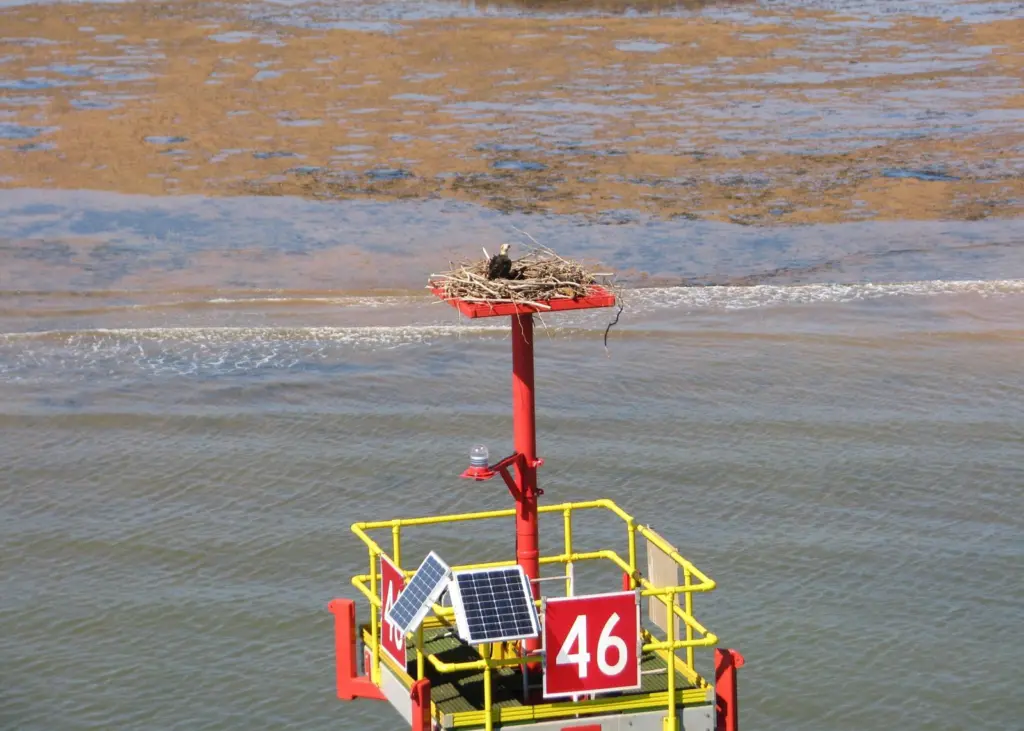
Ospreys are known to nest on artificial structures and have previously used the port’s channel markers to build their nests on. The nesting platforms are designed to allow Ospreys to build their nest above the navigational equipment away from human interactions and disturbance. The platforms also create a safer working environment for people who maintain the navigational aids by providing separation between the birds and the navigation equipment.
Speaking about the channel marker replacement programme, Derek Walker, environment and heritage manager at Pilbara Ports Authority, said: “Ospreys are a native bird that are common in Northern Australia and it’s important that we share the port with them so they can continue to thrive.
“I’m looking forward to seeing the Ospreys build their nests on the new platforms and hopefully we’ll see some eggs and chicks during this breeding season.”
Safer navigation
The programme replaced three land-based and 35 offshore structures to provide a safe, reliable navigation system for entering and departing Port Hedland waters for the next 25 years.
It is one of three projects funded by the Port Improvement Rate, a temporary levy charged on vessels entering and exiting the harbour to fund capital improvements to sustain and improve the safe long-term operation for all users of the port.
Ospreys can be defensive of the nests, particularly when eggs and chicks are present. Breeding usually occurs from April to September. Ospreys generally mate for life and return to the same nest over a number of years.
Related Articles
 AUSTRALASIA GREENPORT
 AUSTRALASIA GREENPORT
 AUSTRALASIA GREENPORT