


Japan: A potential LNG bunkering hub
A recent report from the International Transport Forum (ITF) suggests that Japan has thepotential to become a major international LNG bunkering hub. Nicholas Newman reports.
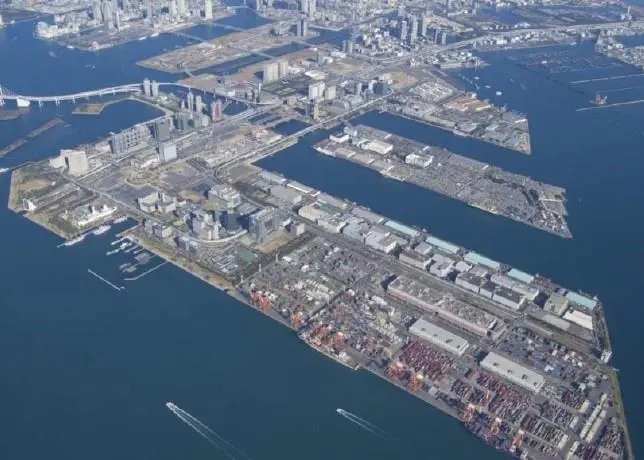
Japan could become a key refuelling stop on the world’s most important trade route, that between East Asia and North America, according to the ITF report ‘Fuelling Maritime Shipping with Liquefied Natural Gas: The Case of Japan’.
The report focuses on the leading ports of the Tokyo Bay area including the Port of Yokohama, the Port of Chiba, the Port of Tokyo, the Port of Kawasaki, the Port of Yokosuka and the Port of Kisarazu.
Shipping has been identified as a major source of air pollution. In response, the International Maritime Organization is spearheading the clean-up of the industry with a target to halve 2008 levels of greenhouse gas emissions by mid-century. LNG could become a major beneficiary since it can reduce emissions of NOx, SOx and particulate matter by up to 85%, 95% and 100% respectively, compared with traditional fuels.
Since a tidal wave struck the nuclear power plant ofFukushima in 2011, Japan has turned to imports of natural gas to make good the loss of energy from the subsequent closure of all nuclear plants. To fill the gap between supply and demand for power, Japan has become the world’s largest buyer of LNG, importing some 7.35 million tonnes at a cost of US$4.18 billion in February 2019, according to Ministry of Finance data.
Due to the restarting of some Japanese nuclear plants and investment in renewable energy, Japan’s purchases of LNG are expected to decline in the coming years, enabling China to become the world’s leading buyer of LNG in the years to come.
However, because Japan makes a convenient stop-over point for ships traversing the trans-Pacific routes linking ports in East Asia and North America, it is ideally placed to become East Asia’s leading LNG bunkering facilities provider.
Government policies are supportive: in 2017, Japan’s Ministry of Economy, Trade and Industry (METI) made available around US$10bn of joint public and private funding to promote Asian LNG demand, alongside a pledge to provide skills development for at least 500 to work in the LNG sector.
To ensure future supplies, Japan has also announced an interest in developing new LNG export projects in both Russia and Africa. In June, Japan received its first LNG cargo from Novotek’s Yamal LNG export port as part of a long-term agreement with the company.
SLOW GROWTH OF LNG ADOPTION
As of April 2019 there were just 154 LNG-fuelled vessels and 146 on order compared with a total merchant fleet of some 53,045, according to DNV GL. The main constraint to widespread adoption of LNG-fuelled shipping is the scarcity and uneven spread of onshore or mobile LNG bunkering facilities. Currently northern Europe leads with 11 onshore LNG bunkering facilities including GATE at Rotterdam, Hamburg in Germany and the Isle of Grain in the UK.
Outside Europe there are around 12 LNG bunkering ports in North America and South and East Asia including Montreal, Kochi and Yokohama. Worldwide there are around 30 such hub projects at various stages of development.
In addition, there are currently just nine LNG bunkering vessels in operation including LNG London and FlexFueler001, and an expected 30 such vessels in 5 years’ time to cover Asia, Europe, the Middle East and North America, according to SEA/LNG forecasts.
As a leading exporter and market, Japan is a major destination, originator and stop-over for container ships, tankers, and car and grain carriers traversing the Pacific. Tokyo already has five LNG facilities and has ordered its first LNG bunkering vessels for 2020.
In total Japan has 40 international import LNG terminals, of which four are currently under construction. In addition there are eight secondary LNG terminals dedicated to domestic vessels. Japan has also emerged as a key cruise destination, thereby strengthening the case for LNG refuelling facilities.
The ITF report forecasts that Japan and Singapore could become Asia’s leading LNG hubs as the region’s demand for LNG would reach over one trillion cubic metres by 2035.
Singapore could become a key LNG bunkering hub for Southeast Asia or Europe-bound trade whilst Japan could become the hub for East Asia and North America-bound trade.
In the short term, development of LNG bunkering in the Tokyo Bay area could cut air pollution in time for the Tokyo Olympics in 2020.
Related Articles
 ASIA GREENPORT
 ASIA GREENPORT
 ASIA GREENPORT