![PortStrategy[GreenPort]](https://www.portstrategy.com/wp-content/uploads/2026/09/PortStrategyGreenPort.svg)





Mussels help marine ecosystem health analysis
A port authority in Australia has completed its annual marine quality monitoring programme field sampling with mussels playing an important role helping it understand the health of the marine ecosystem and protect it.
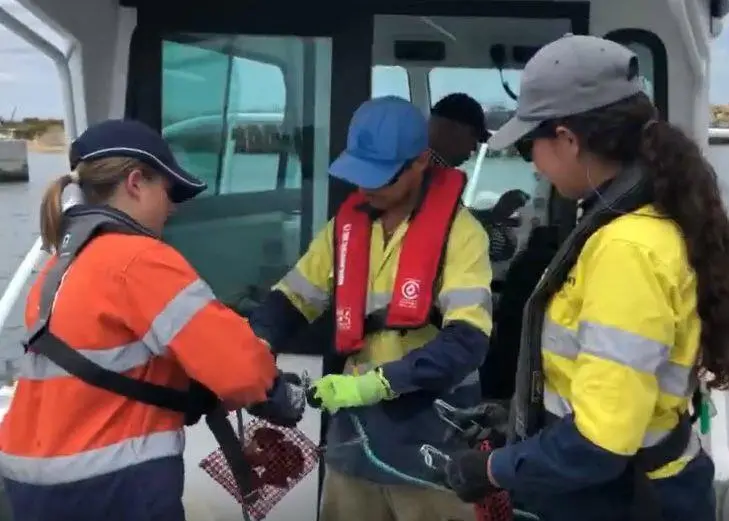
Fremantle Ports explained mussels are filter feeders, each processing about a bathtub of water a day. A total of about 900 mussels were deployed at 15 sample sites located at Blackwall Reach (Swan River), the Fremantle Inner Harbour and in Cockburn Sound at the Kwinana Bulk Jetty and Kwinana Bulk Terminal.
Six weeks after their deployment the mussels were collected and sent to a laboratory to be tested for tributyltin (TBT), hydrocarbons, heavy metals and coliform bacteria.
The annual monitoring programme also includes divers collecting sediment cores which are tested for nitrogen, phosphorus, heavy metals, tributyltin, hydrocarbons, Polyfluorinated Alkyl Substances (PFAS) and organochlorine pesticides.
Water profiles are analysed for temperature, salinity, dissolved oxygen and pH. Water clarity is recorded through the use of a secchi disk.
Surface and bottom water samples are taken and tested for total suspended solids, nutrients, alkalinity, chlorophyll, copper and hydrocarbons.
The results of the monitoring programme are compared with relevant environmental quality guidelines and standards to ensure the quality of the marine environment is maintained and protected.
Mussel sample results are compared with safe human consumption criteria set out in the Environmental Quality Criteria Reference Document for Cockburn Sound (EPA 017), which have been developed from the Western Australian Shellfish Quality Assurance Program (WASQAP) (DoH, 2011) and the Australia and New Zealand Food Standards Code (FSANZ 2016).
Related Articles
 AUSTRALASIA GREENPORT
 AUSTRALASIA GREENPORT
 AUSTRALASIA GREENPORT