![PortStrategy[GreenPort]](https://www.portstrategy.com/wp-content/uploads/2026/09/PortStrategyGreenPort.svg)






Green cruise report
A cruise giants latest sustainability report pledges to continue to get greener in the run up to 2030.
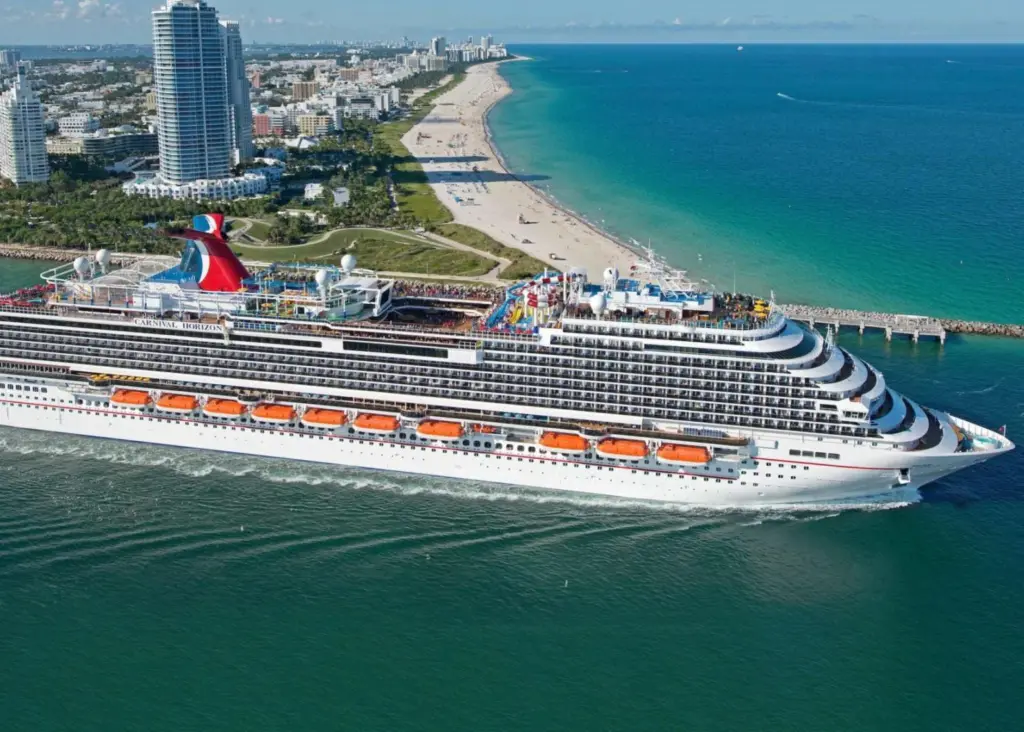
Carnival Corporation’s 11th annual sustainability report called ‘Sustainable from Ship to Shore,’ details key initiatives from the company which align with the United Nations’ Sustainable Development Goals in the run up to 2030 and beyond.
“At Carnival Corporation, our highest responsibility and top priority is always compliance, environmental protection and the health, safety and well-being of our guests, the people in the communities we touch and serve and our shipboard and shoreside personnel,” said Bill Burke, chief maritime officer for Carnival Corporation.
Green commitment
The report details key initiatives from the company and its nine global cruise line brands, incorporating six focus areas guiding the company’s long-term sustainability vision, execution and performance.
Developed to align with the United Nations’ Sustainable Development Goals, the six focus areas that will guide Carnival Corporation’s long-term sustainability vision include: Climate action; circular economy (waste reduction); sustainable tourism; health and well-being; diversity, equity and inclusion (DEI); and biodiversity and conservation. In each focus area, the company is announcing key goals, targets and aspirations that will guide its actions to further strengthen its environmental, social and governance performance, as outlined in its 2020 sustainability report.
With regards to climate action, Carnival said it remains focused on its commitment and efforts to establish a pathway to decarbonisation. The company is working toward transitioning its energy needs to alternative fuels and investing in new low-carbon or zero-carbon emission technologies.
Carnival continues to lead the cruise industry’s use of LNG to power cruise ships. A total of 11 next-generation cruise ships will have joined the fleet through 2025, representing nearly 20% of its total capacity, including four ships already in operation.
The operator has also been pioneering the use of Advanced Air Quality Systems on board its ships with over 80% of its fleet having been equipped with the systems so far. In addition, 40% of its fleet has been equipped with shore-power capabilities, enabling ships to use shoreside electric power where available while in port.
Carnival’s aim is to achieve a 40% carbon intensity reduction by 2030 and aspire to achieve 100% fleetwide shore power connection capability and net carbon neutral ship operations by 2050.
Circular economy
Other initiatives outlined by the company’s sustainability report include focusing on a circular economy model where materials flow around a “closed loop” system, rather than being used once and then discarded, shifting how the company works with supply chain partners to reduce waste.
Operations Oceans Alive, the company’s environmental stewardship program, has been supporting this focus area by continuing to reduce non-essential single-use items, including plastic cups, lids, cutlery, straws, toothpicks, sweetener packets, butter foils and more.
Additionally, the company is continuing to install food waste biodigesters throughout its fleet to minimise the volume of food waste, in support of food waste reduction and management efforts. As of the end of its fiscal year 2020, food waste biodigesters had been installed on 32% of the company’s fleet.
The company’s full sustainability report is available at www.CarnivalSustainability.com
Related Articles
 PORT & TERMINAL NEWS
 CRUISE GREENPORT
 CRUISE GREENPORT