



Skip to content
PortStrategy[GreenPort]
Sign In Subscribe

Sections

  • News
  • Events
  • Buyers Guide
  • GreenPort
  • Subscribe

News

  • Concessions & Investments
  • Container & Cargo Handling
  • Digital
  • Europe
  • Expansion & Development
  • Insight & Opinion
  • Legal, Risk & Insurance
  • Middle East
  • North America
  • Port & Terminal News
  • Projects & Initiatives
  • Terminal Operations

Port Strategy

  • About
  • Advertise
  • Contact
  • Subscribe
  • Sign In

Featured

  • Port of Singapore PSA and Granite launch innovation fund 23 October 2026
  • HHLA Container Terminal Altenwerder HHLA cuts full-year earnings forecast 22 October 2026
  • eNews Image Draft (8) Cyber risk rises up the boardroom agenda 22 October 2026
  • eNews Image Draft (5) Port of Antwerp-Bruges bounces back 21 October 2026
  • warehouse-with-stacked-boxes-and-pallet-truck-drivers Barcode scanner flaw exposes warehouse cyber risks 21 October 2026

Buyers Guide

Port of Oakland

Put your company in front of 37,000 industry professionals every month using our targeted Buyers Guide.

Buyers Guide
  • News
  • Events
  • Buyers Guide
  • GreenPort
  • Subscribe
Home Operations Green credentials tested
OPERATIONS

Green credentials tested

3 years ago

The word greenwashing has risen from a rarely used word to one in common usage today. What does it mean?

In common parlance, greenwashing is widely understood to be the exaggeration of a company’s environmental credentials or to put it more crudely bigging up such credentials through marketing spin or media hype.

There are, however, three specific categories of greenwashing identified by Business for Social Responsibility (BSR), the consultancy and business network whose actions are founded on creating a world in which all people can thrive on a healthy planet. These three categories of greenwashing sit around the base line of Effective Environmental Communications as can be seen in Table 1.

Table 1

CATEGORY #1: EFFECTIVE ENVIRONMENTAL COMMUNICATIONS

Effective communication and good environmental value

Sustainability is built into a business’s strategy and core mission statement. Every organisational process and operation is considered, challenged, and improved to reduce an entity’s environmental and social impact. Efforts and successes are then communicated accurately using an evidence-based approach to back claims made. These brands operate as green leaders.

CATEGORY #2: MISGUIDED GREENWASH

Poor communication, some environmental value

In this instance, corporate greenwash is not used intentionally but is rather the result of ineffective communication that undermines the substantial efforts made to improve a company’s environmental performance. Most often, misguided greenwash includes the use of sweeping generalisations, using terms such as natural, eco, or environmentally friendly with the absence of data to back these statements up. A revised communication strategy is needed here to deliver data-driven and focused marketing messages.

CATEGORY #3: GREENWASH NOISE

Poor communication, poor environmental value

These are companies who try to shout louder than their competitors about how green they already are. These brands spend more time and money presenting themselves as green relative to the actual time and money spent on making a change and becoming more sustainable. Much work needs to be done to move these brands into the Effective Environmental Communications category, but this is possible by:

1. Addressing the brand’s environmental impact through the value chain.

2. Developing and implementing an effective environmental strategy.

3. Communicating environmental efforts accurately using a scientific, data-driven approach.

4. Achieving third-party certification.

CATEGORY #4: UNSUBSTANTIATED GREENWASH

Effective communication disguises poor environmental value

These brands are involved in positive environmental projects and provide data to back up their claims. However, these claims mask a company’s damaging environmental impacts. Brands that fall into this category cause the most harm to the environment because their behaviour could lead to public disillusionment and disengagement from the environmental debate.

DOSE OF SCEPTICISM
The categories shown in Table 1 very effectively cover the whole spectrum of greenwashing and perhaps even more significantly signpost a certain lack of real commitment to achieving decarbonisation efforts against an agreed timeline.

It is then not so surprising that a large dose of scepticism about companies’ Environmental, Social and Governance (ESG) credentials was identified as one of the key findings of a recent UK survey of the subject among 2072 business leaders, entrepreneurs and marketing professionals. Specifically, key findings were:

  • More than a third (36 per cent) said that messages supporting ESG credentials had “no effect” on them whatsoever.
  • Seventeen per cent said they questioned the validity of ESG claims made by businesses.
  • Just 16 per cent said that they look more favourably on those who regularly share updates on their environmental and social responsibility initiatives.

The survey’s originators Bath-based Clearly PR, notes: “…the extent to which many businesses are talking about their ESG credentials has become frenzied.” And that: “This is clearly alienating many customers…” plus “There is, it seems, too much banging on the green and purpose drum and there is evidence to suggest that customers view excessive ESG communications as hyperbole rather than authentic. As such, in many cases, they have either become immune to the ESG messaging emanating from businesses or destring of their validity.”

Tags: BSR Business for Social Responsibility Environmental, Social and Governance ESG Greenwashing

Related Articles

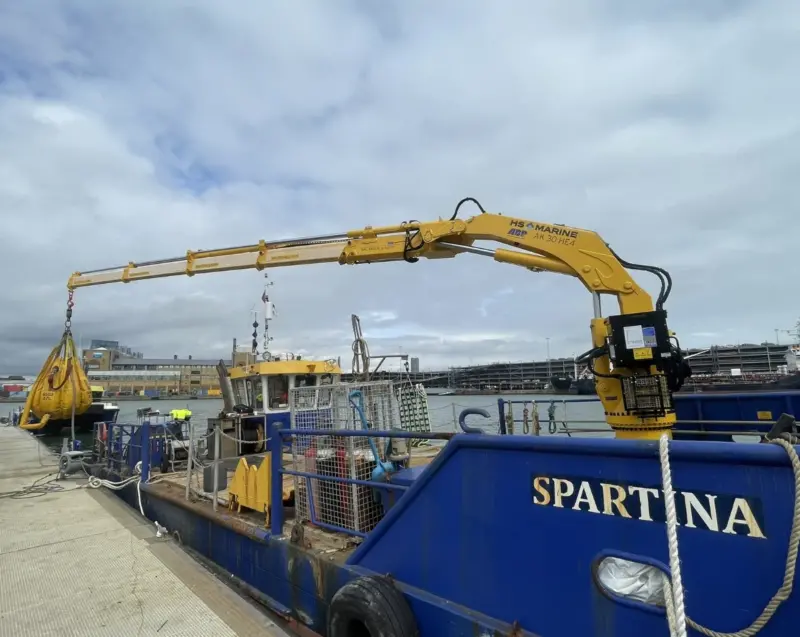
deck crane on board workboat 'Spartina' at the Port of Southampton EQUIPMENT
EQUIPMENT

ABP has installed a new marine deck crane on board a Southampton workboat, strengthening safe harbour operations and capability

23rd September 2026

ABP upgrades Southampton workboat crane

23rd September 2026

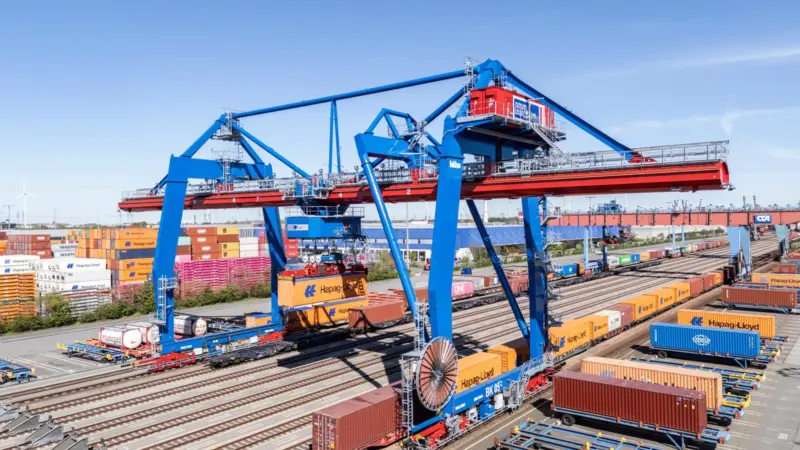
remote control rail gantry crane at the HHLA CTA OPERATIONS
OPERATIONS

HHLA has commissioned remote-controlled rail gantry cranes at its Container Terminal Altenwerder (CTA) in Hamburg, marking another step in the terminal’s ongoing automation programme.

26th August 2026

HHLA advances remote rail crane operations

26th August 2026

liebherr-cbg-310-rocktree-LQ OPERATIONS
OPERATIONS

Liebherr Maritime Cranes has introduced the CBG 310, a new four-rope grab crane designed to improve high-performance transshipment operations while building on the established CBG 300 platform.

20th August 2026

Liebherr’s new crane boosts performance

20th August 2026

Read the latest edition Read Now port-strategy-latest-edition (opens in a new tab)

Most Popular

  1. 1 PSA and Granite launch innovation fund 5 hours ago
  2. 2 HHLA cuts full-year earnings forecast 1 day ago
  3. 3 Cyber risk rises up the boardroom agenda 1 day ago
  4. 4 Port of Antwerp-Bruges bounces back 2 days ago
  5. 5 Barcode scanner flaw exposes warehouse cyber risks 2 days ago
  6. 6 McLaughlin & Harvey secures Dover port framework 2 days ago
  7. 7 Swedish Club strengthens Americas presence 4 days ago
  8. 8 DP World completes £13m London Gateway hub 4 days ago
  9. 9 Solent Freeport launches business skills grants 1 week ago
  10. 10 UK ports face pressure as export growth slows 1 week ago

Stay Informed

Get the latest maritime news delivered to your inbox

Subscribe

Latest Press Releases

  • Lease Adjacent to Port of Kaohsiung Wharf 121 Sets Stage for New Nonferrous Metals Storage and Delivery Center

    10th August 2026 · By Taiwan International Ports Corporation

  • Customized Donut Fender Solution Supports Ferry Terminal Upgrade at Sjællands Odde, Denmark

    5th August 2026 · By ShibataFenderTeam

  • Smart LED Street Light Upgrade at Port of Taichung Makes Port Roads Safer with Significantly Less Power

    3rd August 2026 · By Taiwan International Ports Corporation

  • Port of Tampa Expansion Implements PIANC-Recommended Cone Fender Design

    28th July 2026 · By ShibataFenderTeam

  • ShibataFenderTeam’s Sollana Factory in full Operation

    22nd July 2026 · By ShibataFenderTeam

  • ​Another Smart Step Forward,Taichung Port’s New AI-integrated Vessel Intrusion Detection System Strengthens Security

    8th July 2026 · By Taiwan International Ports Corporation

  • Port of Kaohsiung’s LNG Upcoming Service Launch to Drive Net-Zero Progress in Asia-Pacific Shipping Industry

    1st July 2026 · By Taiwan International Ports Corporation

  • TIPC and Port of Seattle Enhance Taiwan-Northwest US Cruise and Port Business Relations

    18th June 2026 · By Taiwan International Ports Corporation

  • TIPC Chairman Yung-Hui Chou Leads at Seatrade 2026, Secures Taiwan Cruise Expansion & Seabourn Itinerary for 2028

    11th June 2026 · By Taiwan International Ports Corporation

  • Reskinning Projects by ShibataFenderTeam Highlight Lifecycle Extension of Foam Fenders

    8th June 2026 · By ShibataFenderTeam

  • Latest Port Perimeter Security Upgrade Enhances Access Control at Port of Kaohsiungs Chungtao Harbor

    4th June 2026 · By Taiwan International Ports Corporation

  • INFORM Enables High-Performance Hybrid Operations at PSA Antwerp’s Europa Terminal

    1st June 2026 · By INFORM GmbH

  • Port of Kaohsiung Deepens Baltic Region Ties, Pens MOU with Poland’s Port of Gdynia

    27th May 2026 · By Taiwan International Ports Corporation

  • TIPC Signage Rollout at Passenger Terminals Improves Service Quality Amid Record Passenger Numbers

    20th May 2026 · By Taiwan International Ports Corporation

Port Strategy

Insight for port executives

Sections

  • Europe
  • Products & Services
  • Equipment
  • North America

Resources

  • About Us
  • Contact
  • Advertise
  • Subscribe

Legal

  • Privacy Policy
  • Terms & Conditions
  • Cookie Policy
© 2026 Port Strategy. All rights reserved.

Cookie Settings

We use cookies to enhance your experience. You can choose which categories to allow below. Privacy Policy

Essential cookies that enable core site functionality. The site cannot function properly without these.

Help us understand how visitors interact with the site by collecting anonymous usage data.

Used to deliver relevant advertisements and track campaign performance across websites.

Remember your settings and choices to provide a more personalised experience.