


Reducing the knockdown risks
Whether a crane knockdown is caused by structural failure, weather or being hit by a ship, steps can be taken to reduce the risks, says Laurence Jones, TT Club’ s risk assessment manager. Structural failure can be due to overload, prior damage, fatigue or design error.

Loss prevention actions include regular structural inspections, with increasing frequency as the crane ages. A structural inspection must always be organised after any damage or overload incident, says Mr Jones.
Secondly, there are the cases of cranes being blown along the rail by sudden wind gusts or microbursts, hitting an adjacent quay crane or the end stops, and then collapsing. While there is normally advance warning of hurricanes and other extreme weather and appropriate storm tie-down procedures can be implemented, wind microbursts occur without warning.
“In this case,the driver should hit the emergency stop.The natural instinct of the driver is to try to drive against the wind – however, this just lifts the long travel brakes and makes the problem worse,”says Mr Jones.
The port should ensure that all long travel brakes are maintained and working properly, and that there are adequate braking systems installed.
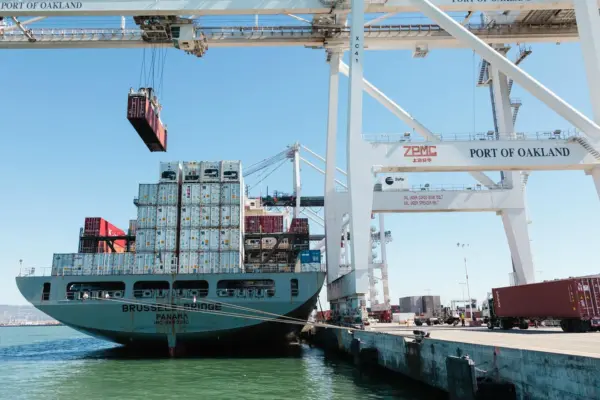
Thirdly, there are ships. Due to the high frequency of ships hitting wharves, the risk of a quay crane being hit is also high, he says. “Some ports and terminals ‘park’ the quay cranes in specific positions on the berth when a ship is berthing or unberthing (mainly at the ends). However, the benefits of this are uncertain.
There is little regulation on berthing and unberthing procedures and it is dependent on the harbourmaster.” In any case,ports should ensure that crane booms are raised, no personnel are on the cranes when a ship is berthing or unberthing, and ships are piloted.
Ports should also ensure that they are protected from financial loss and crippling downtime if the unexpected does happen.
Of course,that means having proper insurance cover. But it also means establishing a berthing agreement for all ships berthing at the terminal, to ensure that the ship is fully responsible for damage in the event of an incident, including consequential losses. Ports should also ensure that disused oil lines running along the wharf are drained to reduce pollution exposure. “If an incident does occur, ports should notify their property insurers immediately,”says Mr Jones.
“If a ship has hit the crane, then the most important thing to do as soon as possible is to get security for the estimated costs,” he says. “Most jurisdictions have strict liability on the shipowner for damage to wharf/port property, so the focus for minimising financial loss is to make a recovery for the damage (including wharf repair, business interruption, pollution cleanup, personal injury) from the vessel.
“Often shipowners only have one asset,the ship itself,so if the ship is sold before a recovery is made against the owner, the port may end up months later after the repairs are done having an unpaid claim. Financial loss can therefore be avoided by taking prompt steps to secure the quantum of the claim at the time when the incident occurred while the ship is still at the port, by bank guarantee or P&I club letter of undertaking. This security will make life much easier when the claim is submitted.”
Next, says Mr Jones, appointing specific experts can provide enormous benefits and cost savings.That includes lawyers to assist in securing the claim, engineering/equipment experts to assess damage and repairs, and possibly business interruption (BI) experts to document the BI issues.
Related Articles
 CONCESSIONS & INVESTMENTS
 CONCESSIONS & INVESTMENTS
 CONCESSIONS & INVESTMENTS