![PortStrategy[GreenPort]](https://www.portstrategy.com/wp-content/uploads/2026/09/PortStrategyGreenPort.svg)





SALUTORY THOUGHTS ON QUAY WALLS AND CRANES
Fools wander in where civil engineers fear to tread but speak to the specialist insurers and they all know a thing or two about contact damage and ports. There are some rough rules of thumb which hold true most of the time. Like when a ships bulbous bow touches a crane and bends its legs, the manufacturers surveyor will always recommend writing it off and purchasing a new one. Or the damage claimed to quay walls by contact damage by a named ship will almost always represent an accumulation of such hits, by many others, often at times when the structure concerned was more than able to shrug such things off.
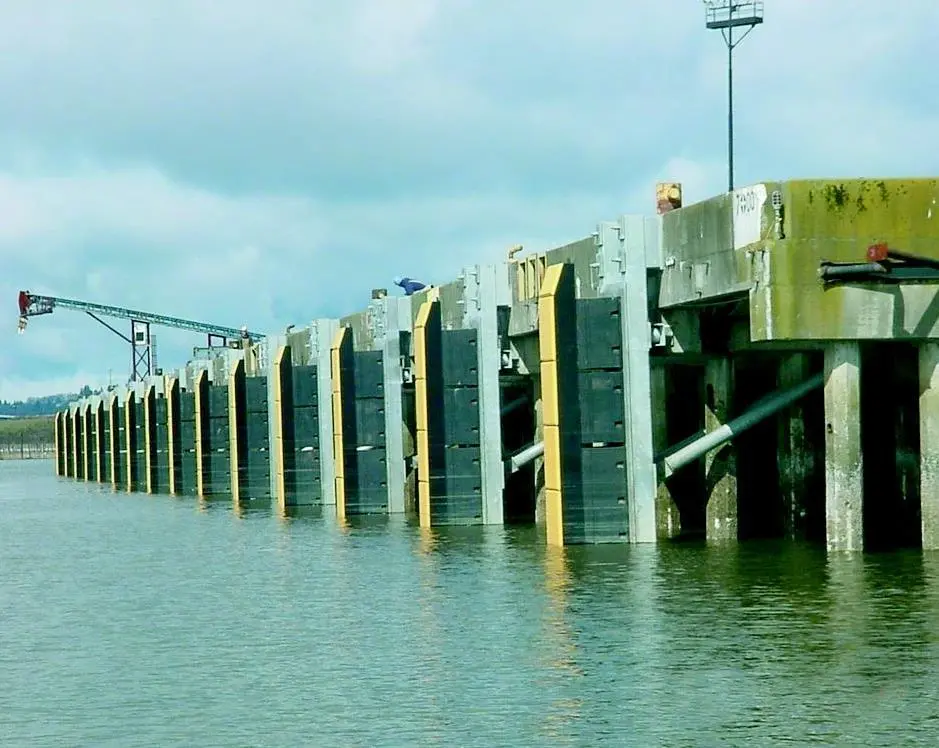
Given the nature of quays, and the fact that they consist of a hard outer layer backed up by softer grades of fill, a loss of integrity is usually followed by the emergence of a surprising hole inland, as the action of the sea gradually washes out the finer particles in the fill. In older facilities the fill may not be much to write home about.
Surveyors examining the dramatic crack which appeared up and down the main berth in Guam following a big earthquake in 1994, discovered that the cranes had been resting on nothing more substantial than crushed coral, which was used for want of anything better by the Seabee engineers who rushed the port into being for wartime use.
Even in orthodox construction it is commonly reckoned that a third of the cost of construction is sunk below the surface in excavations and foundations. How much more does this apply to modern port construction which is, to the naked eye, nothing more dramatic than a large windswept hardstand upon which are stationed costly pieces of specialised handling equipment?
The newer the installation these days, the less likely it is that attention must be paid to renewing fendering and proper depths at the berths. The gargantuan trends in the container industry have also come to pass in the ports concerned. A purpose-built terminal able to service the next generation of post post Panamax ships hardly resembles in scale the earlier generation of such terminals, such is the size of the cranes, the degree of handling automation and the rate of containers handled.
But the P&I Clubs which pay when their shipowner members damage fixed and floating objects are alive to the history of ports, the damages they have suffered and the tendency of claimants to try to pay for new installations to replace the neglect of years.
One noted Club correspondent in Manila, the late Freddie Clemo, was famous for regularly photo-graphing all the terminals each year in the Philippines, to keep ahead of the creativity of claimants.
The world of repairers and problem solvers in this field is small and highly expert. News of shunts travels rapidly and the total value of claims is often surprisingly well estimated in such circles.
These worthies have been fairly busy this winter as the big storm at Busan is actually said to have damaged every single crane standing in that great port. To replace or straighten a crane leg or to replace it onto its track is a nerve-racking but (for the right specialists) routine piece of engineering which places a premium on balance.
The short message is that ports should not look to their property insurers to pay for the erosion of years, time and neglect as they are mostly most reluctant to serve in this capacity. Ports should also hire themselves good recovery lawyers who know their shipping and the P&I Clubs, whenever a ship damages a shore installation. Skill in the right places here will cut years off the recovery process.
Related Articles
 THE INSURER
 THE INSURER
 THE INSURER